

Science & Tech · Science & Environment · 1 hr ago
New Zealand develops tools to remove invasive caulerpa seaweed

Two invasive caulerpa seaweeds were found in New Zealand in 2021, where they formed dense meadows across parts of the seabed.
The seaweed raised fears that it could smother marine life, compete with native species and displace habitats in a country with many marine species found nowhere else.
Divers and researchers are developing ways to remove it, including handheld suction devices used by commercial divers in the Bay of Islands.
Māori communities and other coastal residents are concerned because the sea is central to their livelihoods and culture.
A natural dieback has eased some fears of severe ecological damage, but nationwide eradication is no longer considered achievable.
Removal methods are still being developed across New Zealand, with some receiving government funding.

New Zealand has developed several methods to remove invasive caulerpa seaweed from coastal waters.
The seaweed comprises two invasive species, Caulerpa brachypus and Caulerpa parvifolia, discovered in New Zealand in 2021.
The methods include handheld suction devices used by commercial divers.
Nationwide eradication is no longer considered achievable, while a major natural dieback has eased some fears of ecological damage.
The seaweed had raised concern because dense growth could smother marine life, compete with native species and displace habitats.
- Who
- New Zealand researchers and removal teams, including commercial diver Stephen Te Tai, are developing and using removal methods.
- What
- They have developed a range of tools to remove invasive caulerpa seaweed.
- When
- The two invasive species were discovered in 2021. The development date for the tools is not stated.
- Where
- New Zealand, including the Bay of Islands.
- Why
- The seaweed could smother marine life, compete with native species and displace habitats.
This story does not have two clearly opposing sides.
Two invasive forms of caulerpa were discovered in New Zealand.
Stephen Te Tai and his team removed two metric tons of caulerpa during work in waters off Urupukapuka Island.
- Invasive species
- Caulerpa brachypus and Caulerpa parvifolia
- Discovery
- New Zealand, 2021
- Removal method
- Handheld suction devices
- Removal amount
- Two metric tons removed during one day in July
- Removal area
- Bay of Islands, New Zealand
What people are saying
The moana [ocean] is vital to our people.
I know it’s airy fairy but sometimes I feel its energy,
It’s so wily and so resilient,
Sources
Related news

High-speed video shows how detached honeybee stingers keep pumping venom

China’s CXMT plans next-generation server memory, raising competition concerns
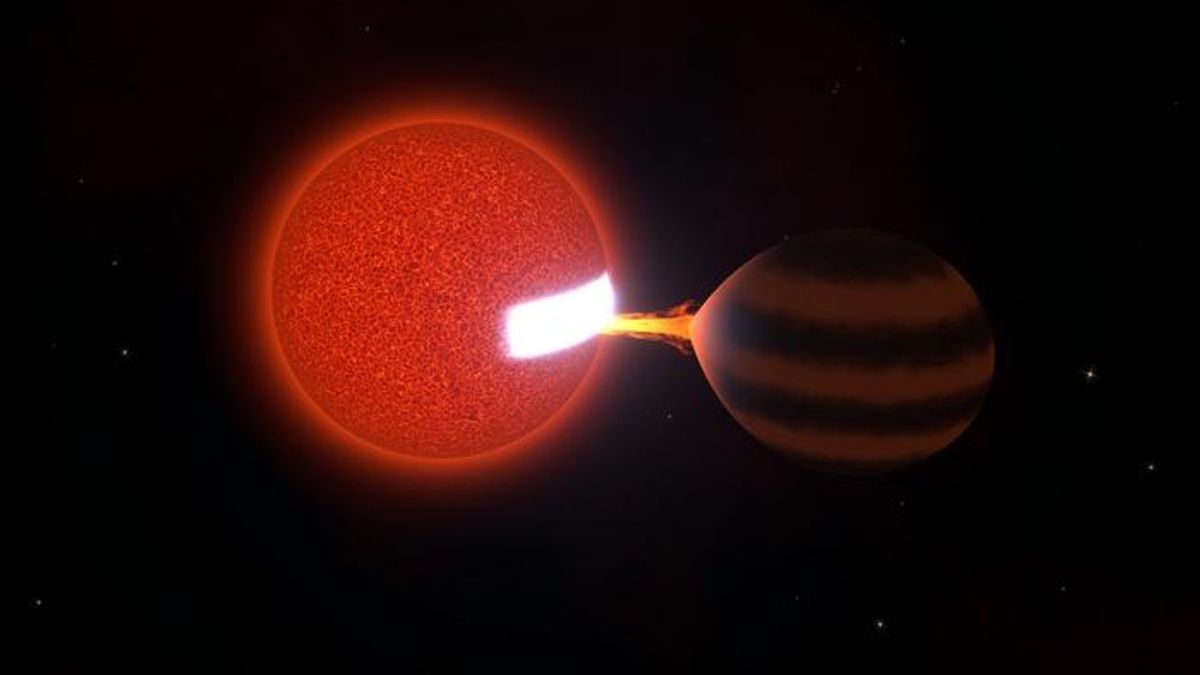
Red dwarf slowly draws matter from a brown dwarf

A 1960 population model set a ‘doomsday’ date that later growth disproved

Pacific buoy recorded a 17.6-metre rogue wave nearly three times its neighbours

Scans reveal how Iran’s spider-tailed viper’s unusual lure is built

New tool maps geological and climate risks beneath cities

NHAI begins tree planting along ECR widening project
Andhra Pradesh researchers named to Stanford-linked top scientists list

MIT startup develops system to convert diesel trucks to hydrogen
