1 week ago
India's Manufacturing Push Faces Value Addition Test, Deloitte Says
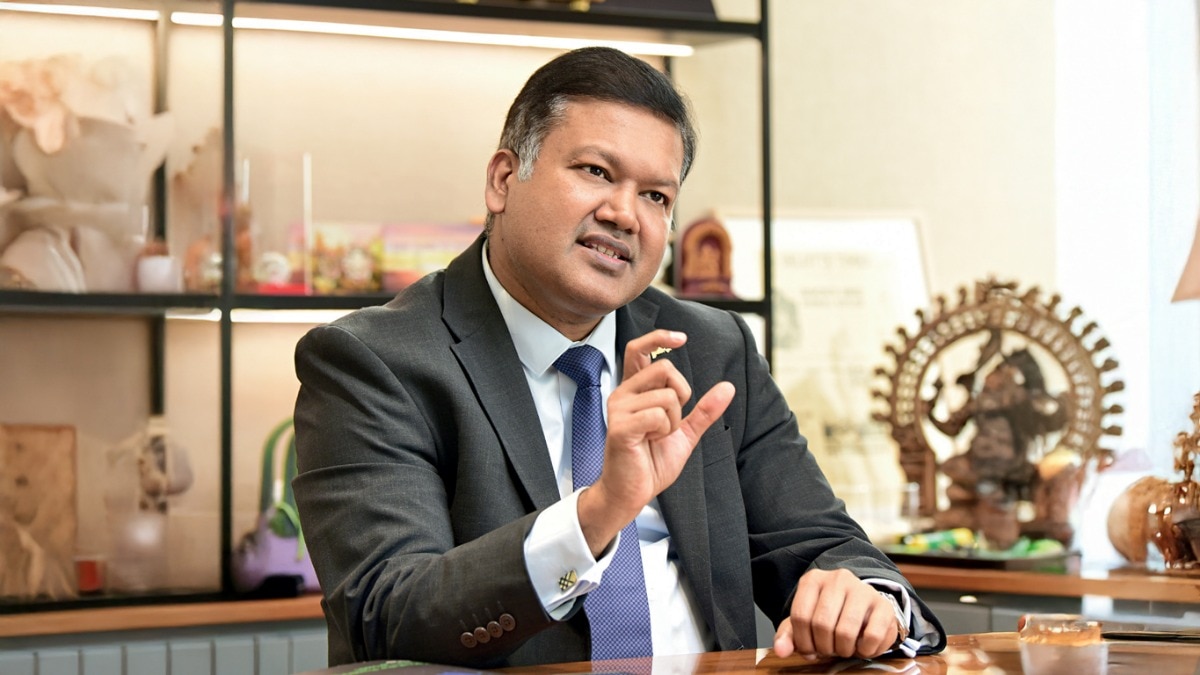
India is making more products and selling more of them to other countries.
Romal Shetty of Deloitte says India could become a very large manufacturing country.
He says successful companies must earn profits and manage their money carefully, not just build more factories.
India has done well in areas such as electronics, cars, medicines and defence.
However, many parts and materials are still brought from outside India.
Companies need to make more of the product themselves and invest in research and technology.
Smaller businesses also need to become stronger suppliers.
Government incentives have helped companies grow, but businesses must eventually compete without depending on those payments.
Shetty believes India has enough entrepreneurs, customers and technical talent to succeed.

Deloitte South Asia CEO Romal Shetty says India can become a large global manufacturing economy.
The strongest manufacturers are combining scale with profitability, cash generation, controlled debt and investment in technology.
India's manufacturing capacity, investment and exports have grown, but domestic value addition and productivity remain unfinished challenges.
Manufacturing's contribution to gross value added rose only from 17.2% in FY14 to 17.5% in FY24.
Shetty says deeper supply chains, research, strategic autonomy, stronger smaller firms and self-sustaining competitiveness are needed beyond production-linked incentives.
- Who
- Romal Shetty, CEO of Deloitte South Asia and a member of Deloitte's Global Executive Committee, discussed India's manufacturing prospects with Siddharth Zarabi.
- What
- Shetty assessed India's manufacturing progress and outlined measures needed to become a deeper, globally competitive manufacturing economy.
- Where
- India, with opportunities involving global markets and the economies of Asia, Africa and West Asia.
- When
- The interview discusses developments over the past decade, including FY14 to FY24, and says production-linked incentive schemes had attracted more than Rs 2.4 lakh crore by March this year.
- Why
- To explain how India can move beyond assembly, increase domestic value addition and build sustained global manufacturing leadership.
Progress and Opportunity
Gaps and Risks
India's manufacturing position
Progress and Opportunity
India has expanded capacity, investment and exports, developed globally competitive industries and is becoming a credible alternative in global supply chains.
Gaps and Risks
The transformation remains incomplete because manufacturing's GVA share has barely increased, while domestic value addition and deeper supply ecosystems are still evolving.
Production-linked incentives
Progress and Opportunity
The schemes have accelerated capacity and attracted more than Rs 2.4 lakh crore of investment across 14 sectors.
Gaps and Risks
Long-term competitiveness will be uncertain if companies rely on incentives rather than achieving competitive costs, reliable quality, sufficient capacity use and greater control over technology and components.
Global supply-chain strategy
Progress and Opportunity
Geopolitical risks create an opportunity for India to broaden production, build strategic capabilities and serve Global South markets.
Gaps and Risks
No country can make every component independently, so complete self-sufficiency is not immediately feasible and collaboration with countries possessing resilient supply chains remains necessary.
Key facts
- Study coverage
- The Business Today-Deloitte study analysed more than 5,000 listed and unlisted firms and ranked nearly 700 manufacturers.
- Manufacturing GVA
- Manufacturing's contribution to gross value added was 17.2% in FY14 and 17.5% in FY24.
- Electronics value addition
- Domestic value addition in electronics is estimated at 18-20%.
- PLI investment
- Production-linked incentive schemes attracted more than Rs 2.4 lakh crore across 14 sectors by March this year.
- Key sectors
- Promising areas include electronics, defence, aerospace, pharmaceuticals, automobiles, electric vehicles, industrial machinery, specialty chemicals and clean-energy equipment.
- Four priorities
- Shetty identifies complete industrial value chains, technology investment, stronger smaller manufacturers and a Global South manufacturing hub as priorities.
Sources
Related news
NITI Aayog identifies 12 sectors for India's global manufacturing push
Maruti Suzuki Chief Calls for World-Class Indian Manufacturing
Why Indian Manufacturing Needs a Distinct Global Advantage
Productivity is the engine of India's manufacturing growth: CII

Why India Is Becoming Central to Global Industrial Competitiveness
Pentagon Turmoil Deepens as Hegseth Tightens Grip on Military

Damaged Lohit River Bridge Cuts Off Arunachal Border Villages

Nepal Flood Exposes Delayed Alerts and Cross-Border Warning Gaps

Chinese Workers Fight Office Ageing With Parasols And Sunscreen
UPSC Key Covers SCO, Electoral Rolls, Economy, Defence and Climate