1 hr ago
UPSC Key Covers SCO, Electoral Rolls, Economy, Defence and Climate
This UPSC study guide explains several important events and ideas from India and the world.
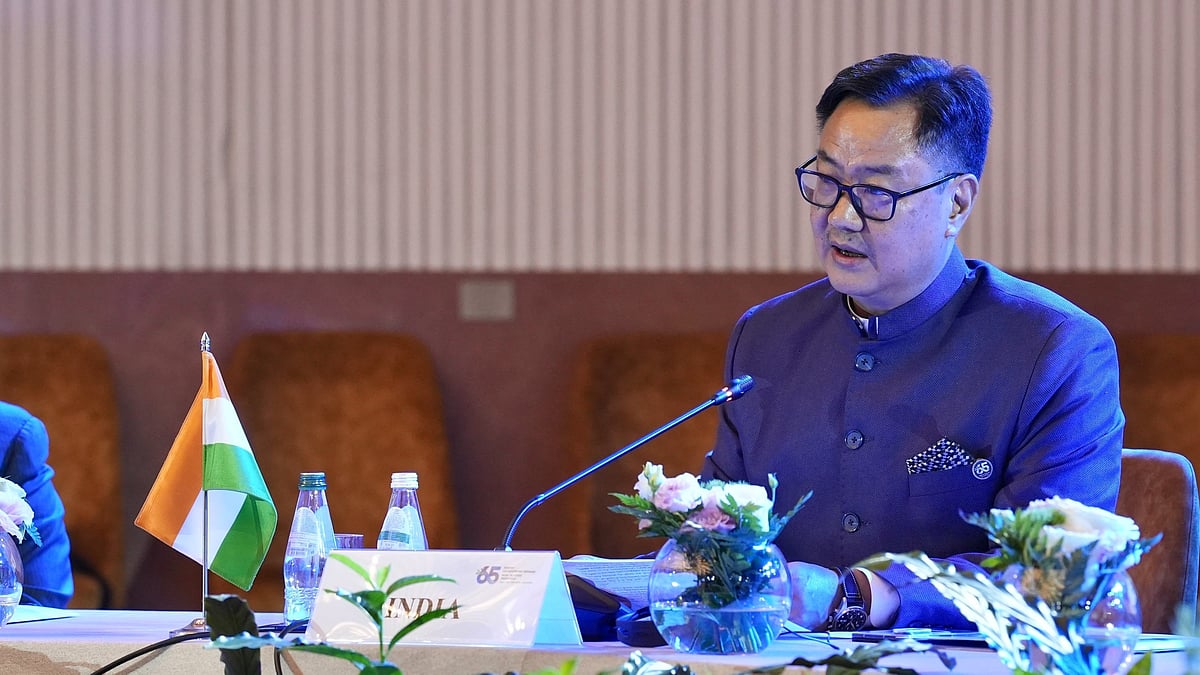
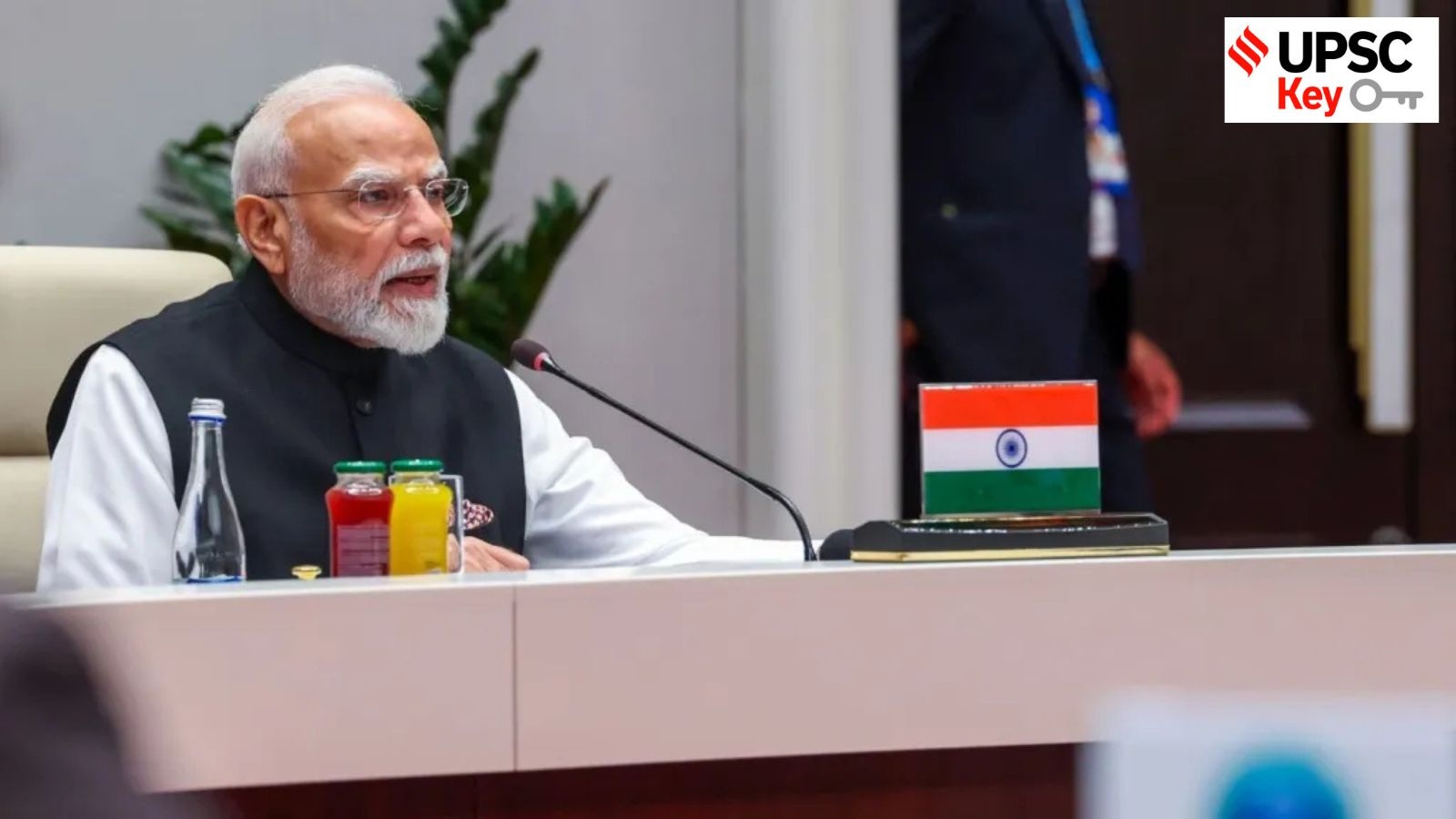
At a meeting in Bishkek, Prime Minister Narendra Modi said countries should solve conflicts through talks instead of fighting.
The guide also explains how names can be added to or removed from voter lists using Form 7.
India’s economy grew quickly, although its trade gap became larger.
The Indian Navy received a new ship called INS Nipun to help divers and rescue submarines.
A court dealing with the Indus Waters Treaty said the agreement between India and Pakistan was still in force, but India rejected that decision.
A Supreme Court judge said legal scholars could someday be appointed directly as judges under the Constitution.
The guide warns that melting glaciers and growing glacial lakes can cause floods that damage both homes and health services.
It also discusses India’s efforts to improve research, chip design and technology while covering other legal, tax and economic developments.

At the SCO summit in Bishkek, Prime Minister Narendra Modi urged dialogue and diplomacy to resolve conflicts and warned of global effects on energy, trade and supply chains.
Godda election officials reported alleged irregularities in Form 7 deletion applications, while electoral rules require inquiry and an opportunity for the affected elector to respond.
India recorded 7.8% GDP growth in the first quarter of 2026-27, while its current account deficit widened to $4.2 billion.
The Indian Navy commissioned INS Nipun, a Nistar-class diving support vessel designed for deep-sea diving, salvage and submarine rescue operations.
The issue also covers the Indus Waters Treaty, Supreme Court appointments, India’s technology race, glacial flood risks, foreign-asset tax disclosures and Semicon 2.0.
- Who
- The subjects include Prime Minister Narendra Modi, SCO member states, Indian electoral officials, the Indian Navy, the Permanent Court of Arbitration, the Supreme Court of India and Indian economic and technology institutions.
- What
- The Indian Express UPSC key reviews the Bishkek Declaration, Form 7, INS Nipun, the appointment of distinguished jurists and several economic, environmental, legal and technology developments.
- Where
- The developments concern Bishkek, India, the India-Pakistan Indus basin, the Himalayas, New Delhi and international technology competition.
- When
- The material is identified as the UPSC CSE key for September 2, 2026, and includes events and data from August 30 to September 2026.
- Why
- They are relevant to UPSC preparation because they concern current affairs, international groupings, elections, the economy, defence, constitutional law, disaster management and science and technology.
Institutional and Policy Positions
Critiques and Counterarguments
Indus Waters Treaty arbitration
Institutional and Policy Positions
The Permanent Court of Arbitration held that India’s decision to place the treaty in abeyance was not permissible and that the treaty remained in force.
Critiques and Counterarguments
India said the court was illegally constituted in breach of the treaty, rejected its orders and maintained that its decision to keep the treaty in abeyance remained valid.
Form 7 deletion process
Institutional and Policy Positions
Election authorities state that safeguards exist because Electoral Registration Officers must conduct an inquiry, allow the affected elector to respond and issue an order.
Critiques and Counterarguments
Godda Booth Level Officers alleged that BJP workers submitted multiple deletion forms, some of which were not in the proper format; the article also notes that the online system does not require proof or verify applicants’ identity details at filing.
India’s technology strategy
Institutional and Policy Positions
China is pursuing original scientific discovery and AI-linked manufacturing, while the United States is seeking to restore its ability to convert scientific discoveries into production.
Critiques and Counterarguments
The article argues that India risks falling behind in the China-US technology race because its R&D spending is below 1% of GDP and private-sector participation remains comparatively weak.
Glacial lake outburst flood preparedness
Institutional and Policy Positions
Existing institutions and technologies, including ISRO, the Central Water Commission and the National Disaster Management Authority, provide monitoring and risk-mapping capabilities.
Critiques and Counterarguments
The health-focused analysis argues that preparedness remains fragmented and must map downstream health facilities, protect medicine and vaccine supplies, and treat GLOFs as prolonged climate-health emergencies.
Key facts
- SCO membership
- The article lists 10 members: India, Iran, Kazakhstan, China, Kyrgyzstan, Pakistan, Russia, Tajikistan, Uzbekistan and Belarus.
- Bishkek Declaration
- SCO leaders called for international action against terrorism, including the cross-border movement of terrorists, and rejected double standards.
- Electoral Form 7
- Form 7 is used to request deletion of an elector’s name or object to a proposed inclusion; possible grounds include death, being underage, shifting, duplicate enrolment or non-citizenship.
- GDP growth
- India’s GDP grew by 7.8% in the first quarter of 2026-27, above the professional forecasters’ median estimate of 6.8% and the RBI projection of 7%.
- Current account deficit
- The current account deficit reached $4.2 billion, or 0.5% of GDP, in Q1 2026-27, compared with $3.4 billion, or 0.4% of GDP, a year earlier.
- INS Nipun
- Commissioned on August 31 at Mumbai, INS Nipun is the second Nistar-class diving support vessel and has a self-propelled hyperbaric lifeboat.
- Indus Waters Treaty
- The Permanent Court of Arbitration said the treaty remained fully in force and directed India to halt Ratle Hydroelectric Project construction until the technical dispute is settled; India rejected the orders.
- India’s R&D spending
- The article says India’s gross expenditure on research and development remains below 1% of GDP, with governments contributing nearly 60% of total GERD.
Quotes

Ministry of External Affairs
India’s foreign ministry responding to the Permanent Court of Arbitration’s orders on the Indus Waters Treaty.
“In today’s interconnected world, the scope of security has expanded significantly. The crisis in West Asia has demonstrated that a conflict in one region does not remain confined there. It impacts global energy security, maritime trade and supply chains. The Global South bears the brunt of these consequences. Therefore, India has consistently maintained that the resolution of all tensions and conflicts is possible only through dialogue and diplomacy, not on the battlefield.”
 indianexpress.com
“This so called Court was constituted by the World Bank in patent breach of the terms of the Treaty and India categorically rejects its so-called award… India has never recognised the existence in law of this illegally-constituted and so-called Court of Arbitration… India’s decision to hold the Indus Waters Treaty in abeyance remains in force”
indianexpress.com
Sources
Related news
UPSC Key Highlights Defence, Disasters, Economy and Governance

UPSC Key Tracks Talking Cars, Glaciers, Treaties And Growth
UPSC Key Highlights Nepal Floods, Rights, Defence, Nuclear Energy
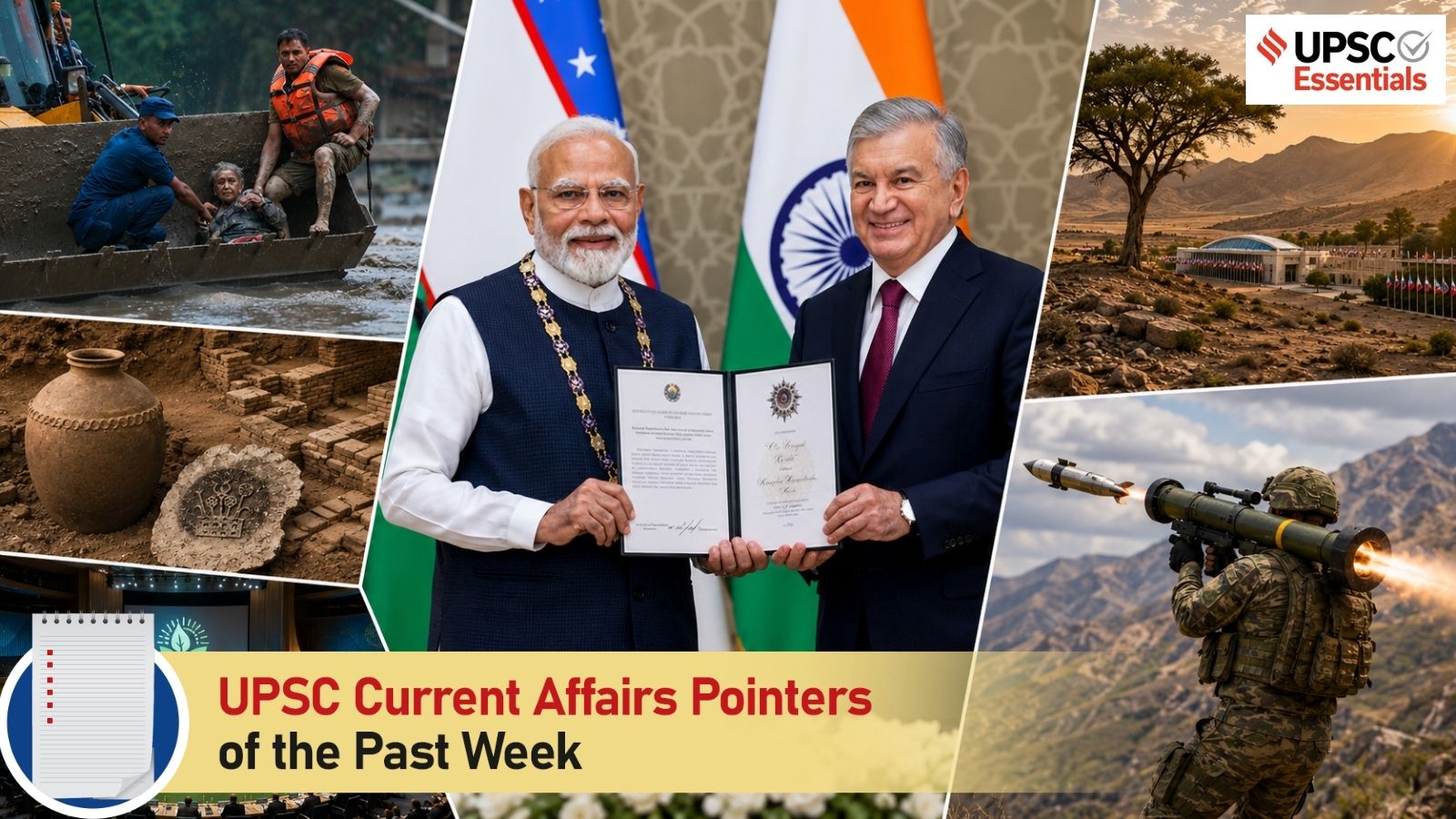
UPSC Weekly Current Affairs: Environment, Diplomacy, Defence and Economy
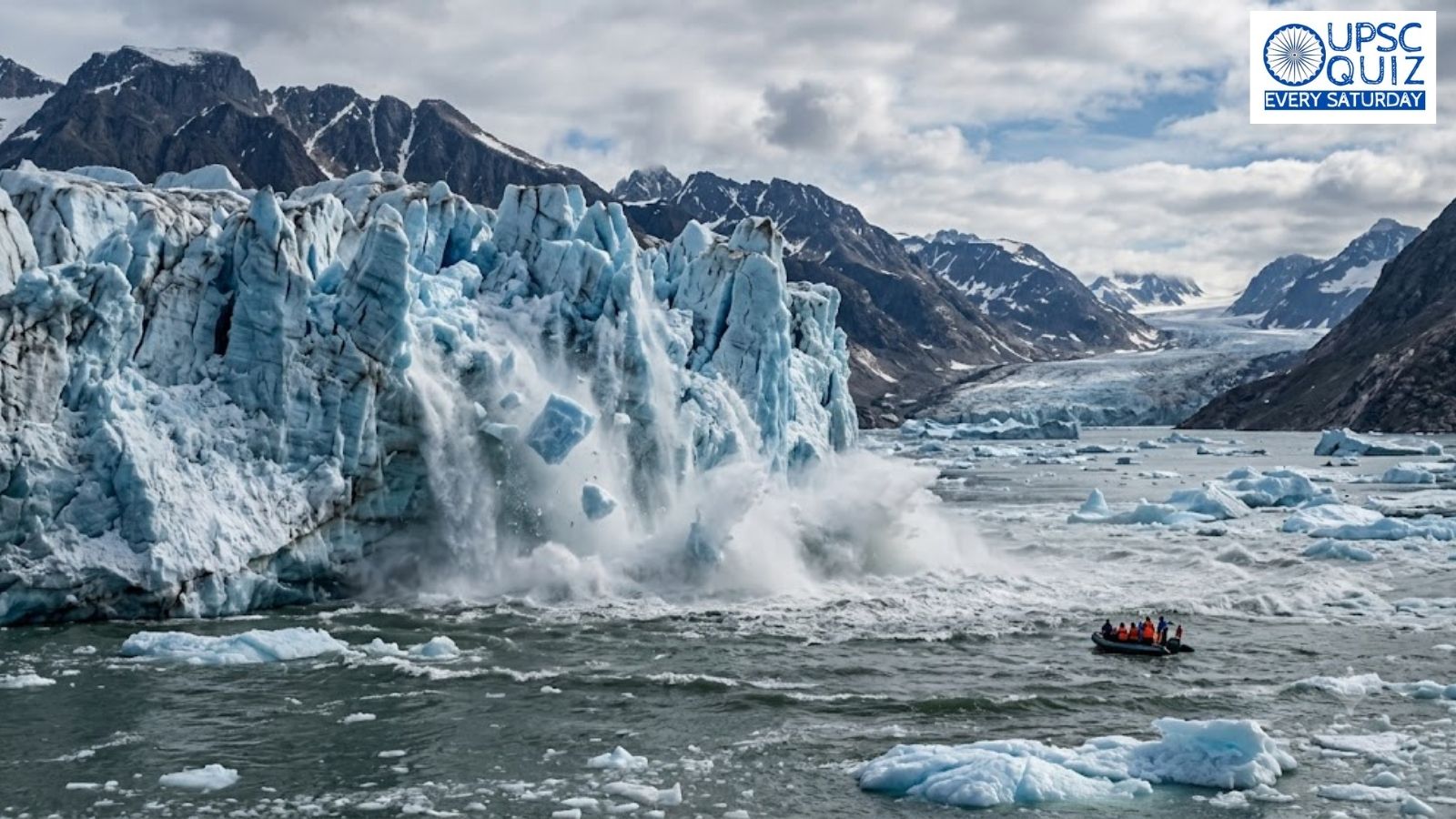
UPSC Weekly Quiz Covers Glaciers, Defence, Geography and Heritage

Manipur Census Deferment Welcomed as Step Toward Public Aspirations

West Bengal CM Crushes Nearly 2 Lakh Seized Syrup Bottles

Modi Highlights India’s Growing Avocado Market and Farmer Gains
China's SCO Power Grab Shapes Global Alliances and Trade