1 week ago
Why Indian Manufacturing Needs a Distinct Global Advantage
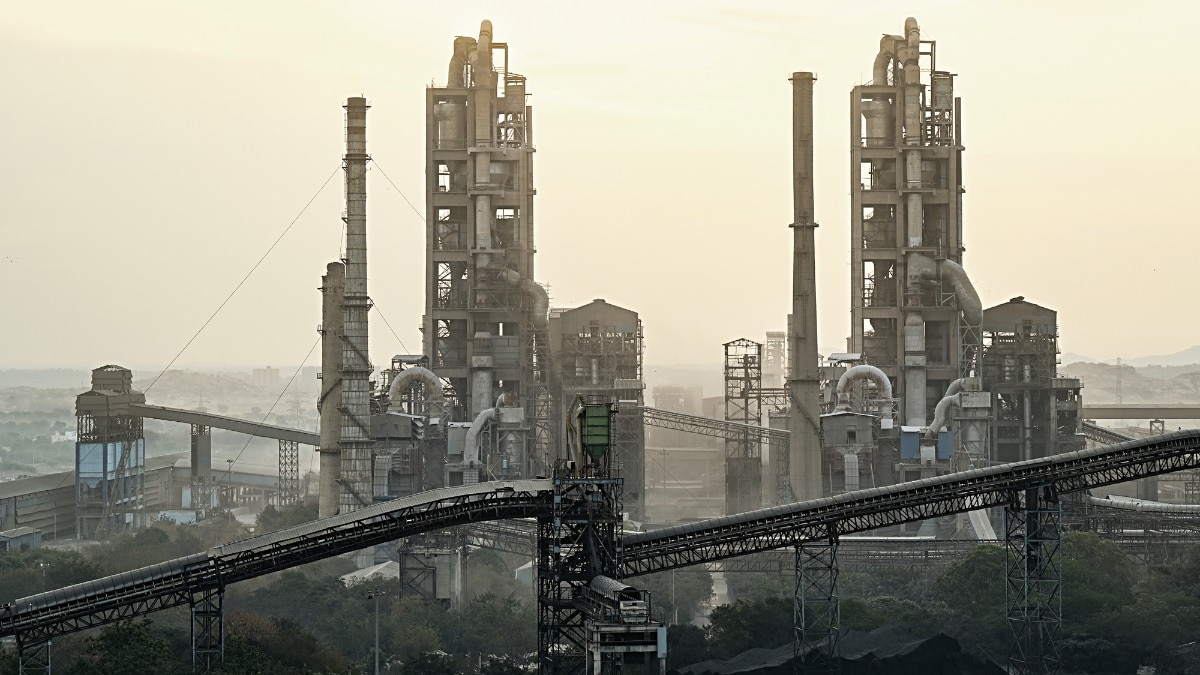
India makes many kinds of products, from cars and chemicals to food and steel.
The article says India should not try to copy China, Germany or other manufacturing countries.
Instead, it can combine engineering, technology, science and a large home market.
Indian companies can use local customers to improve products before selling them around the world.
India’s different regions and income groups make manufacturing difficult, but they also teach companies to be flexible.
Businesses say making things cheaply is not enough for long-term success.
They also need better technology, reliable quality, skilled workers and environmentally safer factories.
Government programs and better infrastructure could help.
The article says India has made progress but must invest much more to become a manufacturing leader.

India’s manufacturing sector spans 5,728 listed and unlisted companies, with refineries leading by turnover and auto ancillaries by company count.
Executives argue India’s varied strengths in engineering, information technology, chemistry, pharmaceuticals and domestic demand create a distinctive manufacturing model.
The country’s large, diverse market helps companies test, adapt and scale products before competing internationally, though regional and income differences add complexity.
Industry leaders say India must prioritize technology, research, skilled talent, sustainability and value-added solutions rather than competing mainly on low costs.
Infrastructure, logistics, energy prices, policy bottlenecks, temporary-worker dependence and limited R&D spending remain barriers to global manufacturing leadership.
- Who
- Indian manufacturers, industry executives and government-supported manufacturing businesses.
- What
- The article assesses how India can build a distinctive advantage and become a global manufacturing leader.
- Where
- India, in comparison with manufacturing economies including China, Germany, Vietnam and Bangladesh.
- When
- The article does not specify a publication date; it presents a current assessment of India’s manufacturing sector.
- Why
- To explain what India must do to expand manufacturing competitiveness and close the gap with leading manufacturing countries.
Cost-Focused View
Capability-Focused View
Basis of competitiveness
Cost-Focused View
Lower wages, lower costs and cost arbitrage can help Indian manufacturers compete, particularly in labor-intensive industries.
Capability-Focused View
Industry leaders argue that competing mainly on cost is neither sustainable nor desirable; India should compete through engineering, innovation, quality, flexibility and reliable solutions.
Manufacturing model
Cost-Focused View
India could seek to emulate successful approaches such as China’s scale, Germany’s precision engineering or Vietnam and Bangladesh’s labor-cost advantages.
Capability-Focused View
Executives say India’s mixed model is an advantage because it combines technology, engineering, science, complex chemistry, pharmaceuticals and domestic consumption rather than copying another country.
Path to global leadership
Cost-Focused View
Expanding factory capacity and protecting margins through favorable cost structures can support growth.
Capability-Focused View
Global leadership requires sustained investment in automation, artificial intelligence, research, skilled talent, energy efficiency, decarbonization and advanced manufacturing.
Key facts
- Companies studied
- 5,728 listed and unlisted manufacturing companies
- Largest segment by turnover
- Refineries
- Largest segment by company count
- Auto ancillaries
- India’s manufacturing rank
- India has moved from tenth to fifth, according to the article
- R&D spending
- Research and development accounts for 0.84% of India’s GDP; one executive says it should reach at least 3%
- Manufacturing approach
- The article emphasizes engineering excellence, process innovation, flexibility, technology and value creation over low-cost competition
- Key policy measures
- Make in India, PM Gati Shakti, Digital India, Skill India, industrial corridors and free-trade agreements
Quotes
Vishal Sharma
Executive Director and CEO of Godrej Industries (Chemicals) and Chairperson of Astec LifeSciences
“Competing only on cost is neither sustainable nor desirable. India’s real strength lies in engineering excellence, process innovation, operational flexibility and the ability to deliver reliable solutions across diverse markets.”
 businesstoday.in
“For China, it was about scale and state-directed capital while Germany did it through precision engineering and vocational depth.”
businesstoday.in
Sources
Related news
India's Manufacturing Push Faces Value Addition Test, Deloitte Says

Why India Is Becoming Central to Global Industrial Competitiveness
India’s Manufacturing Growth Gains Momentum, But Bottlenecks Remain
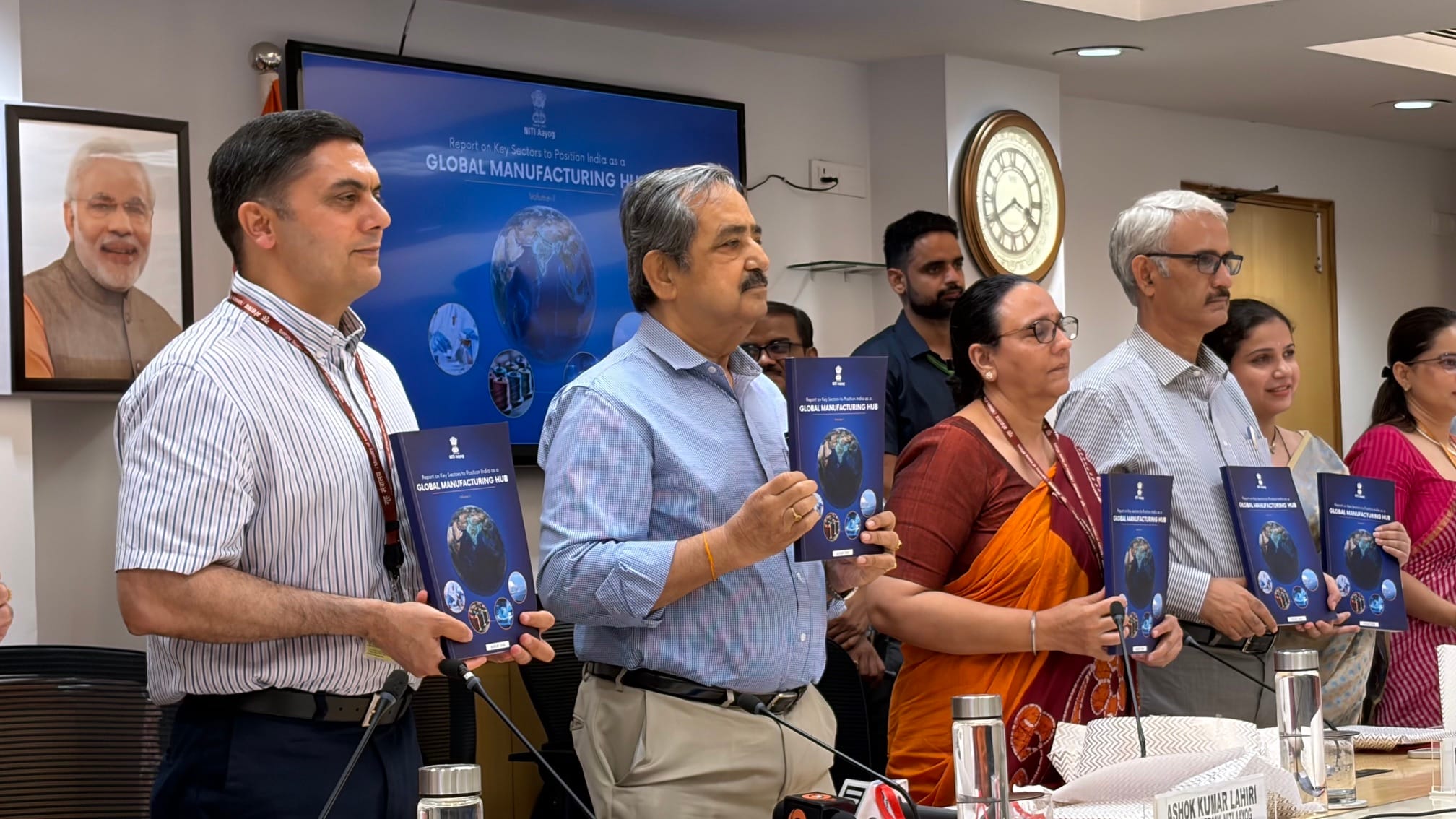
NITI Aayog identifies 12 sectors for India's global manufacturing push
Maruti Suzuki Chief Calls for World-Class Indian Manufacturing

Government Schemes Propel India’s Manufacturing Growth and Supply-Chain Rise

Sharma and Malik share halfway lead at Telangana Golconda Masters

India Replaces Sri Lanka as 2027 Women’s Champions Trophy Host
Centre Assures JDU Bihar’s Interests In Farakka Treaty Decision
India’s Record Wheat Harvest Opens $1.5 Billion Export Window

West Bengal CM Crushes Nearly 2 Lakh Seized Syrup Bottles