

2 days ago
Hydropower Decline Keeps Coal Central to India’s Flexible Grid
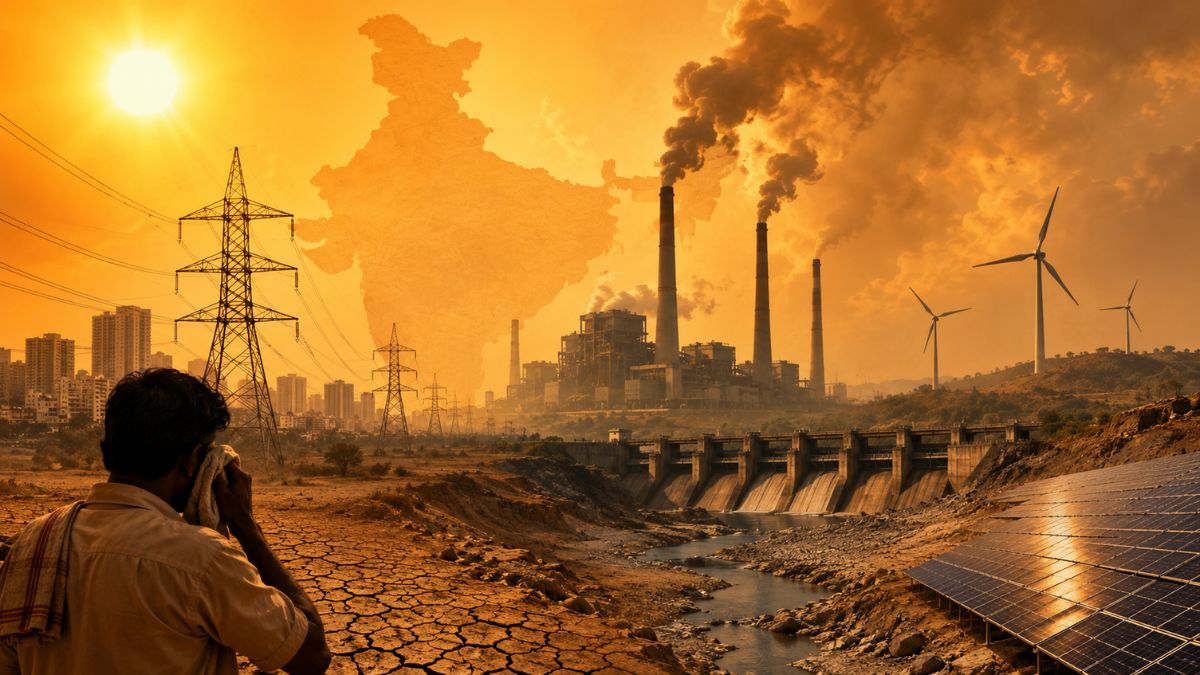
India is building much more renewable energy, such as solar and wind power.
However, the country still relies heavily on coal to produce electricity.
This year, hot weather made people use more air conditioning and other cooling equipment.
At the same time, weak rainfall and low reservoir levels reduced hydropower production.
Hydropower is useful because it can quickly provide extra electricity when needed.
Batteries are not yet available in sufficient amounts to store all renewable power.
India has considered making coal plants more flexible so they can adjust their output when renewable power changes.
Supporters say this could help fit more renewable energy into the electricity system.
Critics worry that continued coal generation could make it harder to reduce emissions and meet clean-energy goals.

Renewables supplied about one-fifth of India’s power generation in July, while thermal sources provided more than 65% of 182.52 billion units.
Hydropower generation fell 10.75% year-on-year from April 1 to July 30, 2026, as reservoir levels declined amid El Niño conditions and erratic rainfall.
Coal-fired generation reached 120.20 billion kilowatt-hours in June, about 14% higher than a year earlier, amid heatwave-driven cooling demand.
India’s policy to make coal plants operate more flexibly has reportedly been delayed by a year because of retrofit costs and rising electricity demand.
Experts say more flexible coal generation could support renewable integration, but continued coal use may complicate India’s 2030 clean-energy goals.
- Who
- India’s government, the Central Electricity Authority, the Centre for Science and Environment, and energy-sector officials and experts.
- What
- Hydropower has declined while coal-fired generation remains high, reinforcing coal’s role in balancing India’s electricity system.
- Where
- Across India, including reservoirs and the Teesta river basin.
- When
- The reported changes occurred mainly from April through July 2026; coal generation peaked near a three-year high in June 2026.
- Why
- Heatwave-driven cooling demand increased electricity use, while El Niño conditions, erratic rainfall, low reservoir levels, and limited battery storage constrained renewable and hydropower output.
Flexible Coal as a Renewable Enabler
Coal Dependence as a Climate Concern
Role of coal plants
Flexible Coal as a Renewable Enabler
The Centre for Science and Environment says more flexible coal plants could balance variable renewable generation, create an additional 18 GW to 34 GW of renewable-energy space, and potentially reduce power-sector emissions by up to 8.37%.
Coal Dependence as a Climate Concern
Continued reliance on coal, even as renewable capacity expands, could make it difficult for India to reduce actual coal-fired generation and meet its clean-energy objectives.
Policy timing
Flexible Coal as a Renewable Enabler
Supporters of flexibility argue that modifying coal plants can help integrate renewables while batteries and other storage remain limited.
Coal Dependence as a Climate Concern
The policy has reportedly been pushed back by a year because regulators are still determining how to compensate plants for the higher cost of retrofitting, while heat-related demand has increased the need for coal power.
Key facts
- July generation
- India generated 182.52 billion units of electricity; thermal sources supplied more than 65% and renewables about one-fifth.
- Hydropower decline
- Hydropower generation was 10.75% lower from April 1 to July 30, 2026, than during the same period in 2025.
- June coal generation
- Coal-fired generation reached 120.20 billion kilowatt-hours in June, approximately 14% above the previous year.
- Coal’s FY25 share
- Coal accounted for nearly 79% of India’s domestically supplied energy in FY25.
- Coal production
- India produced 1,047.52 million tonnes of coal in FY25, up 4.98% from the previous year.
- Flexible coal policy
- A January 2023 policy required relevant coal plants to modify equipment to operate at a minimum technical load of 40%; implementation was reportedly delayed by one year.
- Clean-energy target
- India has a 500 GW renewable-energy target for 2030 and a net-zero target for 2070.
Quotes

Sunita Narain
Director general of the Centre for Science and Environment
“Enhancing the flexibility of the existing coal fleet can play a role in balancing the system and enabling greater integration of renewable energy. We are not talking about renewable vs coal here. We are talking about renewable and coal, and about how to integrate the two. The task is not to replace coal, but to displace it.”
 financialexpress.com
“The impact of El Niño on Hydro reservoir levels is expected to reasonably reduce hydropower generation in India as compared to the previous year. Between April 1 and July 30, hydropower generation has been 10.75% less than that for the corresponding period in 2025”
financialexpress.com
Sources
Related news
Hydro reservoir levels hit lowest since 2023 on El Niño

India's Power Capacity Reaches 552 GW, Non-Fossil Share 54%

India Achieves 300 GW Renewable Energy Capacity Milestone
Monsoon disruptions push 45 Indian power plants toward coal shortages

India crosses 300 GW clean energy, 60% of 2030 target
India’s Solar-Heavy Grid Needs Flexible Demand and Storage

Putin Faces Western Isolation While Russia Builds Non-Western Ties
India’s Global Power Ambitions Face Economic and Democratic Setbacks

Modi’s Frugality Appeal Contrasts With Extensive Foreign Travel
Modi Sets Roadmap for Collaborative, Water-Secure India’s Future

Sonia Gandhi Memoir Sparks Debate Over Politics, Publishing And Speech
