

1 hr ago
Modi Sets Roadmap for Collaborative, Water-Secure India’s Future
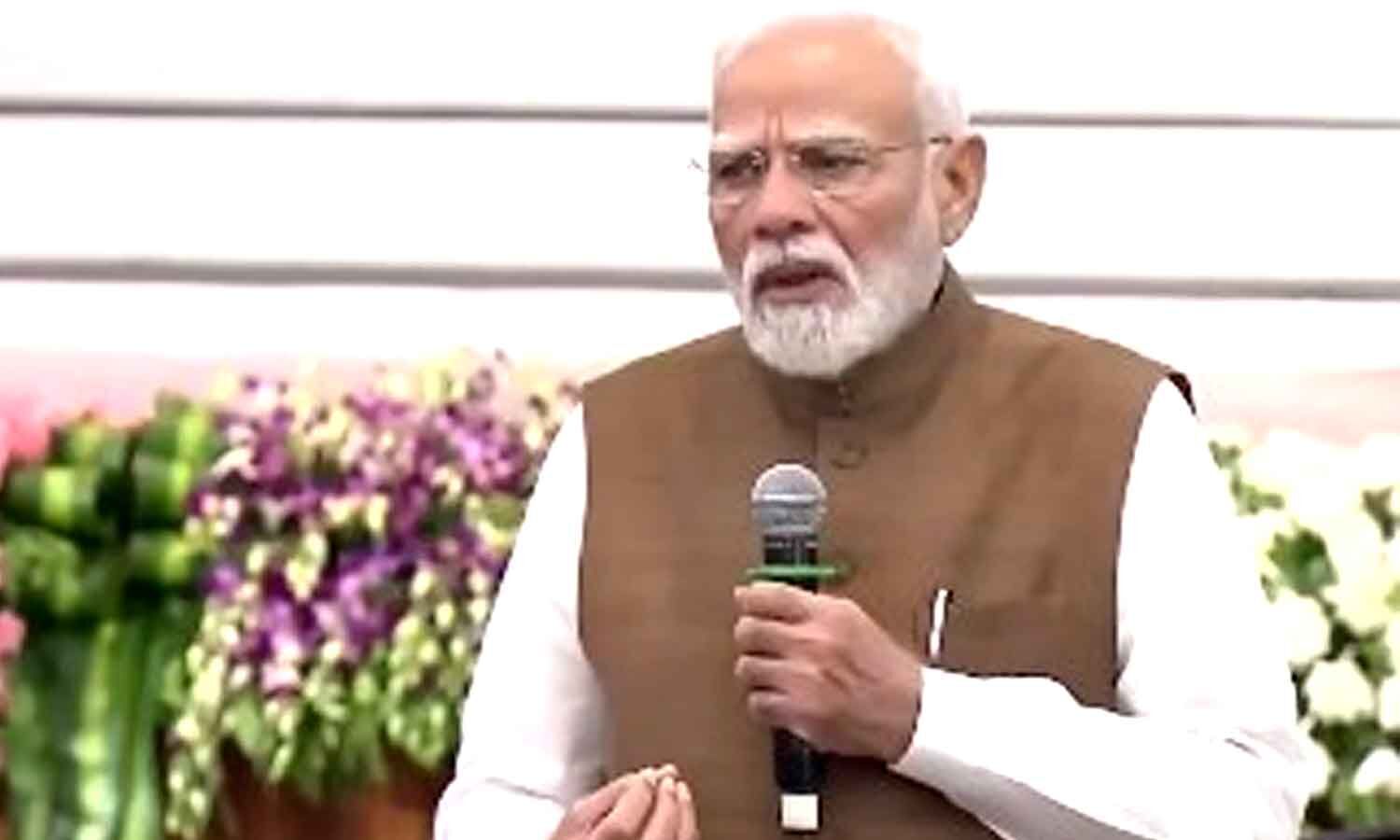
Prime Minister Narendra Modi wants India to plan carefully so people have enough water in the future.
He said the ideas discussed at the water summit should not be forgotten after the meeting ends.
Government officials should regularly check whether the plans are working.
He also wants people to join water-saving activities through events called “Jal Utsav.”
New technology and artificial intelligence could help officials understand water data better.
Cities should prepare for growing populations and future water needs.
The government should also use treated water for farms and factories when possible.
Schools may teach students about dam safety and water management.
The overall goal is for the Centre, States, officials, farmers and citizens to work together on water security.

Prime Minister Narendra Modi urged States and Union Territories to follow up on time-bound water-security decisions through continuous review and implementation.
He called for “Jal Utsav” and wider public participation to make water conservation a sustained people’s movement.
Modi recommended integrated water data governance using artificial intelligence, uniform formats and stronger analysis.
He urged greater use of water-saving technologies, treated water, inter-State study visits and anticipatory planning.
Union Minister C R Patil identified faster infrastructure completion, sustainable drinking-water sources and improved rural scheme maintenance as summit outcomes.
- Who
- Prime Minister Narendra Modi, Union Minister C R Patil, and ministers and senior officials from States and Union Territories.
- What
- Modi called for continuous review and implementation of time-bound plans to improve India’s water security.
- Where
- At the national Departmental Summit on Water organised by the Ministry of Jal Shakti; the report is datelined New Delhi.
- When
- The two-day summit was held on September 1 and 2; Modi addressed its valedictory session on Wednesday.
- Why
- To respond to water challenges linked to urbanisation, rising demand, groundwater depletion and uneven water availability.
Key facts
- Event
- Two-day National Departmental Summit on Water
- Organiser
- Ministry of Jal Shakti
- Main approach
- Team India and cooperative federalism involving the Centre, States and Union Territories
- Public participation
- Promotion of “Jal Utsav” to encourage water conservation
- Technology
- Artificial intelligence and uniform formats for collecting and analysing water-sector data
- Urban focus
- Sensitising Urban Local Bodies to population growth and future water requirements
- Summit outcomes
- Faster water infrastructure projects, sustainable drinking-water sources and improved operation and maintenance of rural drinking-water schemes
Sources

Related news
PM Modi to Promote Team India at Jal Shakti Summit
Telangana to Present Unified Water Security Model at National Summit
Modi Urges Long-Term Governance, AI Use and Departmental Coordination

Pratik Karpe Demands AI, Satellite Survey of Mumbai's Water Sources
Modi Sets Data, AI and Defence Priorities for India

Modi Urges Long-Term Thinking and Youth Engagement in Government

Putin Faces Western Isolation While Russia Builds Non-Western Ties
India’s Global Power Ambitions Face Economic and Democratic Setbacks

Modi’s Frugality Appeal Contrasts With Extensive Foreign Travel

Sonia Gandhi Memoir Sparks Debate Over Politics, Publishing And Speech
