

2 weeks ago
India Achieves 300 GW Renewable Energy Capacity Milestone
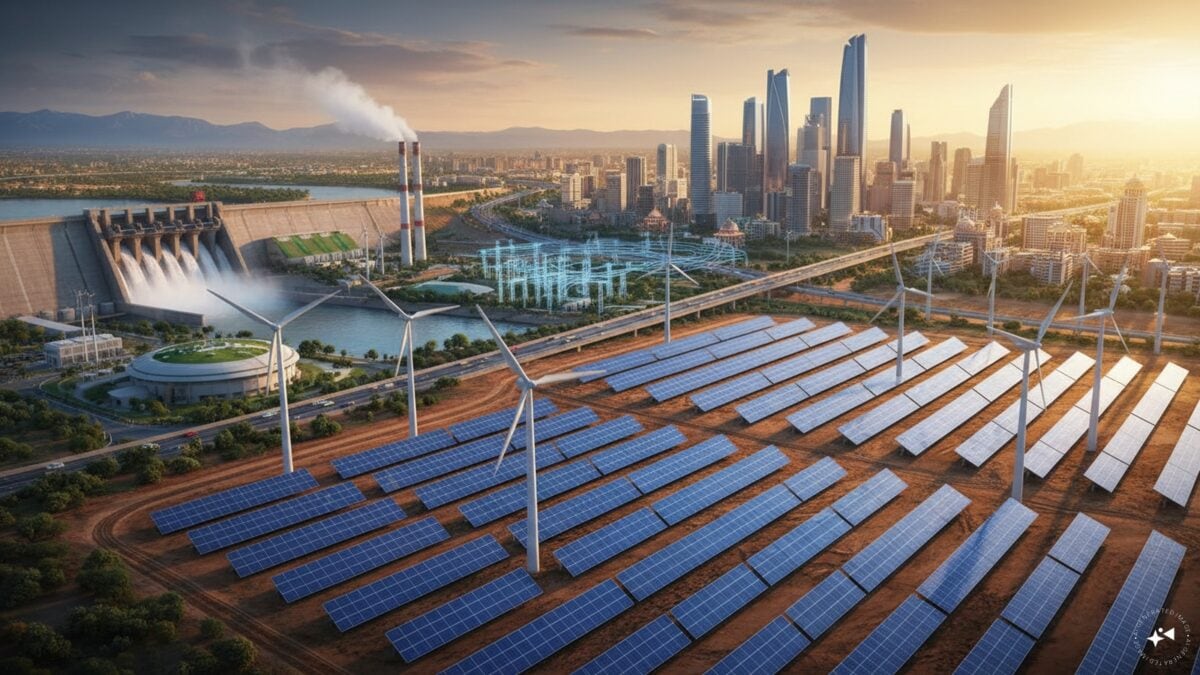
India has started making a huge amount of electricity from clean sources like the sun, wind and water.
The country announced that it now has more than 300 GW of clean energy capacity.
That is more than half of the 500 GW goal it wants to reach by the year 2030.
Solar power is the biggest part, and it has grown a lot since 2014.
Wind, hydro, biomass and nuclear power make up the rest.
India also made new promises to fight climate change by 2035.
It says at least 60 percent of its electricity should come from clean sources by then.
It also promised to make less pollution for every product it produces.
One tricky part is storing extra clean energy for when the sun is not shining or the wind is not blowing.
Batteries and pumping water uphill are ways to save that energy for later.

India's non-fossil fuel installed electricity capacity crossed 300 GW (300.50 GW) as of July 31, 2026, surpassing 60% of the 500 GW target set for 2030.
The Ministry of New and Renewable Energy announced the milestone on August 9.
Solar power is the largest component at 164.59 GW, up from just 2.8 GW in 2014.
Wind capacity reached 58.14 GW, hydropower 57.24 GW, bio-power 11.75 GW and nuclear power 8.78 GW.
India's revised 2035 NDCs pledge at least 60% non-fossil electricity capacity, a 47% cut in emissions intensity versus 2005 levels, and a carbon sink of 3.5-4 billion tonnes of CO2-equivalent.
- Who
- India's Ministry of New and Renewable Energy
- What
- India crossed 300 GW of non-fossil fuel electricity generation capacity, over 60% of its 500 GW target for 2030.
- Where
- India
- When
- As of July 31, 2026, announced on August 9; revised 2035 climate targets were revealed on March 25, 2026.
- Why
- To meet climate commitments under the 2015 Paris Agreement and advance the country's clean energy transition.
Key facts
- Total non-fossil capacity
- 300.50 GW (as of July 31, 2026)
- 2030 capacity target
- 500 GW
- Solar capacity
- 164.59 GW (up from 2.8 GW in 2014)
- Wind capacity
- 58.14 GW (up from 21 GW in 2014)
- Hydropower capacity
- 57.24 GW
- Bio-power capacity
- 11.75 GW
- Nuclear capacity
- 8.78 GW
- 2035 NDC targets
- At least 60% non-fossil capacity; 47% emissions intensity reduction vs 2005; 3.5-4 billion tonnes CO2-equivalent carbon sink
Sources
Related news

India crosses 300 GW clean energy, 60% of 2030 target
India's non-fossil fuel power capacity crosses 300 GW

India's Power Capacity Reaches 552 GW, Non-Fossil Share 54%
India crosses 300 GW non-fossil capacity, adds 30.58 GW renewables
India’s Non-Fossil Capacity Crosses 300 GW as Centre Pushes Transition
Akshay Urja Day Highlights Seven Renewable Energy Sources Powering India

Karnataka Accelerates Rooftop Solar Projects for Government Buildings
Economy Quiz Covers Solar Projects, Forex Deposits And PPPs
Rajasthan Targets 125 GW Renewable Capacity by 2030
PM Surya Ghar May Tie Support to Solar Performance
