

1 hr ago
IIT Guwahati Develops Reactor to Remove Arsenic and Fluoride

Some water can look clean but still contain harmful chemicals such as arsenic and fluoride.
These chemicals can cause health problems when people consume them for a long time.
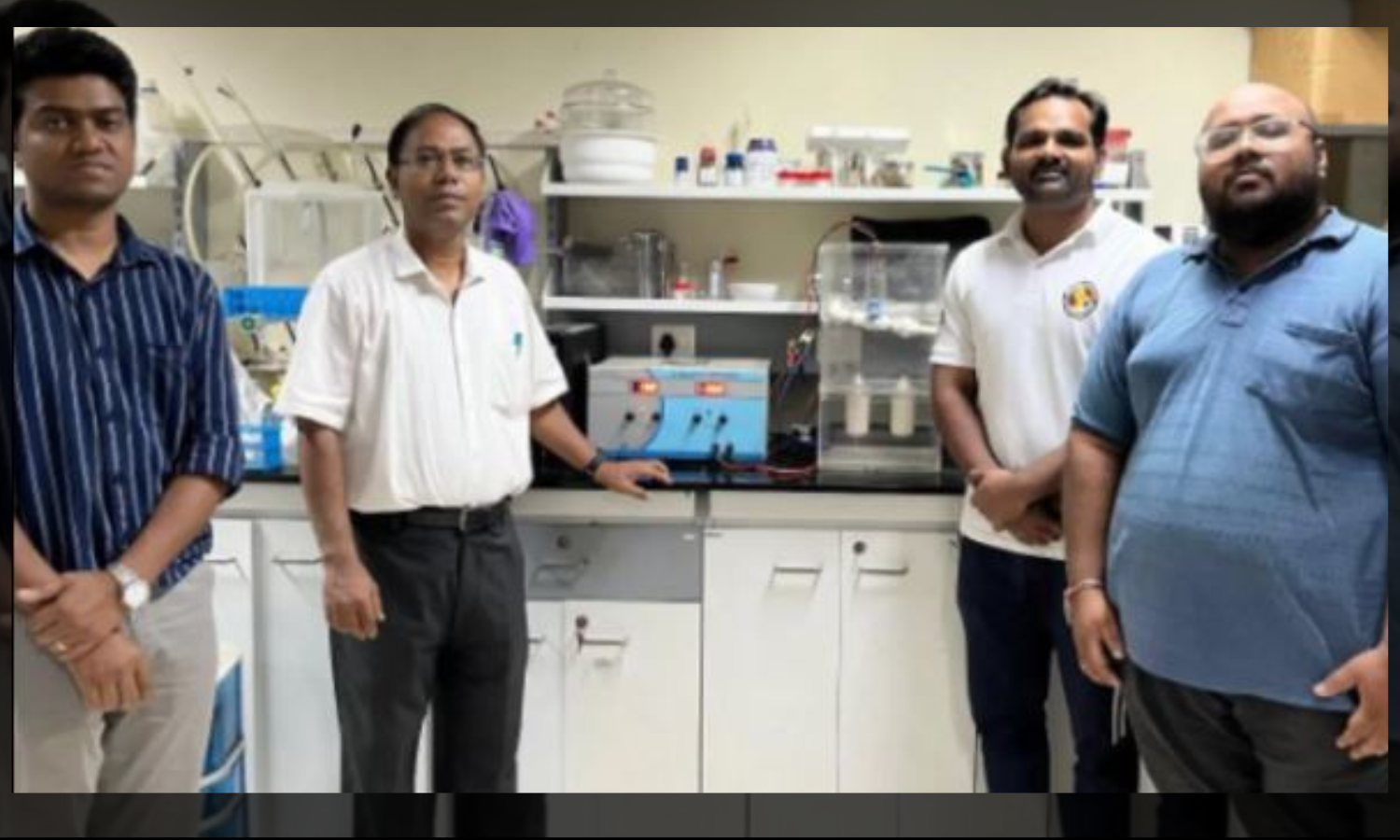
Researchers at IIT Guwahati created a machine that can remove both pollutants together.
The machine uses electricity and a rotating aluminium electrode.
The rotating electrode helps mix the water and keeps the treatment surface working properly.
Tiny aluminium particles form and catch the arsenic and fluoride.
Tests showed that the machine removed large amounts of both pollutants within minutes.
The researchers also tested it with real groundwater from Assam.
They hope to build a larger version for communities and rural water systems.

IIT Guwahati researchers developed a rotating-anode electrocoagulation reactor for treating water containing arsenate and fluoride.
The reactor removed up to 98.2% of arsenate and 91.8% of fluoride within minutes during testing.
Rotating the aluminium electrode improves mixing, renews its surface and reduces electrode passivation.
Initial estimated operating costs ranged from Rs 18 to Rs 58 per 1,000 litres, depending on contaminant concentrations.
The team tested the system with naturally occurring ions and real groundwater samples from Assam.
- Who
- Researchers from the Department of Chemical Engineering at IIT Guwahati, including Prof Mihir Kumar Purkait and research scholar Mukesh Bharti.
- What
- They developed and tested a rotating-anode electrocoagulation reactor to remove arsenate and fluoride from water.
- Where
- The technology was tested in laboratory conditions and with real groundwater samples collected from Assam, India.
- When
- The article does not specify when the research was conducted; the findings have been published in the peer-reviewed Chemical Engineering Journal.
- Why
- The researchers aimed to treat groundwater containing both arsenic and fluoride more effectively and affordably.
Key facts
- Technology
- Rotating-anode electrocoagulation reactor using an aluminium electrode.
- Arsenate removal
- Up to 98.2% in testing.
- Fluoride removal
- Up to 91.8% in testing.
- Treatment time
- Removal occurred within minutes.
- Estimated operating cost
- Rs 18 to Rs 58 per 1,000 litres of treated water.
- Testing conditions
- Testing included naturally occurring ions and real groundwater samples from Assam.
- Next phase
- The team plans to develop a pilot-scale continuous-flow reactor with sensors and automated controls.
Quotes
Prof Mihir Kumar Purkait
Professor in the Department of Chemical Engineering at IIT Guwahati
“Our technology was also tested under realistic groundwater chemistry, including the presence of naturally occurring ions such as calcium, magnesium, bicarbonate, sulphate, and phosphate, as well as real groundwater samples collected from Assam.”
 thebetterindia.com
“Treating them together has remained particularly challenging because they behave differently during conventional purification processes and compete for removal sites.”
thebetterindia.com
Sources
Related news
IIT Guwahati Develops Low-Cost Reactor for Arsenic, Fluoride Removal

IIT Guwahati 'E-Eye' Detects Arsenic, Lead, E. Coli in Water

MIT-Born Tap Filter Challenges India’s Reliance on RO Purifiers
IIT-Guwahati researchers develop low-cost catalyst for cleaner hydrogen production

IIT-Guwahati Unveils Low-Cost Catalyst For Green Hydrogen Production

HYDRAA, BITS Goa to Install Low-Cost Sewage Plant at Lake

Assam Proposes Scholarships for 100 IIT Guwahati Students

Humanoid Robots Near Borders Raise Questions About Human Control

India’s Smart Cancer Drug RK-251 Targets Tumor Cells
