1 week ago
IIT Guwahati Develops Low-Cost Reactor for Arsenic, Fluoride Removal
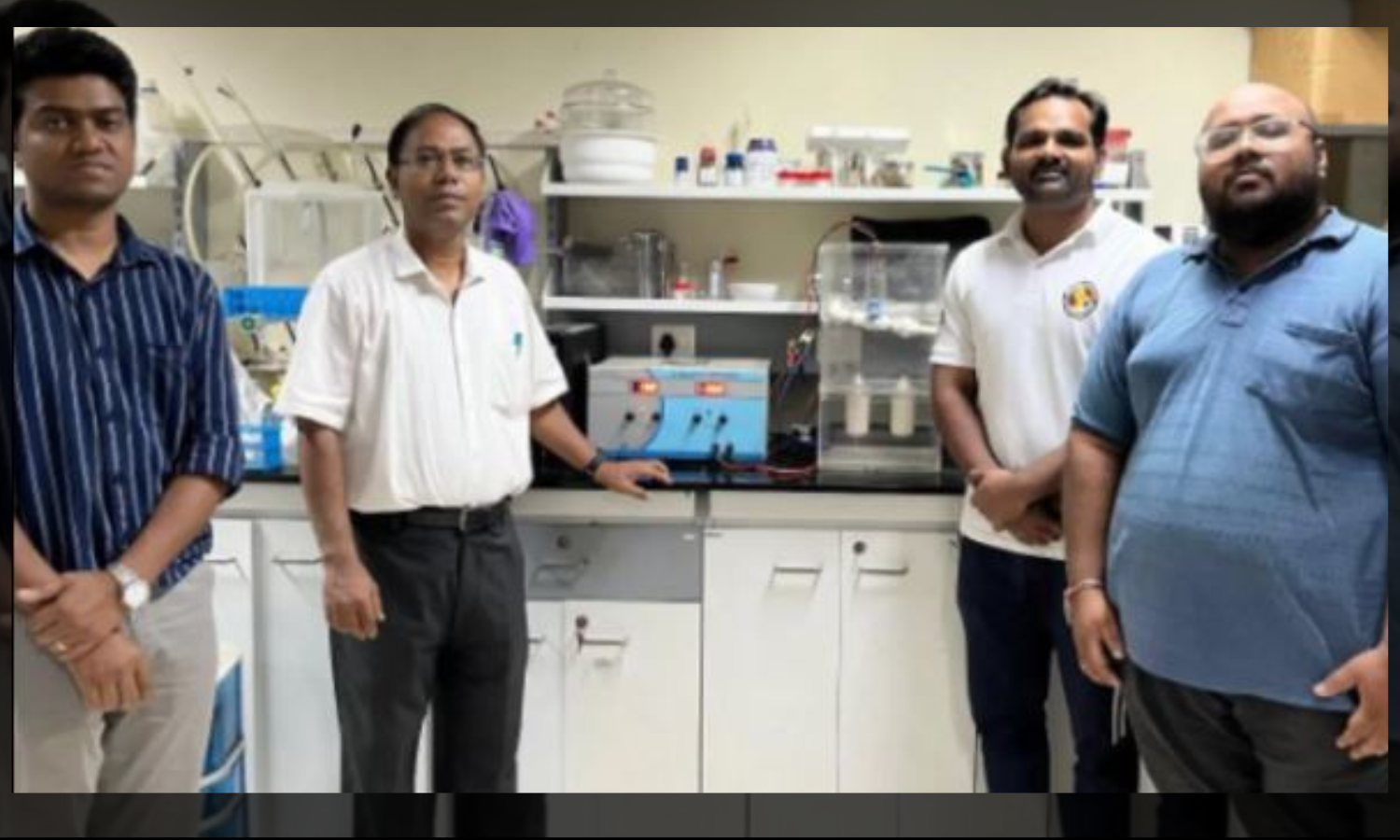
Scientists at IIT Guwahati built a machine that cleans water containing arsenic and fluoride.
These substances can make groundwater unsafe to drink when they are present in high amounts.
The machine uses electricity and a spinning aluminium electrode.
The spinning motion helps the machine mix the water and trap the unwanted substances.
In tests, it removed up to 98.2% of arsenate and 91.8% of fluoride.
The researchers estimated that treating 1,000 litres could cost between Rs 18 and Rs 58.
They also tested the system with real groundwater from Assam.
The team hopes to build a larger version that communities could use in the future.

IIT Guwahati developed a rotating-anode electrocoagulation reactor to remove arsenic and fluoride simultaneously.
Experiments achieved up to 98.2% arsenate removal and 91.8% fluoride removal within minutes.
Researchers estimated operating costs of Rs 18–Rs 58 per 1,000 litres, depending on contaminant concentrations.
Tests included naturally occurring ions and real groundwater samples collected from Assam.
The team plans to develop a pilot-scale continuous-flow version for potential field deployment.
- Who
- Researchers led by Prof Mihir Kumar Purkait and research scholar Mukesh Bharti at IIT Guwahati.
- What
- Developed a rotating-anode electrocoagulation reactor that removes arsenic and fluoride from groundwater simultaneously.
- Where
- IIT Guwahati, with real groundwater samples collected from Assam.
- When
- During the researchers’ experiments; the articles do not specify a date.
- Why
- To provide a potentially low-cost treatment option for groundwater contaminated with arsenic and fluoride.
Key facts
- Technology
- Rotating-anode electrocoagulation reactor
- Contaminants targeted
- Arsenic and fluoride
- Arsenate removal
- Up to 98.2%
- Fluoride removal
- Up to 91.8%
- Estimated operating cost
- Rs 18–Rs 58 per 1,000 litres
- Testing
- Included realistic groundwater conditions and samples from Assam
- Next step
- Development of a pilot-scale continuous-flow reactor
Sources
Related news

IIT Guwahati 'E-Eye' Detects Arsenic, Lead, E. Coli in Water
MIT-Born Tap Filter Challenges India’s Reliance on RO Purifiers

HYDRAA, BITS Goa to Install Low-Cost Sewage Plant at Lake
IIT-Guwahati researchers develop low-cost catalyst for cleaner hydrogen production

IIT-Guwahati Unveils Low-Cost Catalyst For Green Hydrogen Production
Seven Water Purifiers Under Rs 15,000 Compared For Indian Homes

Assam Proposes Scholarships for 100 IIT Guwahati Students

Humanoid Robots Near Borders Raise Questions About Human Control

India’s Smart Cancer Drug RK-251 Targets Tumor Cells

Indian Researchers Develop AI and Targeted Cancer Treatment Tools