3 weeks ago
IIT Guwahati 'E-Eye' Detects Arsenic, Lead, E. Coli in Water

Scientists in India made a clever little machine called E-Eye.
It looks at water like a magic electronic eye.
The machine checks if water has harmful things like arsenic, lead, or germs called E. coli.
It does this by mixing the water with a chemical that changes color.
If the color is strong, that means there is more of the bad stuff.
The machine costs about ₹3,500, something like a fancy gadget.
Testing one sample of water costs only about ₹2.
It works just as well as big, expensive laboratory machines.
The scientists tested it on more than 2,700 water samples.
Now they want to power it with solar energy and share it with people across India, so more people can have safe drinking water.

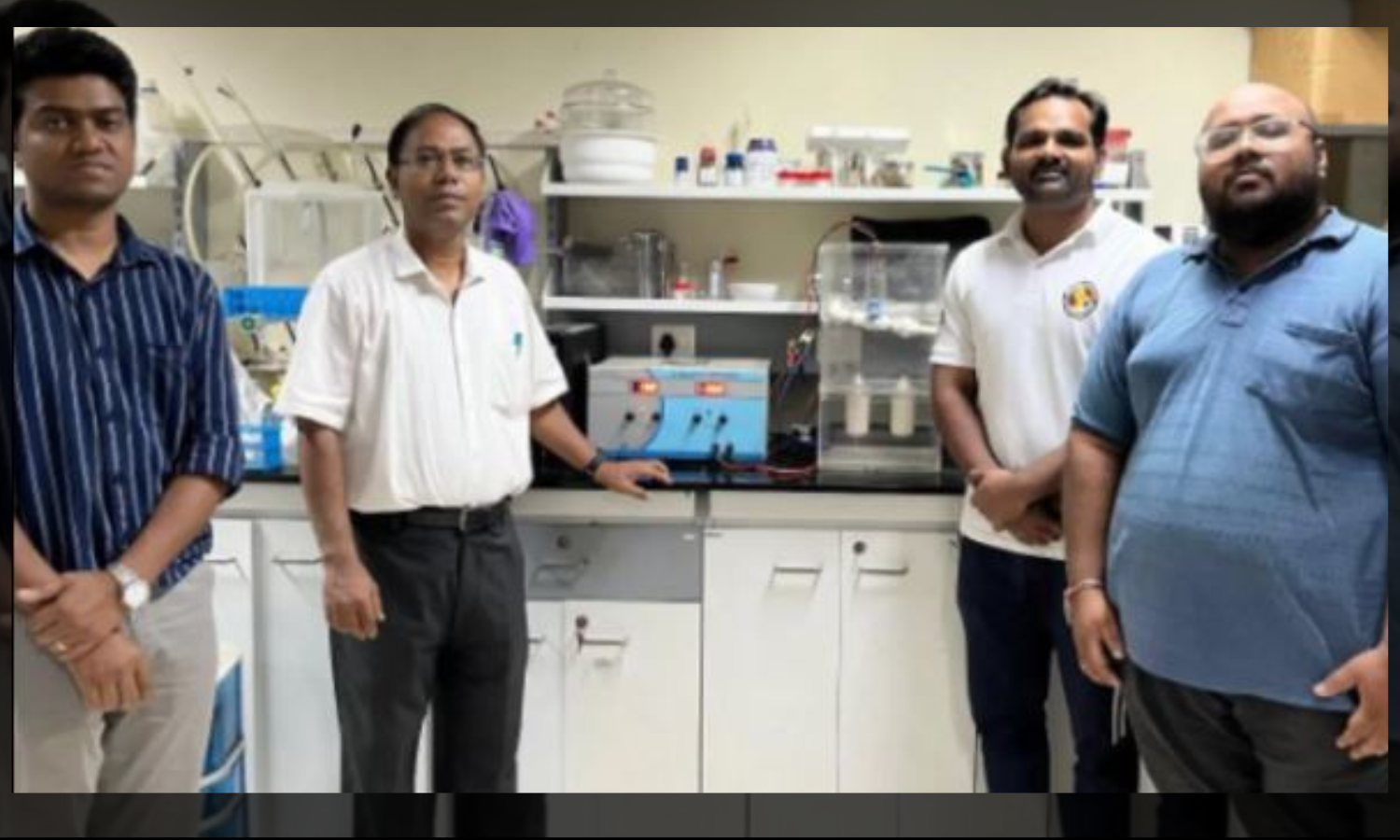
Researchers at IIT Guwahati developed 'E-Eye,' a portable optical sensing device that detects arsenic, lead, iron, chromium, fluoride and E. coli bacteria in water.
The device costs approximately ₹3,500 to build, with a per-sample testing cost of around ₹2.
Laboratory tests showed E-Eye results were comparable to standard UV-Visible and Atomic Absorption spectrophotometers (AAS), and the team tested more than 2,700 samples.
The research was published in the IEEE Sensors Journal and supported by a grant from the Ministry of Electronics and Information Technology (MeitY).
The team established a startup, ENVIONIX Labs Pvt Ltd, to commercialise the technology and plans to add solar panels and cloud connectivity.
- Who
- Researchers at the Indian Institute of Technology Guwahati, led by Prof Tapas K Mandal and Prof Harshal B Nemade, with scholars from KIIT Bhubaneswar and Ramakrishna Mission Residential College, Kolkata.
- What
- Developed E-Eye, a portable point-of-care optical sensing device that detects toxicants such as arsenic, lead, iron, chromium, fluoride and E. coli at a per-test cost of around ₹2.
- Where
- At the Indian Institute of Technology Guwahati in Guwahati, India.
- When
- The findings were recently published in the IEEE Sensors Journal; the articles do not state a specific date.
- Why
- To address the challenge of ensuring safe drinking water quality, aligned with the Government of India's Jal Jeevan Mission.
Key facts
- Device Name
- E-Eye
- Developed By
- IIT Guwahati research team
- Device Cost
- Approximately ₹3,500
- Per-Test Cost
- Around ₹2
- Toxicants Detected
- Arsenic, lead, iron, chromium, fluoride and E. coli
- Samples Tested
- More than 2,700
- Published In
- IEEE Sensors Journal
- Funding
- Ministry of Electronics and Information Technology (MeitY)
Quotes
Prof Harshal B Nemade
Professor of Electronics and Electrical Engineering at IIT Guwahati
“"The device operates on the Beer‑Lambert law and combines optical sensing with digital electronics to generate accurate quantitative measurements."”
 freepressjournal.in
“"E‑Eye has prominent application potential across government departments, industries, and private enterprises."”
freepressjournal.in
Sources
Related news
IIT Guwahati Develops Low-Cost Reactor for Arsenic, Fluoride Removal

MIT-Born Tap Filter Challenges India’s Reliance on RO Purifiers

MAHE and GHCL Partner to Develop AI-Enabled Fuel Quality Monitoring
Seven Water Purifiers Under Rs 15,000 Compared For Indian Homes
BITS Pilani Researchers Develop Portable Sensor for Progesterone Testing

IIT Kanpur Study Finds Rural Tap Water Improves Lives

Assam Proposes Scholarships for 100 IIT Guwahati Students

Humanoid Robots Near Borders Raise Questions About Human Control

India’s Smart Cancer Drug RK-251 Targets Tumor Cells

Indian Researchers Develop AI and Targeted Cancer Treatment Tools