1 week ago
MIT-Born Tap Filter Challenges India’s Reliance on RO Purifiers
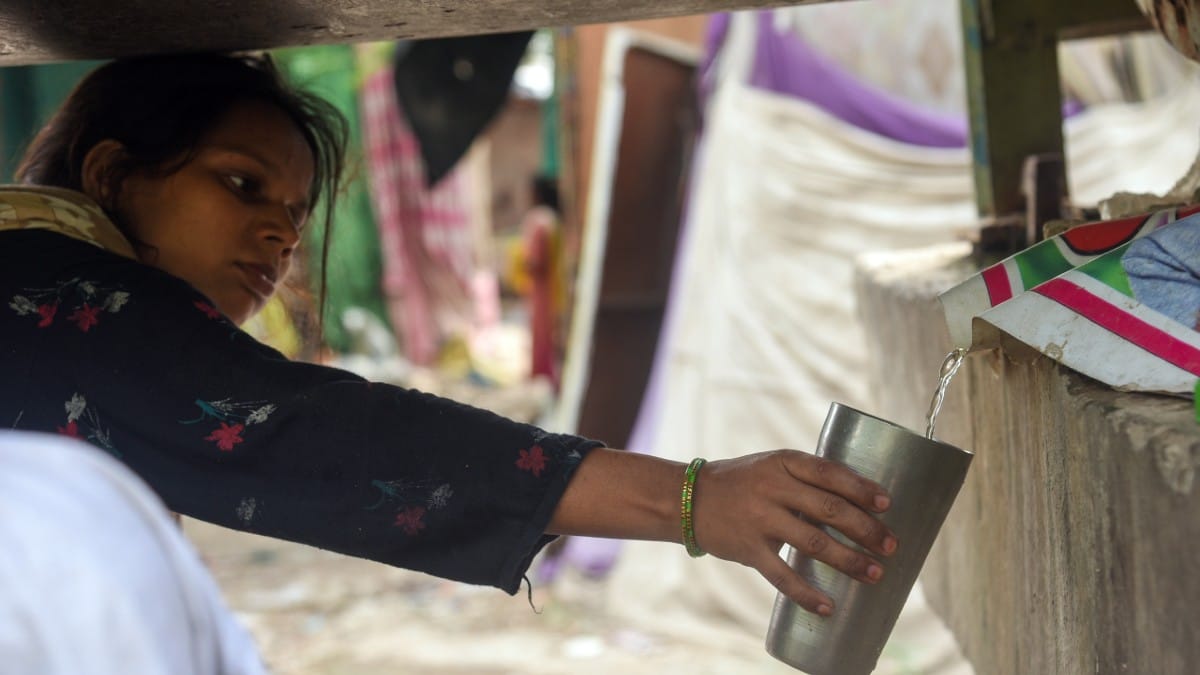
A team connected to MIT has made a small filter that attaches to a water tap.
It is called Jal Kavach and costs Rs 899 in India.
The team says it can remove 99.9 per cent of bacteria from water.
It does not need electricity and does not throw away extra water.
The filter uses several materials, including activated charcoal, to clean the water.
It also removes things such as sand, rust, chlorine, bad smells, and some organic compounds.
The filter works for different lengths of time depending on how dirty the water is.
The team hopes people will use it instead of RO purifiers, but many consumers still trust RO more.

DetoXyFi’s Jal Kavach tap filter sells in India for Rs 899.
The filter reportedly removes 99.9 per cent of bacteria without electricity or water waste.
Its composite membrane uses activated charcoal to reduce chlorine, odors, and organic compounds.
The filter can process about 7,500 litres, lasting four months to over a year depending on water quality.
DetoXyFi reported revenue of Rs 5 lakh in 2025 and Rs 20 lakh the following year.
- Who
- DetoXyFi, led by MIT professor Rohit Karnik and including co-founder Dhananjay Goel and researcher Vishal.
- What
- The startup is developing and selling Jal Kavach, a tap-mounted water filter.
- Where
- The product is being marketed in India, after earlier versions were tested in Uganda, Madagascar, and Kenya.
- When
- The product went on sale in June 2025; the article also refers to an EAW Global Aqua Expo held in early August 2026.
- Why
- The team aims to provide affordable drinking-water filtration while avoiding the electricity use and water waste associated with RO purifiers.
Jal Kavach’s advantages
RO purifiers’ established appeal
Resource use
Jal Kavach’s advantages
DetoXyFi says Jal Kavach requires no electricity and does not waste water.
RO purifiers’ established appeal
The team says RO purifiers consume substantial electricity and can waste three litres of water for every litre produced.
Consumer trust
Jal Kavach’s advantages
DetoXyFi argues that its filter can offer an affordable alternative and says reception has improved with advertising.
RO purifiers’ established appeal
Many Indian consumers remain accustomed to RO systems and initially did not trust another filtration method.
Product consistency
Jal Kavach’s advantages
The team says the filter can process about 7,500 litres and signals replacement through reduced water flow as its pores clog.
RO purifiers’ established appeal
The company acknowledges that filter life is not universal and varies from four or five months to more than a year depending on how dirty the water is.
Key facts
- Product
- Jal Kavach tap filter
- Price
- Rs 899 in the Indian market
- Reported bacterial removal
- 99.9 per cent
- Water capacity
- About 7,500 litres per filter
- Expected lifespan
- About four or five months to more than a year, depending on water quality
- Sales channels
- Amazon, Blinkit, Flipkart, JioMart, and other platforms
- Reported revenue
- Rs 5 lakh in 2025 and Rs 20 lakh the following year
Quotes
Vishal
Co‑founder and young engineer of DetoXyFi
“In India, we face a major problem. People are not quickly adaptable. They are so used to the RO filter that they don’t trust any other method as a filtration device. So initially, people did not trust our product, but slowly as we put out small ads we have seen better reception.”
 theprint.in
“How long the filter lasts, depends on how dirty your water is. We can’t say it has a universal one-year life span. But it can filter about 7,500 litres. This can mean that the filter lasts anywhere from four to five months to even more than a year.”
theprint.in
Sources
Related news
Seven Water Purifiers Under Rs 15,000 Compared For Indian Homes
Geysers and Water Purifiers Under Rs 8,000 With 65% Discount

IIT Guwahati 'E-Eye' Detects Arsenic, Lead, E. Coli in Water
IIT Guwahati Develops Low-Cost Reactor for Arsenic, Fluoride Removal

IIT Kanpur Study Finds Rural Tap Water Improves Lives

Tributes Follow Deaths of Kiran and Shilpa Nathwani

Kenyan Editor Found Safe After Armed Abduction, Employer Says

Indian Duo Completes WRC3 Podium Hat-Trick In Paraguay

Kenya Airport Workers' Strike Leaves Hundreds of Passengers Stranded
Ethiopian Runners Win Hyderabad Marathon; Gopi, Nirmaben Lead Indians