1 week ago
ICMR Says Seasonal H1N1 Flu Rise Needs No Panic
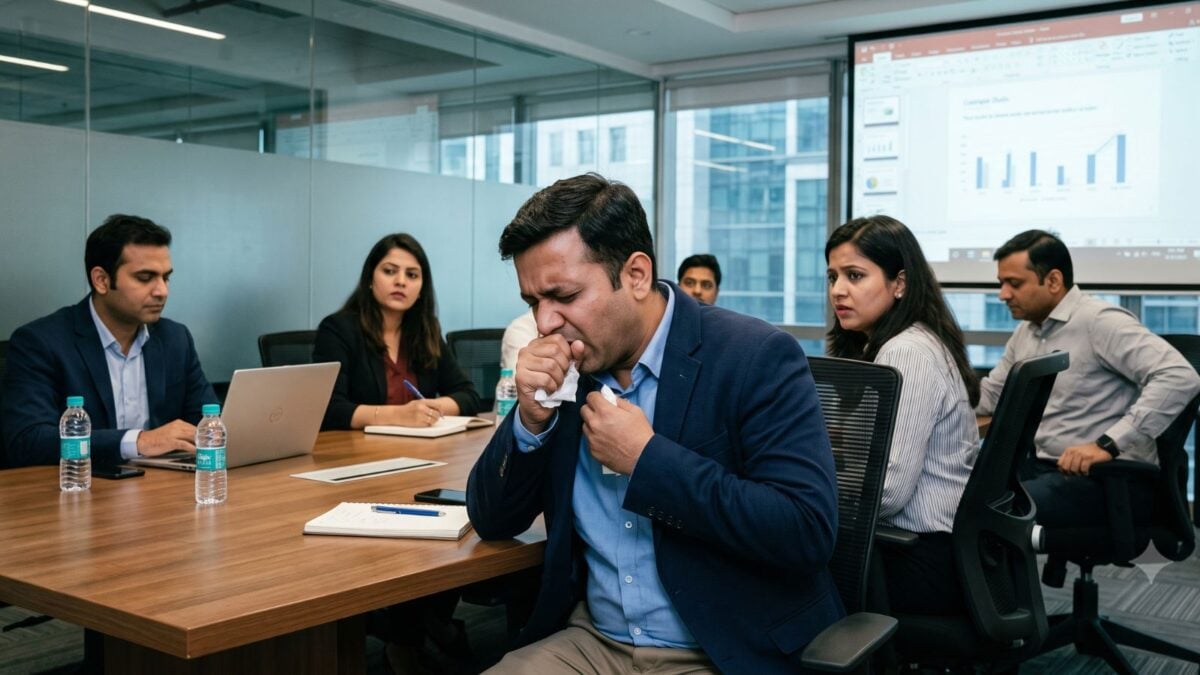
Seasonal flu cases are increasing in India, especially in Delhi.
Doctors say this happens at certain times of the year.
The current virus is a familiar seasonal H1N1 virus, not a new strain.
Most people will have mild illness and recover on their own.
The rise in cases is expected to stop growing or fall in the next few weeks.
Most people do not need a flu test, antibiotics or antiviral medicine.
They should rest, drink fluids and take paracetamol for fever if needed.
Older people, pregnant women and people with weakened immune systems need to be more careful.
They should ask their doctor whether a flu vaccine would help.

ICMR chief Rajiv Bahl said seasonal flu cases are rising, but mortality remains low.
The increase is part of India’s usual seasonal influenza pattern and may plateau or decline within weeks.
Influenza A (H1N1) pdm09 accounts for about 97–98% of detected Influenza A infections.
Routine testing, antiviral drugs and antibiotics are not needed for most people with mild flu symptoms.
Elderly, immunocompromised and pregnant people should take extra precautions and consult doctors about vaccination.
- Who
- The Indian Council of Medical Research, led by Director-General Rajiv Bahl, issued the guidance; high-risk people were specifically advised to take extra precautions.
- What
- India is experiencing a rise in seasonal influenza, dominated by the familiar Influenza A (H1N1) pdm09 virus.
- Where
- Across India, with particularly increased reporting in the national capital.
- When
- The increase is occurring during the usual January-to-March seasonal flu period and is expected to plateau or decline over the next few weeks.
- Why
- Seasonal influenza commonly has two annual peaks in India, and current surveillance indicates a seasonal rise rather than a new viral strain or increased mortality.
Broader Vaccination Guidance
India-Specific Guidance
Who should receive flu vaccination?
Broader Vaccination Guidance
The World Health Organization recommends annual vaccination for people at higher risk of severe disease, including healthcare workers, people over 65, those with relevant comorbidities, immunocompromised individuals and pregnant women.
India-Specific Guidance
The vaccine is not recommended as a universal immunisation programme in India, but high-risk individuals may choose it after consulting their doctors.
Need for routine testing
Broader Vaccination Guidance
Testing can help identify circulating viruses through surveillance and track changes in respiratory infections.
India-Specific Guidance
ICMR says individual testing is not necessary for most people because seasonal flu is usually mild, endemic and self-limiting; its surveillance system is sufficient for tracking trends.
Key facts
- Dominant virus
- Influenza A (H1N1) pdm09
- Share of detected Influenza A
- H1N1 accounts for about 97–98%; H3N2 accounts for about 2–3%.
- Surveillance network
- ICMR monitors respiratory viruses through 73 laboratories or tertiary-care hospitals.
- Weekly sampling
- The network tests around 1,500 respiratory-infection samples each week.
- Testing advice
- Routine flu testing is not needed for most people because seasonal flu is endemic and usually self-limiting.
- Treatment advice
- Most patients may use paracetamol for fever; Tamiflu and azithromycin are generally unnecessary.
- Higher-risk groups
- Older people, immunocompromised individuals and pregnant women should take additional precautions.
Quotes
Dr Rajiv Bahl
Director-general of the Indian Council of Medical Research
“However, the vaccine is readily available and those who are at a high risk may choose to get it after consulting their doctor. They should prefer to get the vaccine recommended for the northern hemisphere as it is likely to be closer to the strains in circulation and therefore offer better protection.”
 indianexpress.com
“The infection is self-limiting. Only the people who are at a high risk of severe disease — such as those over the age of 65 years and those who have a compromised immune system — may get the shot if they are keen, after consulting their doctor.”
indianexpress.com
Sources
Related news

No new H1N1 strain identified as seasonal surge continues

ICMR Says Seasonal H1N1 Surge Needs No Masks
India's H1N1 Cases Rise, ICMR Urges Calm and Precautions
Delhi H1N1 Cases Rise; ICMR Says No New Strain
ICMR Says No New H1N1 Strain, Cautions High-Risk Groups
Experts Say Rising H1N1 Cases Are Seasonal, Not New
Flu Precautions: When Masks and N95s May Help
Sixty-Five Doctors Apply for AIIMS Delhi Director’s Post

India's Seasonal H1N1 Surge Prompts Advisories, Doctors Urge Calm