1 hr ago
Quick Commerce’s Inventory Shift Resets India’s FMCG Retail Playbook
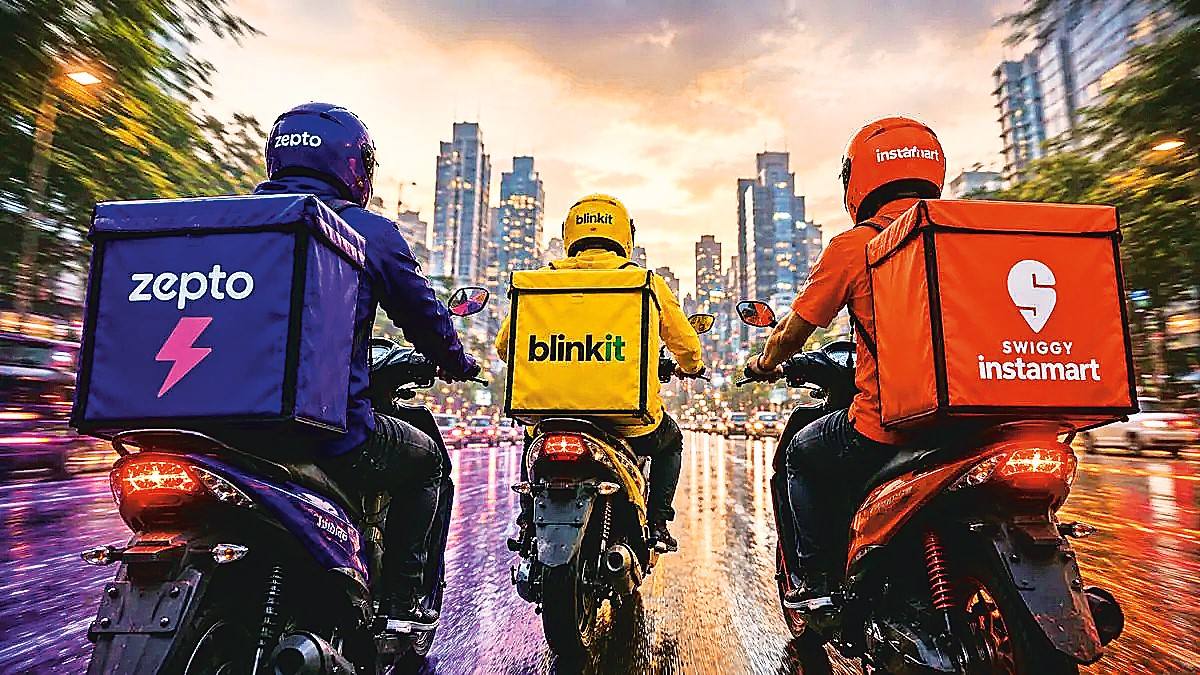
Swiggy wants Instamart to own more of the products it sells instead of acting mainly as a marketplace.
This means Instamart would record the full price of goods sold, so its reported revenue could become much larger.
It would not necessarily mean that customers are placing more orders.
Companies that make everyday products say quick commerce is growing quickly, especially in large cities.
They also say it can be cheaper and more profitable than traditional online marketplaces.
Owning inventory gives platforms more control over what products are available and which products are promoted.
It may also help brands test and launch new products.
However, platforms can lose money when goods expire, are damaged, stolen or otherwise cannot be sold.
Investors may therefore pay more attention to inventory and store economics, not just sales growth.

Swiggy plans to move Instamart from a marketplace to an inventory-led model after shareholders approved a 49.5% foreign-ownership cap.
The transition could increase Instamart’s reported revenue four to five times without additional orders by recording the full value of goods sold.
FMCG executives say quick commerce is growing faster and can offer higher margins than conventional e-commerce marketplaces.
Inventory ownership gives platforms greater control over assortment, pricing, availability, sourcing and product launches.
The model also brings retail risks, including inventory losses, higher dark-store investment and greater investor focus on stock turnover and returns on capital.
- Who
- Swiggy and its Instamart business, along with rival Blinkit and FMCG companies.
- What
- Swiggy is shifting Instamart toward an inventory-led quick-commerce model, changing its revenue reporting and retail economics.
- Where
- India, particularly the top eight to ten metropolitan cities highlighted as major quick-commerce markets.
- When
- Shareholders approved the ownership measure on August 18; Swiggy expects the transition to take two to four quarters, with analysts expecting it to begin in the third quarter.
- Why
- The change is intended to give Instamart greater control over inventory and supply chains, improve efficiency and margins, and align it more closely with conventional retail.
Efficiency and growth
Retail risks and scrutiny
Business model
Efficiency and growth
Inventory ownership can make quick commerce more cost-efficient, improve control over products and supply chains, and potentially increase margins.
Retail risks and scrutiny
Owning inventory exposes platforms to expiry, shrinkage, damage, transit losses and pilferage that marketplaces largely avoid.
Brand relationships
Efficiency and growth
FMCG companies can use quick commerce to reach consumers, test products and promote new launches with targeted marketing.
Retail risks and scrutiny
Platforms will have greater influence over what brands are stocked, promoted and surfaced, making them more like organised retail partners.
Investor evaluation
Efficiency and growth
Higher order density and lower working capital can improve dark-store economics as the model scales.
Retail risks and scrutiny
Investors may need to scrutinize return on capital, inventory turns, stock losses, same-store sales and private-label sales alongside contribution margin and order growth.
Key facts
- Ownership approval
- Swiggy shareholders approved a 49.5% cap on aggregate foreign ownership.
- Transition timeline
- Swiggy says moving Instamart to inventory ownership could take two to four quarters.
- Instamart June-quarter figures
- Quick-commerce revenue was ₹1,232 crore and net order value was ₹5,817 crore in the June quarter of FY27.
- Revenue reporting effect
- Analysts estimate Instamart’s reported revenue could rise four to five times without additional orders.
- Margin potential
- Swiggy has said inventory ownership could add about 80 basis points to Instamart’s contribution margin.
- Blinkit inventory share
- About 80% of Blinkit’s order value came from owned inventory in September 2025, rising to 90% by December.
- Inventory losses
- Eternal reported quick-commerce inventory losses of 1.8% of net order value in July.
- Dark-store investment
- Eternal raised steady-state capex per dark store, including warehousing, to ₹2.5 crore from ₹1 crore.
Quotes

Mohit Malhotra
Global CEO of Dabur
“Delivery and servicing costs tend to be higher with e-commerce marketplaces versus quick commerce. The move towards owning inventory will make q-commerce even more cost-efficient, prompting a bigger shift from e-commerce to quick commerce as dark store networks expand and assortments grow.”
 financialexpress.com
“Convenience is driving shopping choices, especially in the top 8-10 metro cities. Wider and relevant assortment along with convenience are the key priorities for consumers today. Quick commerce taps into this felt need.”
financialexpress.com
Sources
Related news
Swiggy’s IOCC Hurdle Clears Path for Instamart Turnaround

Quick Commerce Replays Modern Trade Revolution Faster in India

QCaaS Could Drive Next Phase of India's Quick Commerce Growth

Quick commerce private-label push gathers pace as platforms chase margins
Why Eternal Could Outperform in India’s Quick Commerce Battle

Flipkart Minutes Overtakes Instamart As Quick-Commerce Race Intensifies
Karnataka Flags Food Safety Lapses Across 64 Bengaluru PGs

Agentic Commerce Needs Human Control As AI Agents Shop
Swiggy’s Crew Concierge Platform Expands Into Travel Services
Salt Lake’s First Eateries Built A Lasting Food Culture