

2 weeks ago
Swiggy’s IOCC Hurdle Clears Path for Instamart Turnaround
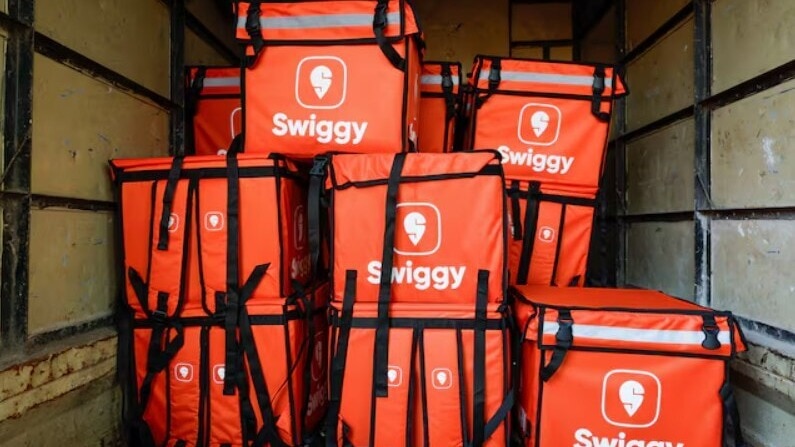
Swiggy is changing how its Instamart grocery business can buy and manage products.
Shareholders approved ownership and governance changes that may help Swiggy qualify as an Indian Owned and Controlled Company.
If approved under the applicable rules, Instamart could buy and hold more products itself instead of relying mainly on outside sellers.
This could help Swiggy negotiate better prices and keep more money from each order.
Equirus Securities estimates the change could add ₹4–5 per order.
However, owning products also means Swiggy must pay for stock and manage products that may not sell quickly.
Instamart has already improved its profitability and reached contribution break-even in May.
Its reported revenue could also rise because an inventory-led model records sales differently, not necessarily because the underlying business suddenly became larger.
The bigger test is whether Instamart can attract frequent orders, fill larger baskets, and use its dark stores efficiently while expanding.

Swiggy shareholders approved a 49.5% cap on aggregate foreign ownership and governance changes on August 18.
The changes could help Swiggy qualify as an Indian Owned and Controlled Company, allowing Instamart to directly own inventory.
Equirus Securities estimates inventory ownership could add ₹4–5 per order, or roughly 80 basis points of contribution margin.
Instamart’s contribution loss narrowed to 0.3% of net order value in Q1 FY27 after reaching contribution break-even in May.
Growth remains a challenge, with June-quarter NOV up 3% sequentially and about 75 new stores planned for the second quarter.
- Who
- Swiggy and its Instamart quick-commerce business, with analysis from Equirus Securities and Datum Intelligence's Satish Meena.
- What
- Swiggy shareholders approved ownership and governance changes that could enable Instamart to adopt a more inventory-led operating model.
- Where
- The changes concern Swiggy's operations in India and Instamart's dark-store network.
- When
- The shareholder approval took place on August 18, 2026; the articles were published on August 19, 2026.
- Why
- The proposed model could improve procurement, assortment, order-level margins, and operational control, while creating additional working-capital and inventory-management responsibilities.
Greater control and margin potential
Execution costs and underlying risks
Procurement and inventory
Greater control and margin potential
Instamart could source more directly from brands and manufacturers, negotiate better terms, manage procurement more efficiently, and retain more margin per order.
Execution costs and underlying risks
Owning inventory would increase working-capital needs and responsibility for inventory management, unsold products, and slow-moving stock.
Revenue and profitability
Greater control and margin potential
An inventory-led structure could add ₹4–5 per order and make a larger share of goods sold appear as reported revenue.
Execution costs and underlying risks
A revenue increase could largely reflect a change in accounting presentation, while Equirus says inventory ownership is an incremental lever rather than the main reason for recent profitability gains.
Scaling Instamart
Greater control and margin potential
IOCC status could provide another tool for improving unit economics, assortment, and brand relationships as Instamart expands its dark-store network.
Execution costs and underlying risks
Customer frequency, basket size, retention, dark-store utilisation, and growth remain unresolved challenges; expansion and customer acquisition could reduce recent margin gains.
Key facts
- Foreign ownership cap
- Shareholders approved a 49.5% cap on aggregate foreign ownership.
- Potential margin benefit
- Equirus Securities estimates an inventory-led model could add ₹4–5 per order, or about 80 basis points of contribution margin.
- Instamart profitability
- Contribution loss narrowed from 7.4% of net order value in Q4 FY25 to 0.3% in Q1 FY27.
- Break-even milestone
- Instamart reached contribution break-even in May.
- Adjusted revenue per order
- Adjusted revenue per order rose to ₹108 from ₹83 in Q4 FY25.
- FY26 revenue
- Instamart reported revenue of about ₹3,859 crore in FY26.
- Expansion and growth
- NOV increased 3% sequentially in the June quarter, while about 75 stores are expected to be added in the second quarter.
Quotes
EquiRUS Securities
EquiRUS Securities analyst
“An inventory‑led model, unlocked once Swiggy qualifies as an Indian Owned and Controlled Company, could add ₹4-5 per order on top, estimating the benefit at roughly 80 basis points of contribution margin.”
 thehindubusinessline.com
“The margins are somewhere around 4 to 10%. Any saving margin is something which is moving towards a profit”
 businesstoday.in
Sources

Related news
Swiggy Shares Jump 5% on ₹10,000 Crore FY31 Profit Target
Swiggy aims Rs 10,000 crore EBITDA over next five years
Quick commerce private-label push gathers pace as platforms chase margins
Why Eternal Could Outperform in India’s Quick Commerce Battle
Macquarie Keeps Eternal and Swiggy Underperform Amid Quick-Commerce Growth

Flipkart Minutes Overtakes Instamart As Quick-Commerce Race Intensifies

MSCI Removal Puts Swiggy Shares Under Fresh Selling Pressure

Cockroach Allegedly Spotted On Dessert Plate At Virar Restaurant
Internet Stocks Rally as MSCI Rejig Boosts IPO Activity

Adani Stocks Mixed After Heavy Sell-Off Amid MSCI Reshuffle

MSCI Rebalance Puts Indian Stocks Under Trading Spotlight
