3 weeks ago
Quick Commerce Replays Modern Trade Revolution Faster in India

Imagine long ago, people bought their groceries only from small neighborhood shops.
Then big supermarkets came along, but it took almost 20 years for them to become really important.
Now there are app-based delivery services that bring groceries to your door very quickly.
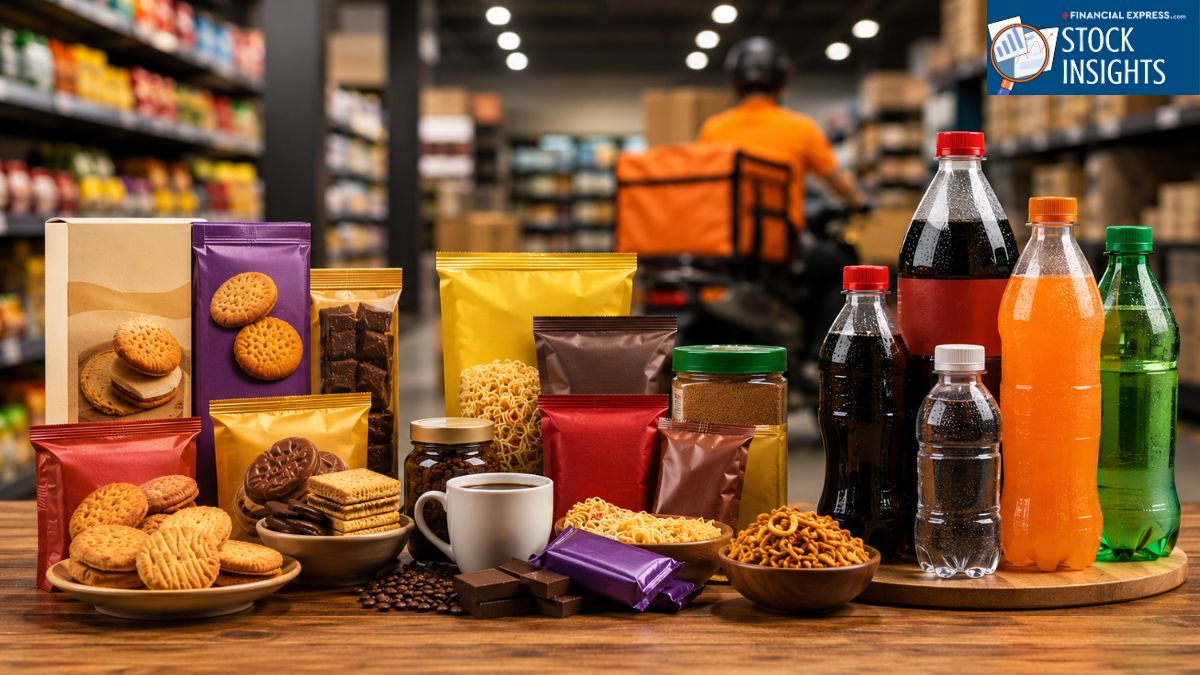
In only about three years, these fast delivery services have become very important for companies that make food and household products.
For some of those companies, most of their online sales now happen through these apps.
Experts think these apps could become even bigger than supermarkets ever were, and do it much faster.
This works well in India because many people live in crowded cities, pay with their phones, and buy groceries often.
Big companies are now paying close attention and selling more through these fast delivery apps.

Quick commerce already accounts for 6-7% of sales for large FMCG companies, and as much as 9% for some, just three years into meaningful scale-up.
For several FMCG firms, quick commerce constitutes 60-75% of their online sales.
Modern trade took nearly two decades to reach 10-12% of FMCG sales, while quick commerce could reach about 15% in roughly half that time.
Dabur, Nestlé India, and Britannia cited strong growth in quick commerce and emerging channels in Q1 FY27 commentary.
With about 14 million kirana stores and over 450,000 FMCG distributors, consolidation around four or five platforms could shift bargaining power between brands and retailers.
- Who
- Large Indian FMCG companies such as Dabur, Nestlé India, Britannia, HUL, and Tata Consumer, along with quick-commerce platforms.
- What
- Quick commerce is rapidly scaling as a distribution channel for FMCG products, potentially surpassing the impact modern trade achieved in two decades.
- Where
- India, particularly its dense urban agglomerations.
- When
- Three years into quick commerce's meaningful scale-up, reinforced by Q1 FY27 company commentary.
- Why
- India's dense urban areas, low last-mile costs, ubiquitous digital payments, and high-frequency grocery consumption make quick commerce especially well-suited to the market.
Quick commerce as a lasting structural shift
Caution on quick commerce's durability
Durability of quick commerce
Quick commerce as a lasting structural shift
Quick commerce is a structural shift that is compressing decades of retail evolution into a few years, with sustained strong double-digit growth expected across emerging channels.
Caution on quick commerce's durability
The debate over whether quick commerce will endure persists, and the article notes the channel must still prove it can avoid the plateau that limited modern trade's expansion.
Bargaining power between brands and platforms
Quick commerce as a lasting structural shift
Quick commerce gives brands a rich experimentation engine with instant consumer data, enabling channel-specific products and innovation.
Caution on quick commerce's durability
If the industry consolidates around four or five platforms holding ~15% of FMCG sales, brands could lose negotiating leverage and be forced to redirect trade and advertising spending to protect digital shelf space.
Key facts
- Quick commerce share of large FMCG sales
- 6-7% (up to 9% for some companies)
- Quick commerce share of online sales
- 60-75% for several FMCG firms
- Modern trade peak share
- 10-12% of FMCG sales after nearly two decades
- Projected quick commerce share
- Approximately 15% in about five years if it compounds at ~30% annually
- Kirana stores in India
- Approximately 14 million
- FMCG distributors
- Over 450,000
- Companies citing channel growth
- Dabur, Nestlé India, Britannia, HUL, Tata Consumer
Sources
Related news

QCaaS Could Drive Next Phase of India's Quick Commerce Growth
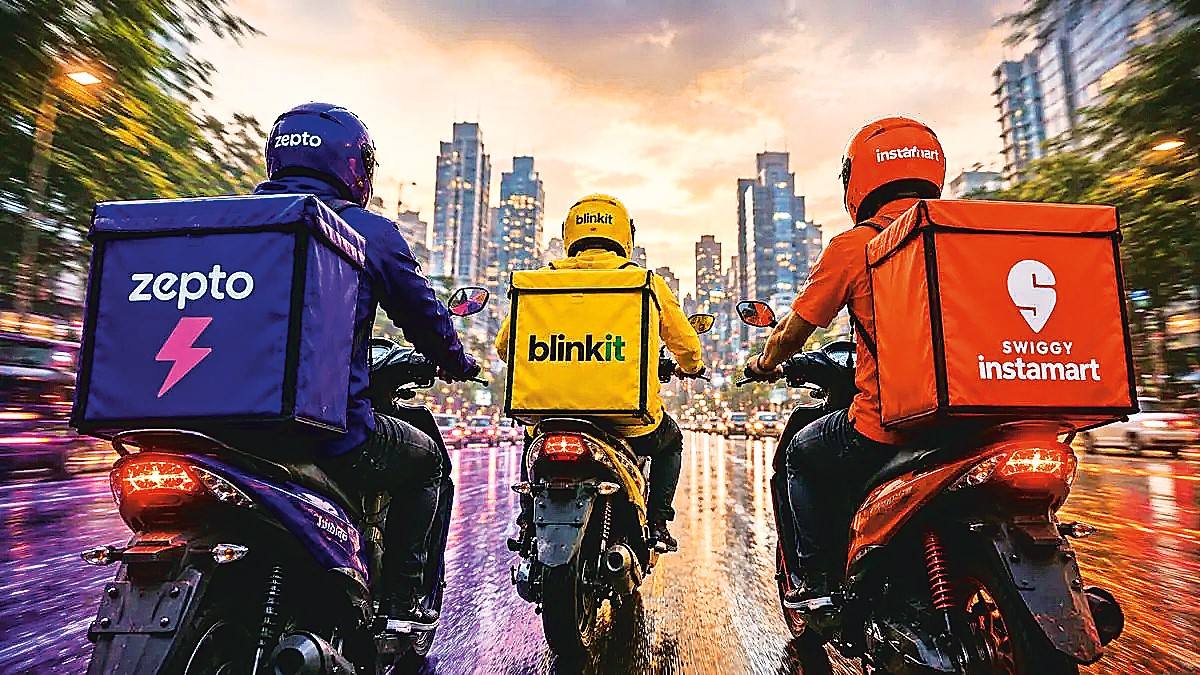
Quick Commerce Platforms Turn Premium Grocery Into Growth Strategy
Flipkart Minutes Surges Past 1.1 Million Daily Orders in India

Quick commerce private-label push gathers pace as platforms chase margins

Flipkart Minutes Enters Gourmet Grocery Market With Private Label Pykd

Flipkart Minutes Overtakes Instamart As Quick-Commerce Race Intensifies

Rising Sugar, Crude Oil and Copra Reshape Consumer Company Margins
India’s Consumer Demand Holds Up Despite Inflation and Conflict
GST Cut Drives Sharp Recovery in India’s Consumer Staples

Sugar Spike Threatens FMCG Margins Ahead of Festive Season

BNP Paribas Assesses Consumer Stocks, Favors Britannia Titan DOMS