6 days ago
India’s Food Safety Drive Highlights Regulation and Enforcement Gaps
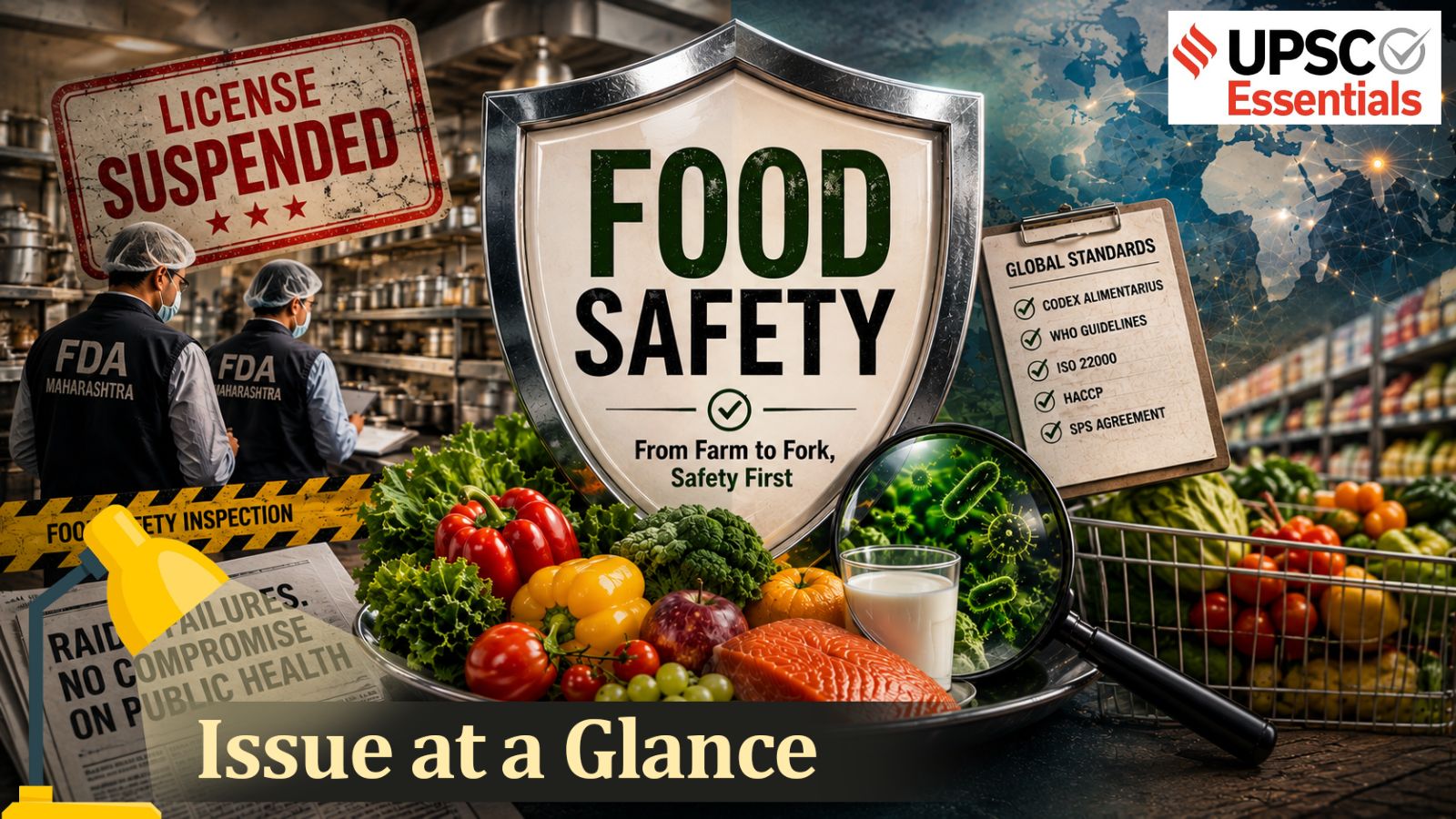
Food safety means making sure what people eat does not make them sick.
Recently, food inspectors in Maharashtra increased checks on hotels and restaurants.
Some businesses had their licences suspended, which made them review their kitchens and safety practices.
Unsafe food can spread diseases and harm children, older people and sick people especially.
Food can become unsafe through adulteration, chemicals, germs or poor handling.
India has a national food-safety regulator called FSSAI and laws that set standards for food businesses.
However, experts say there are not enough staff, facilities or public awareness to enforce every rule properly.
They recommend stronger inspections, better data, education and faster action against serious violations.

Maharashtra FDA Commissioner Tukaram Mundhe has intensified inspections and licence suspensions across Pune, Mumbai and other cities.
Unsafe food can cause foodborne illness, malnutrition and economic losses affecting trade, tourism, earnings and employment.
Major food-safety threats include adulteration, chemical residues, climate-related risks and biological hazards.
India’s Food Safety and Standards Act, 2006 established the FSSAI and State Food Safety Authorities as the main regulatory framework.
Experts say staff shortages, inadequate infrastructure, limited awareness and delays in accountability weaken enforcement despite extensive rules.
- Who
- The Maharashtra Food and Drug Administration, led by Commissioner Tukaram Mundhe, along with India’s Food Safety and Standards Authority of India.
- What
- Inspection drives and licence suspensions have renewed attention on food safety, adulteration, regulation and enforcement in India.
- Where
- The inspections covered Pune, Mumbai and other cities in Maharashtra, while the broader regulatory discussion concerns India and global food-safety frameworks.
- When
- The Maharashtra inspection drive intensified after Tukaram Mundhe became FDA Commissioner in May; the article also notes that World Food Safety Day is observed annually on June 7.
- Why
- The drive highlighted concerns about kitchen hygiene, food contamination, adulteration, legal compliance and weaknesses in implementing food-safety rules.
Visible Enforcement
Systemic Reform
Inspection drives
Visible Enforcement
Visible and credible action, such as the Maharashtra inspections, can change business behaviour and encourage compliance.
Systemic Reform
Inspections alone are insufficient because serious risks may be invisible, and enforcement should prioritize high-risk foods, establishments and supply chains.
Regulatory performance
Visible Enforcement
The recent crackdown demonstrates that stronger regulatory action can make restaurants and hotels reconsider hygiene and legal compliance.
Systemic Reform
Critics say FSSAI has been weakened by staff and infrastructure shortages, inconsistent updating of standards and delays between detecting violations and final accountability.
Business compliance
Visible Enforcement
Licensing places food businesses within the regulatory system and establishes formal compliance requirements.
Systemic Reform
A licence does not prove that safe practices are consistently followed; education and awareness are also needed, particularly among smaller businesses.
Key facts
- Main regulator
- The Food Safety and Standards Authority of India is an autonomous statutory body under the Food Safety and Standards Act, 2006.
- Legal framework
- The Food Safety and Standards Act, 2006 established FSSAI and State Food Safety Authorities; the Food Safety and Standards Rules, 2011 cover areas including licensing, labelling and advertising.
- Global illness burden
- The article cites the FAO estimate that about 600 million foodborne-illness cases occur annually.
- Key hazards
- Food-safety challenges include adulteration, pesticide and other chemical residues, climate-related risks, and biological hazards such as microbial pathogens.
- International food code
- Codex Alimentarius is a collection of standards, guidelines and codes of practice adopted by a joint FAO-WHO intergovernmental commission.
- Indian initiatives
- Eat Right India, Eat Right Station certification and the annual State Food Safety Index are among the initiatives described.
- State Food Safety Index
- The index assesses states and Union Territories using parameters including institutional capacity, compliance, food testing, infrastructure, training and consumer empowerment.
Quotes

World Health Organization
International public health organization cited for its explanation of pesticide-related risks.
“Pesticides are chemicals used in agriculture to protect crops against insects, fungi, weeds and other pests. In addition to their use in agriculture, pesticides are also used to protect public health in controlling the vectors of tropical diseases, such as mosquitoes. But pesticides are also potentially toxic to humans. They may induce adverse health effects including cancer, effects on reproduction, immune or nervous systems.”
 indianexpress.com
“Visible and credible action, as seen in Maharashtra recently, can change behaviour. However, long delays between violation detection and final accountability weaken deterrence. Not all violations pose the same health risk, so regulatory efforts should prioritize foods, establishments, and supply chains with the highest risk, including microbial and chemical hazards that are not always visible during inspections.”
indianexpress.com
Sources
Related news

India’s Food Safety Rules Face Persistent Enforcement Gaps

India Expands Food-Safety Crackdown Across Kitchens, Dairies and Warehouses
Maharashtra FDA Explains When Restaurants Can Lose Licences

Maharashtra FDA chief: goal is voluntary compliance, not crackdowns

Tukaram Mundhe Warns Indians About Food Safety Risks
Maharashtra Food Safety Raids Expose Gaps Beyond Restaurant Compliance

India Urges UN Action to Protect Critical Sea Lanes

Milk Leads Rice and Pork in Global Food Commodity Values

India Moves to Harness Ecological and Economic Benefits of Bamboo

UPSC Key: Coastal Erosion, Naval Uprising, J&K Quota and More