2 weeks ago
India's honey economy diversifies after US tariff shock

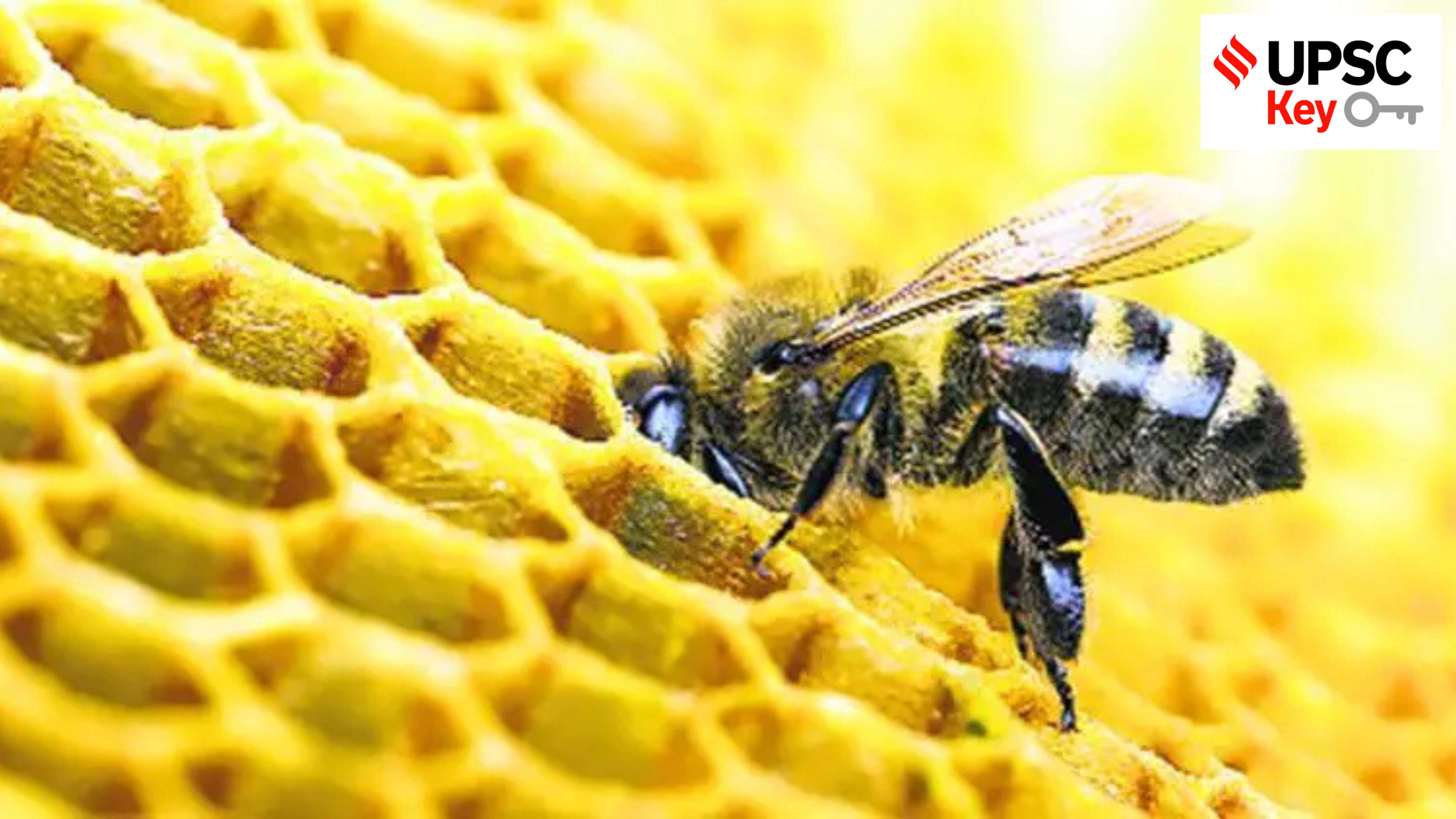
Bees are tiny insects that help plants grow by carrying pollen from one flower to another.
This is called pollination, and it helps make about one-third of the food we eat.
In India, bees help farmers grow crops like mustard and apples, and they also make honey.
India is now the second-biggest honey maker in the world, after China.
India used to sell most of its honey to one country, the United States.
But the US put high taxes on Indian honey, so India started selling honey to other countries like the Netherlands and Germany.
India's honey production has almost doubled in the last ten years.
Still, people in India do not eat much honey, only about 37 grams a year.
Indian honey is also cheaper than honey from New Zealand.
To do better, India needs to make better honey, brand it well, and protect the bees that help farms grow.

Honeybees pollinate nearly one-third of global crop output and enhance yields of 87 of 115 leading food crops, according to the FAO.
India is the world's second-largest honey producer and third-largest exporter by value, with production nearly doubling from about 76,000 tonnes in 2013-14 to roughly 151,000 tonnes in 2025-26.
The US absorbed about 76% of India's honey exports ($157.8 million) in 2025-26, but high US tariffs prompted a swift shift to markets like the Netherlands, Belgium, Germany, and Israel.
India's per capita honey consumption remains low at about 37 gm per year, indicating a large untapped domestic market.
Indian honey's unit value is about $1,858 per tonne, well below the world average and far from premium categories like New Zealand's Manuka, highlighting the need for quality, traceability, and branding upgrades.
The bee product market (beeswax, propolis, royal jelly, pollen) was valued at roughly $12.7 billion in 2023 and is projected to grow.
- Who
- Indian honey farmers, exporters, and policymakers, with analysis by ICRIER researchers Ashok Gulati, Suvangi Rath, and Tanmoy Adhikary.
- What
- India's honey sector is diversifying export markets and seeking to upgrade quality and branding after US tariffs hit exports.
- Where
- India, with export shifts to the Netherlands, Belgium, Germany, and Israel, and production in states like Uttar Pradesh, Rajasthan, and Himachal Pradesh.
- When
- The analysis covers data through 2025-26, with the US tariff shock occurring recently and National Honey Bee Day falling on August 15, 2025.
- Why
- To reduce concentration risk from relying on a single buyer (the US) and to convert scale into higher value through premium, sustainable honey.
Pro-diversification and reform
Cautious on structural change
Export market diversification
Pro-diversification and reform
Shifting to EU and other markets reduces concentration risk and taps premium, sustainability-focused buyers.
Cautious on structural change
Diversification is a temporary reprieve; unit value remains low and structural transformation is not guaranteed without sustained reforms.
Role of policy and investment
Pro-diversification and reform
Targeted reforms, labs, GI branding, and farmer producer organisations can unlock premium markets and durable rural livelihoods.
Cautious on structural change
The Viksit Bharat 2047 vision is too distant and vague to assess seriousness, and scaling initiatives requires sharper targeting.
Key facts
- India's honey production
- About 151,000 tonnes in 2025-26, up from 76,000 tonnes in 2013-14
- India's global honey export share
- Around 8.4%
- Honey exports value (2025-26)
- $208 million
- US share of India's honey exports
- About 76% ($157.8 million) in 2025-26
- India's per capita honey consumption
- About 37 gm per year
- Indian honey unit value
- About $1,858 per tonne
- Global bee product market value (2023)
- Roughly $12.7 billion
- India's honey production ranking
- Second-largest producer, third-largest exporter by value
Sources
Related news

FTAs can give Indian agriculture a bigger global footprint

Modi's agriculture, millet, AI push opens global opportunities: Expert

PM Modi's global agri products call can boost millet-based businesses

Telangana Bee Hub Promotes Beekeeping for Sustainable Rural Prosperity

Global Uncertainty Threatens India’s $1 Trillion Export Target

Tripura exports 1,000 kg organic honey to UAE

India’s Food Safety Drive Highlights Regulation and Enforcement Gaps

India Urges UN Action to Protect Critical Sea Lanes

Milk Leads Rice and Pork in Global Food Commodity Values

India Moves to Harness Ecological and Economic Benefits of Bamboo