2 weeks ago
India Moves to Harness Ecological and Economic Benefits of Bamboo
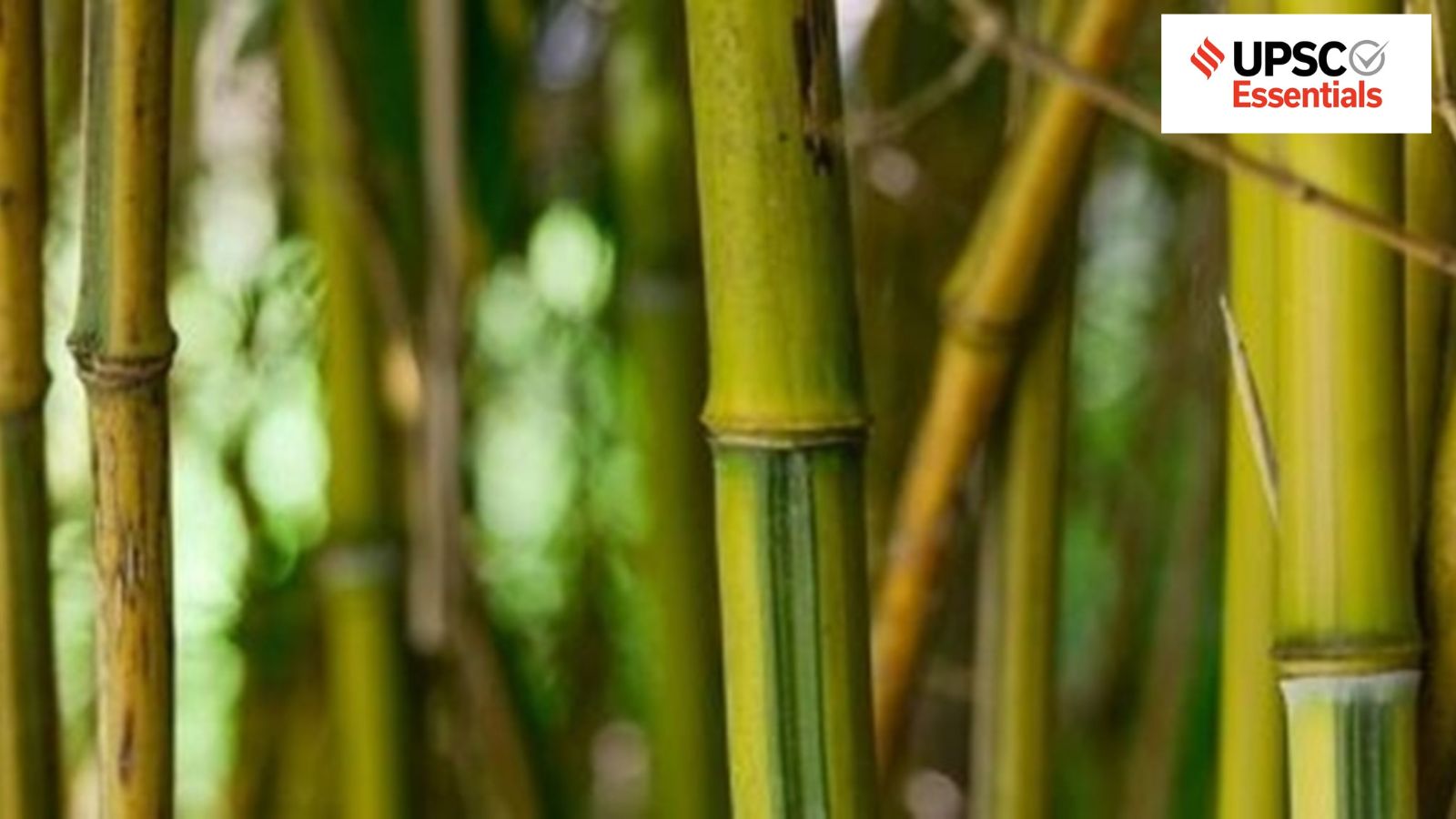
Bamboo is a super-fast-growing grass, not a tree.
It can grow up to one meter in a single day.
Some people call it Green Gold because it helps the earth heal, stopping soil from washing away and storing carbon.
India has more bamboo land than any other country.
Many things are made from bamboo, like paper, furniture, clothes, and even toothbrushes.
Nearly two million Indian artisans earn money working with bamboo.
The Indian government runs a program called the National Bamboo Mission to help farmers grow and sell more bamboo.
A new factory in Assam even makes fuel from bamboo.
But India's bamboo grows less productively than China's, so India still buys bamboo materials from other countries.
If India improves, bamboo could help nature and give people jobs at the same time.

India has the world's largest area under bamboo cultivation at 13.96 million hectares and the second-highest bamboo diversity with 136 species.
Bamboo, a fast-growing grass in the Poaceae family, can grow 30–100 cm per day and helps prevent soil erosion while increasing soil organic carbon.
The National Bamboo Mission, restructured in 2018, operates in 24 states and Union Territories, covering nurseries, cultivation, and marketing.
India's bamboo industry is estimated to be worth about Rs 28,005 crore and employs nearly 2 million artisans.
India's bamboo yield of 10–15 MT/hectare trails China's 50 MT/hectare, leaving India a net importer of raw bamboo materials.
- Who
- India's government and institutions such as the National Bamboo Mission and NITI Aayog, along with farmers, tribals, forest dwellers, and state governments like Maharashtra.
- What
- India is seeking to harness the ecological and economic benefits of bamboo through cultivation, industry promotion, and policy support.
- Where
- Across India, where bamboo grows naturally except in Kashmir; over half grows in northeastern states, and Madhya Pradesh has the largest bamboo-bearing area.
- When
- In the context of the UN Decade on Ecosystem Restoration (2021–2030), with recent milestones including the 2017 legal amendment, the 2018 restructured National Bamboo Mission, and ISFR 2023 data.
- Why
- To restore degraded ecosystems, sequester carbon, prevent soil erosion, and support rural livelihoods and a commercially viable bamboo value chain.
Key facts
- Largest bamboo area
- India — 13.96 million hectares, world's largest
- Bamboo diversity in India
- 136 species (125 indigenous, 11 exotic); 23 genera
- Global bamboo area
- About 30.1 million hectares (GFRA 2025); Asia 21.2 million hectares
- Industry value
- About Rs 28,005 crore; employs nearly 2 million artisans
- Productivity comparison
- India 10–15 MT/hectare vs China 50 MT/hectare
- National Bamboo Mission
- Launched 2006, restructured 2018, implemented in 24 states/UTs
- Maharashtra policy target
- Bamboo Industry Policy 2025: Rs 50,000 crore investment and 5 lakh jobs in 10 years
- First bio-ethanol plant
- World's first commercial second-generation bamboo-based plant at Golaghat, Assam
Sources
Related news

Punjab Gets Bamboo Diversification Push With Rs 2.49 Crore
Meghalaya launches bamboo carbon project to restore land, boost incomes
India Launches First Grasslands Guide, Highlights Open Ecosystems

India urges community-led rangeland restoration at UNCCD CoP17

Yi Amaravati Sets Asia Record With 1.13 Lakh Bamboo Balls
Indore Municipal Corporation Banks on Bamboo to Curb Soil Erosion

India’s Food Safety Drive Highlights Regulation and Enforcement Gaps

India Urges UN Action to Protect Critical Sea Lanes

Milk Leads Rice and Pork in Global Food Commodity Values
UPSC Key: Coastal Erosion, Naval Uprising, J&K Quota and More