

6 days ago
Why Young Himalayas Remain So Prone to Disasters
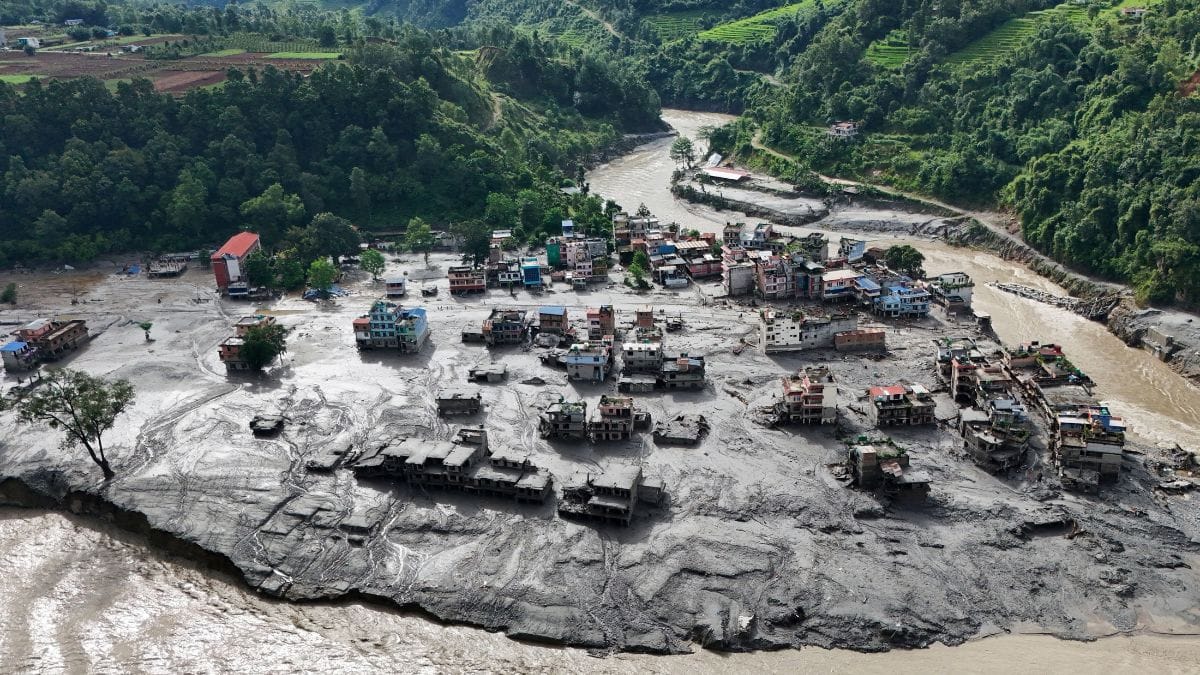
The Himalayas are still young mountains, so their rocks and slopes are not fully stable.
Two huge pieces of Earth are pushing against each other there, making the mountains rise.
Rivers and landslides are cutting into the mountains at the same time.
This creates very steep slopes that can collapse.
Heavy monsoon rain can make the ground soggy, while earthquakes can shake it apart.
As glaciers melt, they can leave lakes held back by piles of loose rocks and dirt.
If those natural dams break, powerful floods called GLOFs can rush downhill.
Climate change may bring more extreme rainfall and make some dangers worse.
A geologist also says poorly planned roads and dams can turn natural hazards into larger disasters.

Flash floods in Nepal’s Rasuwa district began after part of a glacier collapsed into a valley.
The Himalayas are rising as tectonic plates collide while rivers and landslides carve their steep slopes.
Monsoon rain, earthquakes, glacier melt and falling rocks can destabilise the region.
Retreating glaciers can leave lakes behind natural debris dams that may fail and cause GLOFs.
Scientists and geologists say climate change and human interventions, including roads and dams, are increasing risks.
- Who
- Residents of Nepal’s Rasuwa district were affected; scientists, the International Centre for Integrated Mountain Development, and geologist Y P Sundriyal are cited in the explanation.
- What
- A glacier collapse triggered devastating flash floods, highlighting the Himalayas’ vulnerability to landslides, glacial lake outburst floods and other hazards.
- Where
- Nepal’s Rasuwa district and the wider Himalayas, including the Hindu Kush Himalayan region.
- When
- The article does not specify when the Rasuwa flash floods occurred; it cites studies from 2012, 2023 and 2026.
- Why
- The region’s steep, tectonically active terrain interacts with rainfall, earthquakes, glaciers and landslides; climate change and human development may further increase the risks.
Natural and Climate-Driven Risks
Human Management and Development Failures
Main cause of disasters
Natural and Climate-Driven Risks
The region’s hazards result from tectonic uplift, steep slopes, monsoon rainfall, earthquakes, glacier retreat and climate-change-related extreme rainfall.
Human Management and Development Failures
Y P Sundriyal says current disasters are also management and governance failures, with human interventions worsening a fragile landscape.
Development approach
Natural and Climate-Driven Risks
The landscape’s natural processes make hazards difficult to eliminate, requiring improved forecasting and mapping of unstable high-altitude areas.
Human Management and Development Failures
Sundriyal says development should be sustainable and criticises wider roads, mountain cutting and dams that are built without adequately accounting for consequences.
Key facts
- Initial trigger
- Part of a glacier collapsed and crashed into a Himalayan valley.
- Geological setting
- The Indian and Eurasian tectonic plates are pushing against each other.
- Landslide finding
- A 2012 Nature Geoscience study mapped more than 15,000 landslides in the eastern Himalayas and linked landslide erosion with tectonic uplift.
- Slope risk
- The study found that small increases in hillslope angles beyond 30 degrees can sharply increase landslide erosion.
- GLOF fatalities
- The International Centre for Integrated Mountain Development says nearly 7,000 people have died in GLOFs over the past 190 years.
- GLOF triggers
- Mass movements triggered 54 percent of GLOFs, while intense rainfall caused 18 percent, according to ICIMOD.
- Human factors
- Geologist Y P Sundriyal argued that roads, mountain cutting and dams can worsen hazards in the fragile ecosystem.
Quotes
Y P Sundriyal
A geologist from Uttarakhand quoted by ThePrint
“For them, development means wider roads, but development must be sustainable. We can’t cut down mountains and set up dams and not expect to face the consequences.”
 theprint.in
“The disasters today are management and governance failures.”
theprint.in

International Centre for Integrated Mountain Development
The regional mountain-development organisation cited in a 2023 media advisory
“The Hindu Kush Himalayan (HKH) region is recognised as a “hotspot of risk” for hazards such as GLOFs”
theprint.in
Sources
Related news
Why Nepal Remains Vulnerable to Glacial Floods and Earthquakes

Nepal Flash Floods Expose Glacier Risks Amid Climate Concerns
Nepal Flood Highlights Rising Glacier Risks in Warming Himalayas
India Leads Hindu Kush Himalaya GLOF Death Toll, Study Finds

Nepal Glacier Collapse Exposes Rising Himalayan Flash-Flood Risks
Maharashtra Starts DNA Profiling After Nepal Disaster Deaths
Kailash Flood Tragedy Puts Sadhguru’s Safety Claims Under Fire
Landslides Threaten Nainital Homes as Uttarakhand Rain Continues

Flash Flood Devastates Nepal's Bhotekoshi River Region

Nepal Families Seek Missing Loved Ones After Deadly Flash Floods
