

1 week ago
Canada-US Trade Talks Collapse as Tariffs Deepen Economic Rift

Canada and the United States tried to make a new trade agreement, but the talks failed.
Canada said the United States added new demands that could hurt Canadian industries, culture and decision-making.
The United States said Canada wanted benefits and exceptions that Washington would not accept.
The United States then placed extra taxes, called tariffs, on about $20 billion of Canadian products.
More than 500 kinds of goods are affected, including clothing, dairy, alcohol, wood and technology equipment.
Canada plans to place matching taxes on some goods from the United States starting September 8.
These taxes can make products more expensive and give shoppers fewer choices.
Businesses may also have trouble with supply chains that cross the border.
Canada depends heavily on selling goods to the United States, but the United States also relies on Canada for important energy supplies.

Negotiations broke down after Canada rejected new US conditions it called unfair and uneconomic.
The United States imposed 50% tariffs on about $20 billion of Canadian goods across more than 500 categories.
Disputed issues included Canadian cultural policies, bilingual labelling, trade agreements and access for US businesses.
Canada plans dollar-for-dollar retaliatory tariffs from September 8 on products including steel, dairy and electronics.
The tariffs threaten higher prices, disrupted supply chains and weaker demand across both deeply integrated economies.
- Who
- The governments of Canada and the United States, led by Prime Minister Mark Carney and President Donald Trump.
- What
- Trade talks collapsed, followed by new US tariffs and planned Canadian retaliation.
- Where
- The dispute involves trade between Canada and the United States.
- When
- The negotiations broke down on Friday; US tariffs took effect Saturday, and Canada’s response is scheduled for September 8.
- Why
- The countries disagreed over tariff relief, Canadian cultural and language policies, trade agreements, subsidies, labelling and market access.
Canadian Position
United States Position
Negotiating demands
Canadian Position
Mark Carney said the United States introduced last-minute terms that were unfair, uneconomic and could undermine Canadian sovereignty, industries and the reliability of any agreement.
United States Position
US officials said Canada sought concessions Washington was not prepared to make, particularly in automotive, steel, aluminum and lumber trade.
Culture and domestic policies
Canadian Position
Canada objected to demands concerning Canadian and French-language streaming content, publishing and film subsidies, bilingual labelling, Quebec culture and the ability to make trade agreements with other countries.
United States Position
The United States has criticized Canadian policies it considers unfair to US businesses, especially restrictions involving US alcohol sales.
Tariff relief
Canadian Position
Canada declined to accept the proposed terms simply to obtain lower tariffs, arguing that the broader relationship and Canadian policy choices were at stake.
United States Position
US Trade Representative Jamieson Greer said Washington had offered major tariff reductions on Canadian steel, aluminum and automobiles and to remove a recent lumber tariff.
Key facts
- New US tariffs
- A 50% tariff applies to about $20 billion of Canadian goods.
- Products affected
- More than 500 categories, including alcohol, dairy, wood products, furniture, clothing, cosmetics, jewellery, sports goods and technology equipment.
- Existing US tariffs
- Canadian steel, aluminum, automobiles and softwood lumber were already subject to separate US tariffs or duties.
- Canadian retaliation
- Canada has announced dollar-for-dollar tariffs beginning September 8.
- Likely Canadian targets
- The planned measures will largely cover US steel, dairy products, appliances, agricultural equipment, pulp and paper and electronics.
- Trade dependence
- Nearly three-quarters of Canada’s goods exports go to the United States.
- Energy relationship
- Canada supplies 99% of US natural gas imports, 85% of US electricity imports and 60% of US crude oil imports.
- Estimated direct impact
- Royal Bank of Canada economists estimated that the latest tariffs directly affect about 0.4% of Canada’s GDP.
Quotes

Donald Trump
President of the United States
“In recent days, the United States proposed new terms that were uneconomic, unfair and undermined the net benefits for Canada, and called into question the reliability of any deal.”
 livemint.com
“We cannot accept what they offered and we will not give what they asked”
livemint.com
Andreas PJ Schotter
Professor of international business at Western University
“Dollar-for-dollar retaliation creates political symmetry, not economic symmetry.”
livemint.com
Sources

Related news
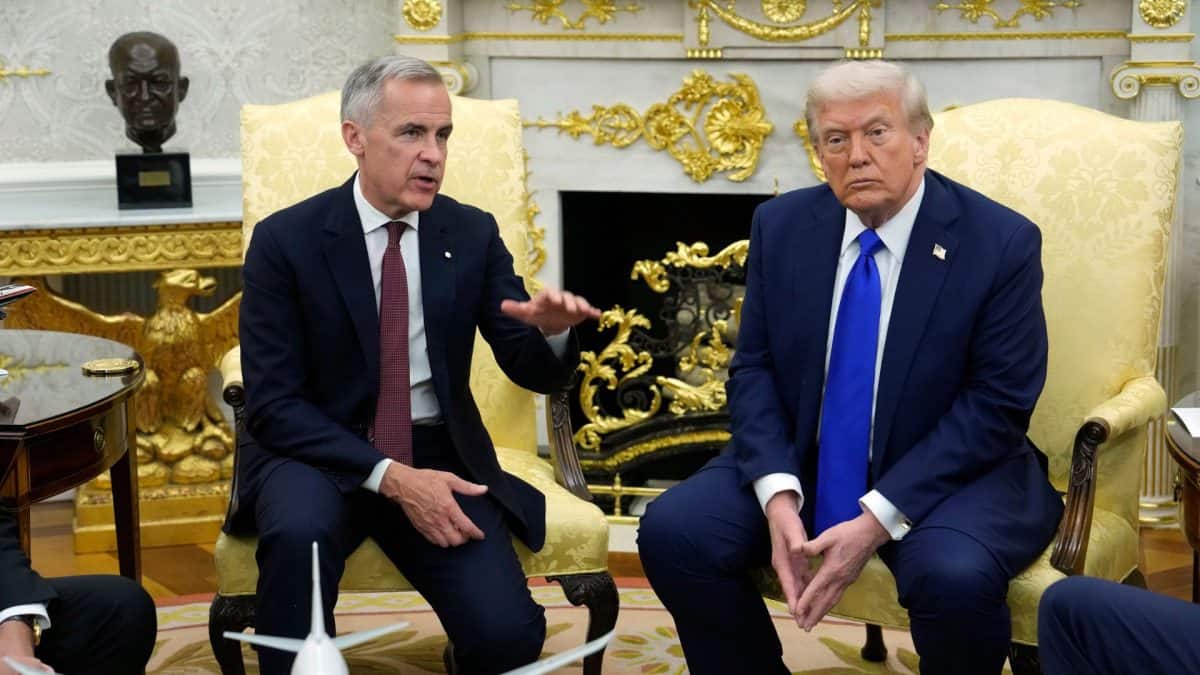
US-Canada Trade Talks Collapse as 50% Tariffs Take Effect

Canada Announces Dollar-for-Dollar Tariffs After US Trade Talks Collapse

US-Canada Trade Deal Collapses Over Trucks, Culture and Tariffs

Canada Retaliates as Trade War with US Escalates
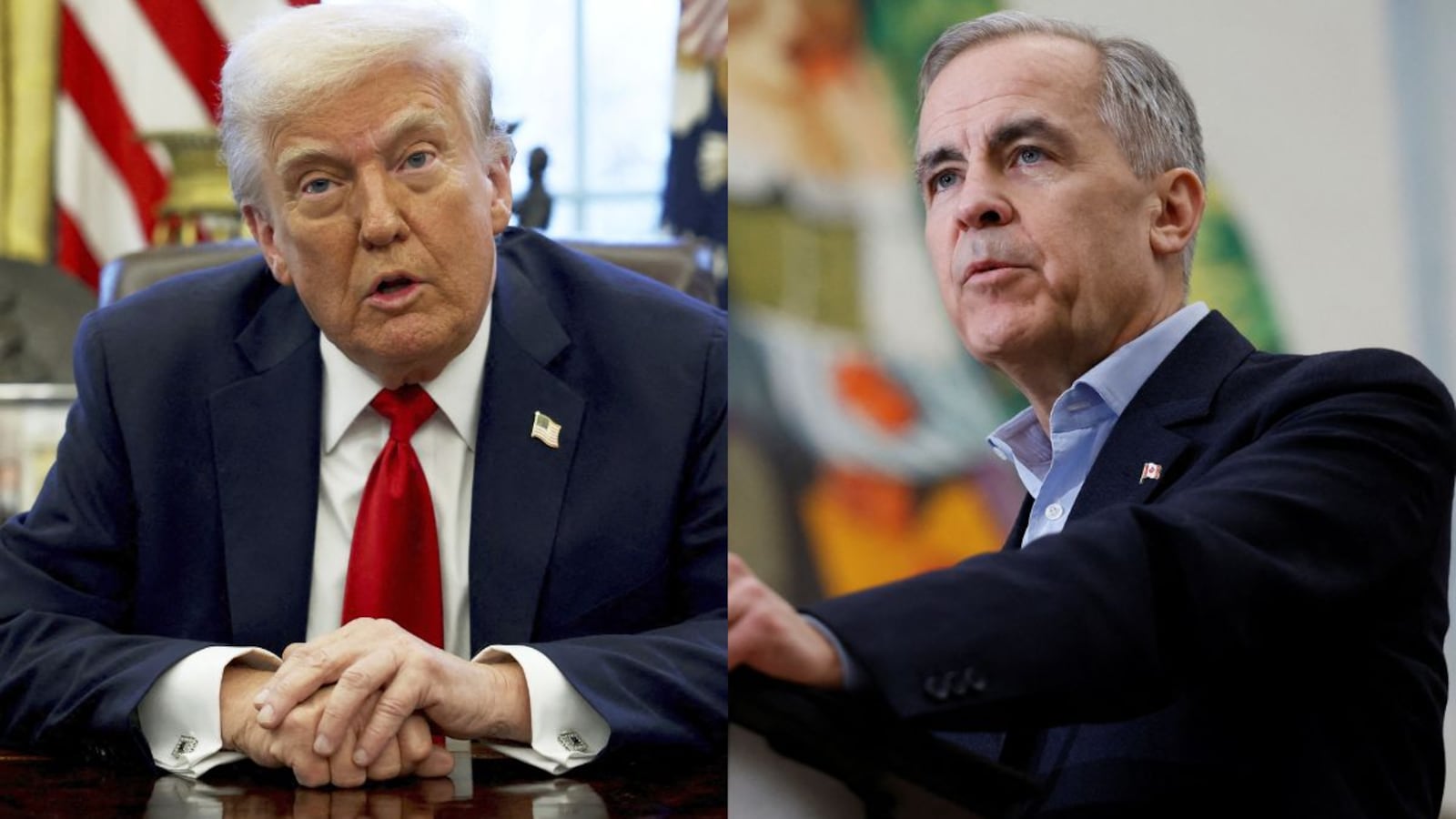
US Imposes 50% Tariffs on Canada After Talks Fail

US-Canada Trade Talks Collapse as Tariffs Trigger Retaliation
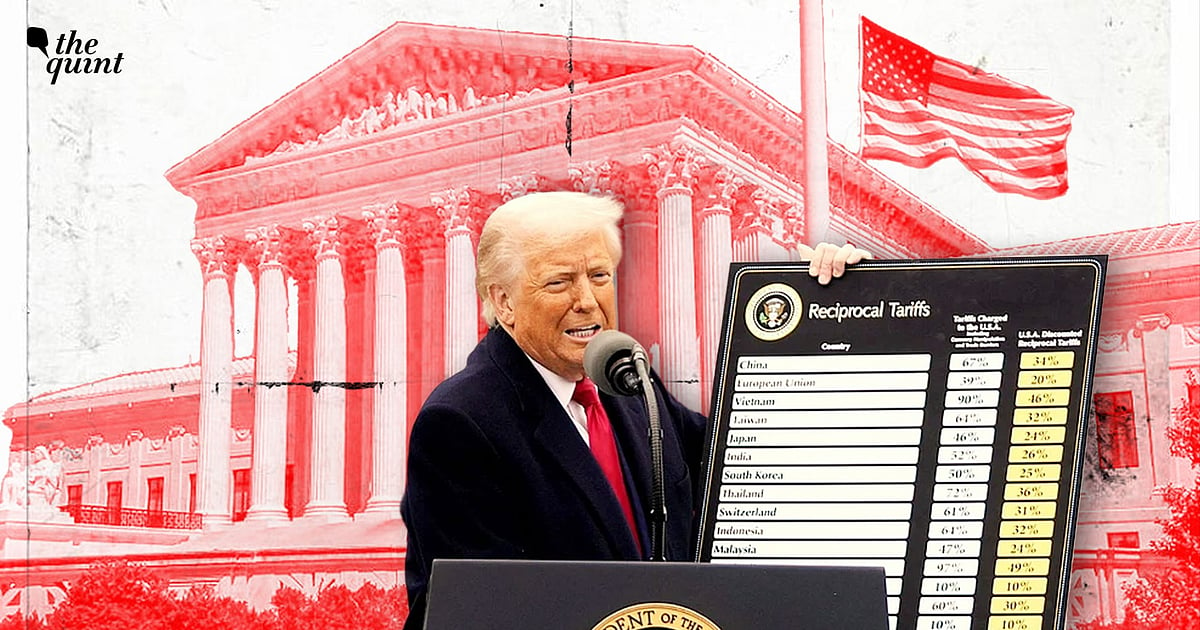
Canada Tariff Dispute Raises Wider Worry for New Delhi
Cheese Name Dispute Becomes Stumbling Block in U.S.-Mexico Talks

Canada Rejects Unequal US Trade Deal Despite Economic Risks
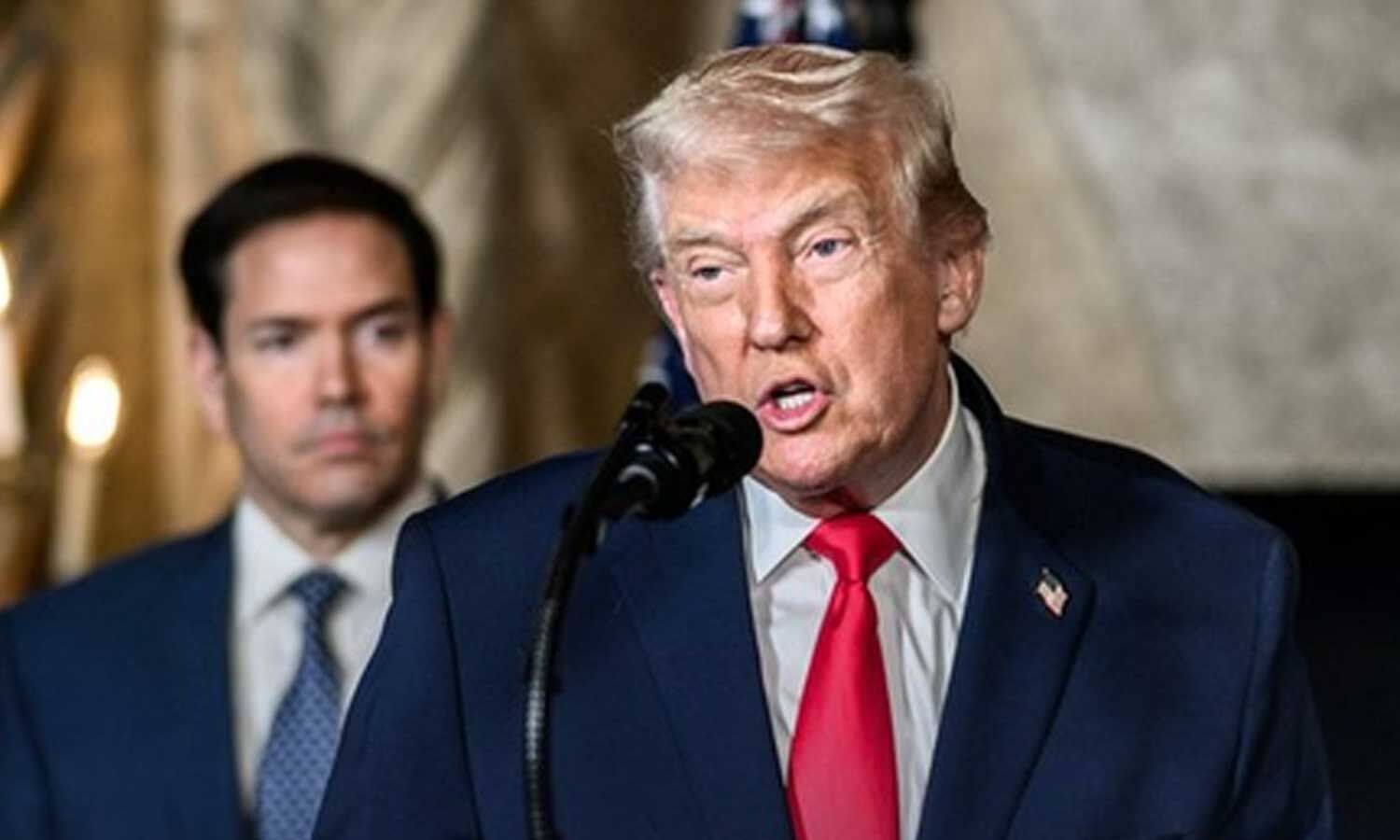
Trump Escalates Trade Confrontation as Canada Vows Tariff Retaliation

US-Canada Trade Collapse Offers India a Cautionary Lesson
