2 hrs ago
Why Cutting Short-Lived Climate Pollutants Is a Climate Priority
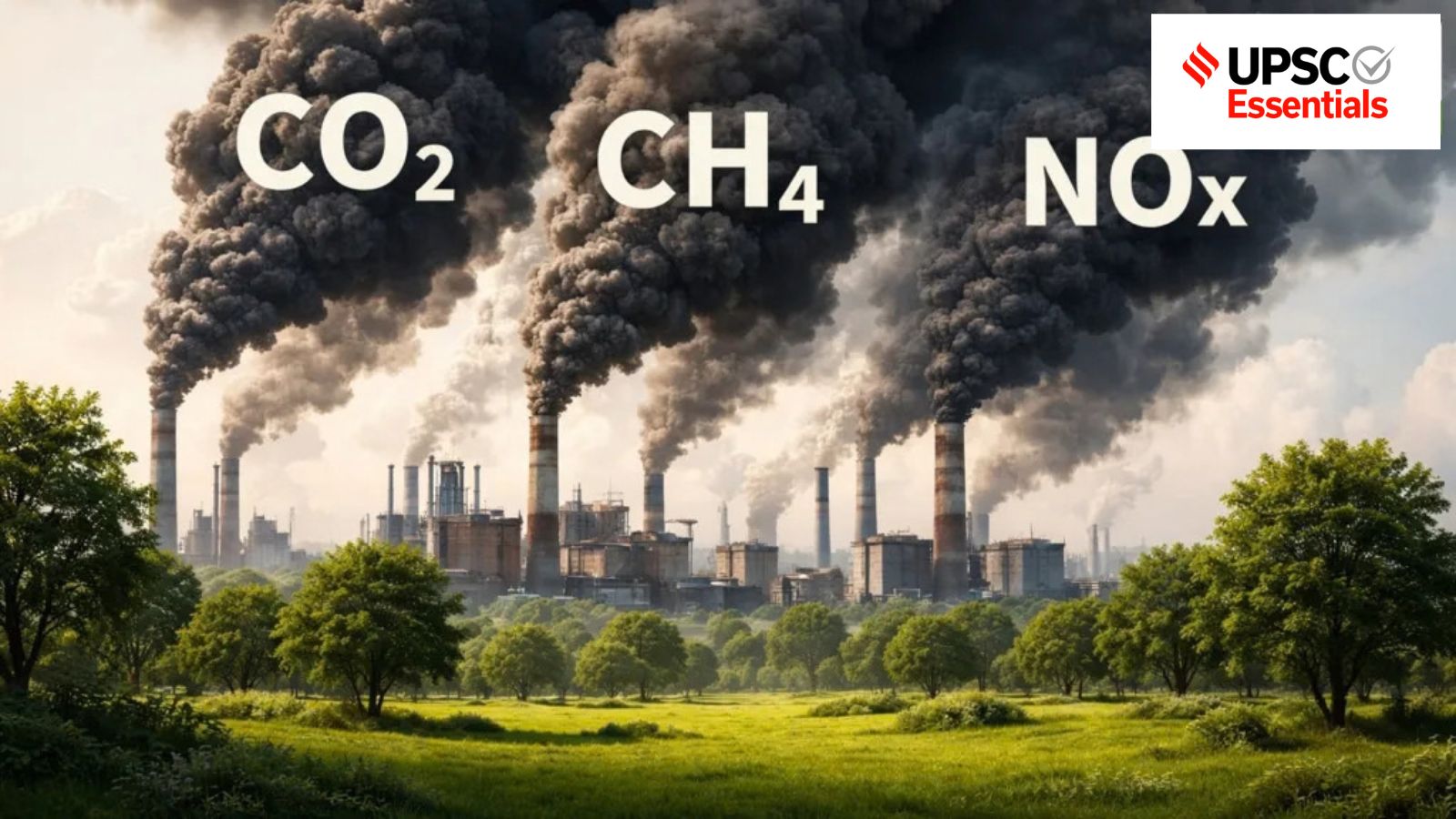
Some air pollutants warm the planet much more strongly than carbon dioxide, but they stay in the air for a shorter time.
They come from things like burning fuel, farming, rubbish and cooling equipment.
Cutting them can help slow warming and make the air cleaner.
Black soot can settle on snow and ice, making them absorb more sunlight and melt faster.
That matters for Himalayan glaciers, which help supply rivers in India.
Air pollution also harms people’s health and can damage crops.
India has programs to improve air quality and provide cleaner fuel, but the article says more work is needed.
It argues that reducing these pollutants should happen alongside cutting carbon dioxide.

Short-lived climate pollutants (SLCPs) contribute to warming and air pollution; the article says cutting them can deliver climate and health benefits quickly.
Major SLCPs include black carbon, methane, hydrofluorocarbons and tropospheric ozone, with sources including fuel burning, farming, fossil-fuel operations and waste.
Black carbon darkens snow and ice, hastening melt; the article links Himalayan glacier loss to risks for India’s Indus, Ganga and Brahmaputra basins.
India’s methane emissions are reported as 9% of the global total, while agriculture accounted for 73.96% of India’s methane emissions in 2016.
The article calls for faster SLCP cuts alongside decarbonisation, including cleaner cooking, crop-residue management and expanded pollution-control efforts.
- Who
- Governments, including India’s, and sectors that emit short-lived climate pollutants.
- What
- The article explains the sources and effects of SLCPs and argues for faster emissions cuts.
- Where
- Globally, with particular attention to India, the Indo-Gangetic Plain and the Hindu Kush-Himalaya region.
- When
- The article cites current impacts and targets or findings from 2016, 2018, 2021, 2025 and 2025-26.
- Why
- Reducing SLCPs can help limit warming, improve air quality, protect health and crops, and slow glacier ice loss.
Case for rapid methane cuts
Food and livelihood concerns
Reducing methane emissions
Case for rapid methane cuts
The article says methane cuts can help limit near-term warming and identifies paddy cultivation and livestock as major sources.
Food and livelihood concerns
India has not joined the Global Methane Pledge; the article says it regards agricultural methane as survival emissions because food security and a large population depend on these activities.
Cleaner cooking access
Case for rapid methane cuts
The article recommends expanding access to cleaner cooking fuel to reduce pollution.
Food and livelihood concerns
It notes that providing LPG connections has not fully resolved the challenge, because sustained refills remain an issue.
Key facts
- SLCP warming contribution
- The article says SLCPs are responsible for up to 45% of current global warming.
- Potential warming avoided
- It cites estimates that effective reductions could avoid up to 0.6°C of warming by 2050.
- Methane warming power
- Methane has about 80 times the warming power of CO₂ over its first 20 years in the atmosphere.
- India’s global methane share
- India emitted 9% of total global methane emissions, according to the Global Methane Status Report (2025).
- India methane sources
- India’s 2016 methane emissions were attributed to agriculture (73.96%), waste (14.46%) and energy (10.62%).
- India PM2.5 results
- In 2025-26, 65 of 130 NCAP cities met the cited PM2.5 standard; Delhi recorded 102 µg/m³.
- India clean cooking
- The article says the Pradhan Mantri Ujjwala Yojana provided more than 10.5 crore LPG connections, while sustained refills remain an issue.
Sources
Related news
UN Report Says 1.5°C Breach Is Now Unavoidable
Melting Himalayas Put One-Fifth of India’s GDP at Risk

BRICS Climate Debate Highlights Clean Air’s Economic Importance
Timely Clean-Air Action Could Cut Delhi PM2.5 Exposure 20%
Modi Highlights India's Lower Per-Capita Emissions and Climate Progress
Nepal Seeks Loss and Damage Compensation After Devastating Floods

Mumbai Climate Risk Study Draws Scrutiny Over Coastal Development
UNEP Report Says 1.5°C Breach Is Now Inevitable

Melting Himalayan Glaciers Raise Risk of Downstream Floods