

1 week ago
Record Ocean Warmth Signals Climate Change Entering Unfamiliar Territory

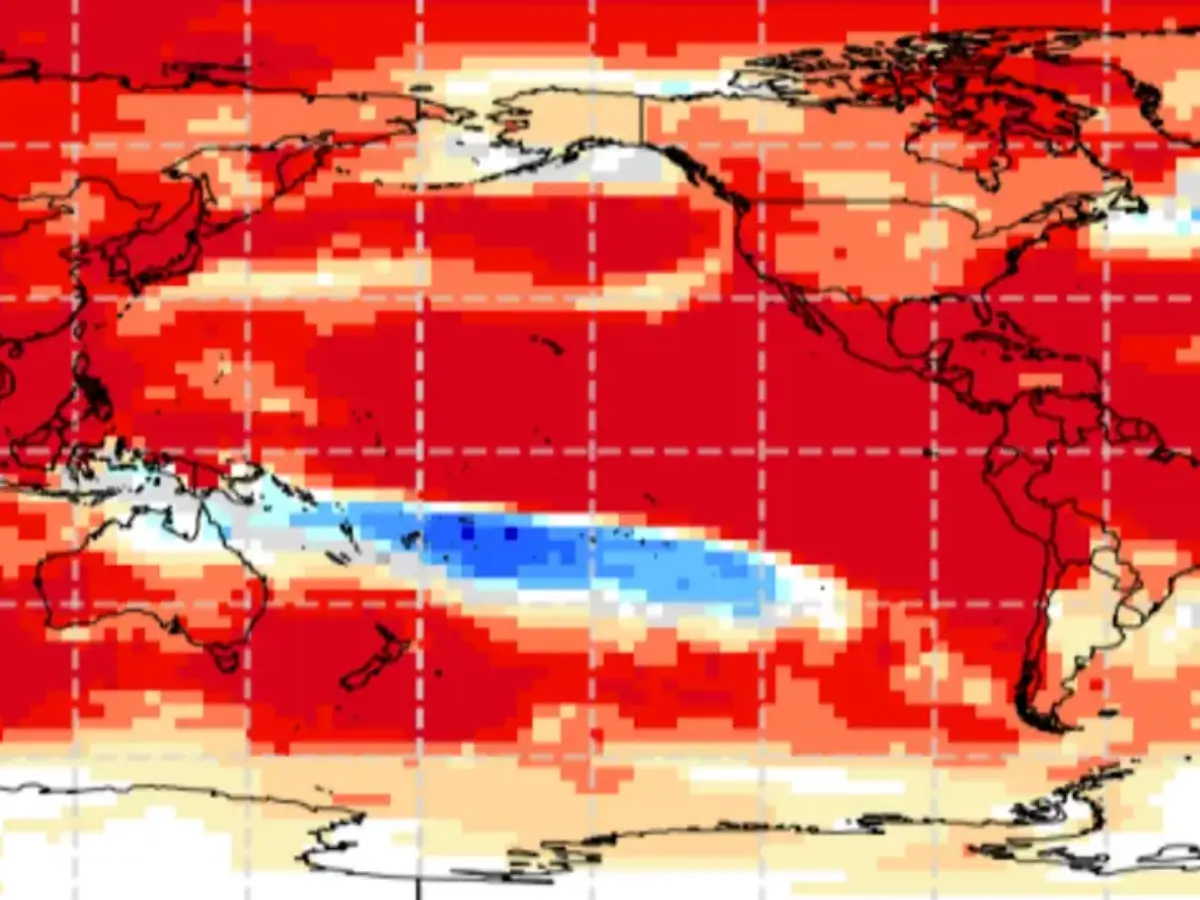
The oceans are getting warmer than scientists have ever measured.
They usually reach their warmest temperatures in March and April, but a new record was set on August 22.
The temperature reached 21.1°C, slightly higher than the record from March 2024.
June and July also had unusually high ocean temperatures.
A strong El Niño and human-caused global warming helped push temperatures upward.
Oceans absorb most of the extra heat caused by global warming, which slows some effects on land.
However, this heat harms sea life and can change weather patterns.
Warmer oceans also help make sea levels rise.
Scientists say these records show that the climate is entering unfamiliar territory.

Global sea-surface temperature reached a record 21.1°C on August 22.
The previous record was 21.09°C, recorded in March 2024.
June and July each set records for ocean temperatures in their respective months.
Oceans have absorbed more than 90% of the excess heat from global warming.
Ocean warming is stressing ecosystems, disrupting weather patterns, and contributing to sea-level rise.
- Who
- The world’s oceans, with the Intergovernmental Panel on Climate Change and National Aeronautics and Space Administration cited for evidence about ocean heat absorption.
- What
- Global sea-surface temperatures reached a new record, while recent monthly temperatures also exceeded previous records.
- Where
- Across the world’s oceans, including the extra-polar oceans; related weather effects were reported in Europe, India, and South America.
- When
- The new record was recorded on August 22; the previous record was set in March 2024, and June and July also broke monthly records.
- Why
- A rapidly intensifying El Niño combined with global warming to increase ocean temperatures.
Key facts
- New sea-surface temperature record
- 21.1°C on August 22
- Previous record
- 21.09°C in March 2024
- June and July
- Both months surpassed their previous ocean-temperature records
- Ocean heat absorption
- Oceans absorbed more than 90% of the excess heat generated by global warming
- Climate effects
- Warming stresses marine ecosystems and disrupts food webs
- Weather effects
- Ocean warming affects the oceans’ capacity to regulate weather
- Sea-level rise
- Global average sea level was about 11 centimetres higher by the end of 2025 than in January 1993
Sources
Related news

Global Sea Surface Temperature Sets Record Amid El Niño Warming

World’s Oceans Reach Record Heat as El Niño Intensifies
Earth’s Oceans Reach 125,000-Year Heat Record Amid El Niño

Climate Change Drives Record Heat Across Europe’s Seas

France Braces for Fifth Heatwave as Europe Sets Temperature Records

World's seas hottest July on record as Europe faces heatwaves

Ikea cuts European prices as cost pressures weaken demand

Europe's Bond Selloff Deepens as Middle East Tensions Lift Oil

China’s Rapid Car Development Faces Growing Safety Scrutiny

CNG Prices Rise Rs 2 per Kilogram in Pune

China Challenges US Leadership in Escalating Global AI Contest
