1 hr ago
Melting Himalayas Put One-Fifth of India’s GDP at Risk
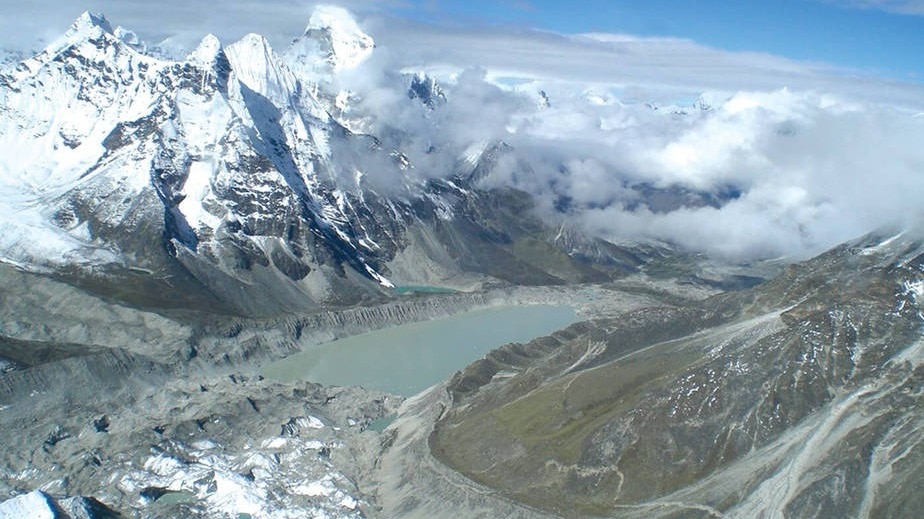
The Himalayas store water in their glaciers and slowly release it into rivers.
These rivers provide water for farms, cities, factories and electricity in India.
A new report says economic activity worth about 21.5% of India’s yearly output depends on this water.
This does not mean that melting glaciers would immediately erase that much money from the economy.
As the climate warms, glaciers may first release more water and later provide less as the ice disappears.
The Hindu Kush Himalaya could lose up to 80% of its glacier volume by 2100.
Soot, called black carbon, makes snow darker so it absorbs more sunlight and melts faster.
Cleaner brick kilns could reduce this soot, but experts say pollution from cooking, vehicles and crop burning must also be reduced.

A Systemiq report estimates that ₹64.8 lakh crore, or 21.5% of India’s FY24 GDP, depends on the Himalayas.
The estimate measures economic activity reliant on Himalayan water, not the share of GDP that glacier melt would directly destroy.
Himalayan glaciers feed the Indus, Ganga and Brahmaputra systems, supporting farms, cities, industry and hydropower.
The Hindu Kush Himalaya could lose up to 80% of its current glacier volume by 2100, with river basins potentially reaching “Peak Water” around mid-century.
The report identifies black carbon as a controllable threat and recommends modernising brick kilns alongside action on cookstoves, transport and crop burning.
- Who
- Systemiq, the Integrated Mountain Initiative and supporting Himalayan research institutions produced the report; experts including Nimish Singh commented on black carbon.
- What
- The report assesses India’s economic dependence on Himalayan water and outlines risks from glacier loss, disasters and black-carbon pollution.
- Where
- The risks concern the Himalayas and downstream India, including the Indus, Ganga and Brahmaputra river basins.
- When
- The estimate concerns India’s FY24 GDP; the report says Himalayan river basins may reach “Peak Water” around the middle of this century, while glacier losses are projected through 2100.
- Why
- Warming, glacier retreat and black-carbon pollution could make water supplies less reliable and disrupt agriculture, industry, cities, hydropower and supply chains.
Targeted Kiln Action
Broader Pollution Control
Best immediate strategy
Targeted Kiln Action
The report proposes focusing on brick kilns because cutting their emissions can reduce local air pollution and glacier-melting black carbon together.
Broader Pollution Control
Nimish Singh said kiln upgrades would produce measurable benefits but warned that kilns are not the whole story.
How broad the response should be
Targeted Kiln Action
Converting brick kilns to zigzag technology can cut black carbon and particulate emissions by roughly 70% and fuel use by 20–30%, according to Singh.
Broader Pollution Control
Singh argued that real progress requires coordinated action on kilns, cookstoves, transport and crop-residue burning across the airshed.
Key facts
- Estimated GDP dependence
- ₹64.8 lakh crore, or 21.5% of India’s FY24 GDP
- Meaning of the estimate
- Economic activity traceable to dependence on Himalayan water, not projected climate damages
- Projected glacier loss
- Up to 80% of present Hindu Kush Himalaya glacier volume by 2100
- Disaster exposure
- The Himalayas cover 18% of India’s land but account for about 35% of its disasters
- Black-carbon contribution
- South Asian black carbon is attributed to about one-third of Himalayan glacier mass loss in recent modelling
- Brick-kiln emissions
- Industry, mainly brick kilns, contributes 32–42% of South Asian anthropogenic black-carbon deposition across the region
- Proposed response
- Modernise viable brick kilns, retire the worst-performing kilns and reduce demand for fired bricks
Quotes
Systemiq report authors
Authors of the report on Himalayan resilience and economic dependence
“The rivers that carry risk downstream also carry the water that sustains India’s economy: wheat and rice across the Indo-Gangetic plain, tea in Assam and Bengal, hydropower in the Northeast, and pilgrimage economies in downstream towns.”
 indianexpress.com
“Real progress needs kilns, cookstoves, transport, and crop-residue burning to be tackled together, coordinated at the airshed scale rather than kiln by kiln or city by city.”
indianexpress.com
Sources
Related news

Himalayan Glacier Melt Threatens Water Security and Livelihoods
Himalayan Glaciers Near Tipping Point, Threatening Millions’ Livelihoods

Melting Himalayan Glaciers Raise Risk of Downstream Floods

Himalayan Glacier Loss Raised Nepal Flood Disaster Risks
Himalayan Melt and Monitoring Gaps Threaten Northern India