1 hr ago
How Gandhi and India Shaped WEB Du Bois’s Global Vision
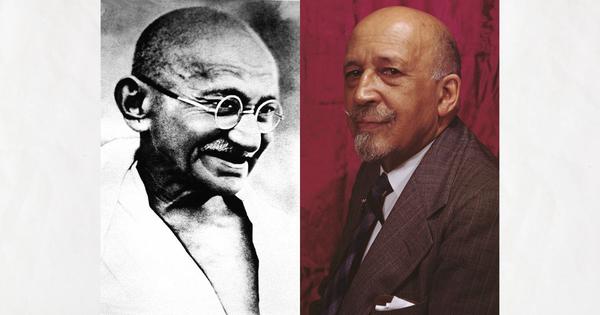
In 1936, WEB Du Bois wrote about the relationship between Indians and African Americans.
He said both groups knew too little about each other.
Du Bois warned Indians not to believe that calling themselves “Aryans” would make Europeans treat them as equals.
He believed that European empires placed many different peoples in similar positions of exploitation.
He wanted African Americans and Indians to work together, especially ordinary workers.
Some Indian writers agreed with parts of his ideas, while others said cultural differences mattered more than race.
Du Bois became friends with Lala Lajpat Rai and exchanged ideas with Gandhi and Tagore.
These connections influenced his dream of a freer and more democratic world.
Later, Martin Luther King Jr.’s use of nonviolent methods helped strengthen ties between India’s and America’s freedom movements.

In a 1936 article, WEB Du Bois urged Indians and African Americans to learn about one another and unite against imperial racial hierarchies.
Du Bois rejected the idea that Indians could escape discrimination by identifying as “Aryan,” arguing that European exploitation oppressed Indian laborers alongside Africans and Chinese workers.
He framed Indian and African American struggles as part of a worldwide “clash of colour” led by laboring people across darker-skinned societies.
Indian thinkers including Ram Manohar Lohia and NS Subbarao responded differently, debating race, culture, cooperation and resistance to white domination.
Du Bois’s relationships with Gandhi, Tagore and Lala Lajpat Rai helped shape his vision of a democratic, socialist world influenced by Asian philosophies and anti-colonial movements.
- Who
- WEB Du Bois, Indian thinkers including Ram Manohar Lohia and NS Subbarao, and figures such as Gandhi, Tagore and Lala Lajpat Rai.
- What
- A historical exchange of ideas about race, anti-imperialism, Indian and African American solidarity, and alternative social systems.
- Where
- The discussion appeared in The Aryan Path, published in Mumbai, and concerned India, the United States and wider global anti-colonial movements.
- When
- The central exchange began with Du Bois’s 1936 article; later developments included Martin Luther King Jr.’s 1959 visit to India.
- Why
- Du Bois sought greater understanding and cooperation between Indians and African Americans as part of resistance to racial oppression and imperialism.
Du Bois’s International Solidarity
Subbarao’s Cultural Distinction
Race, identity and oppression
Du Bois’s International Solidarity
Du Bois argued that Indians should not imagine themselves as “Aryans” or closer to Europe, because European exploitation assigned Indian laborers a position comparable to other colonized and exploited peoples.
Subbarao’s Cultural Distinction
NS Subbarao objected to Du Bois’s argument, saying Indians’ sense of strangeness toward Africans reflected “non-parity of culture” rather than racial superiority.
Response to white domination
Du Bois’s International Solidarity
Du Bois refused to accept continued suppression and called for cooperation among darker-skinned peoples, especially through the leadership of their laboring masses.
Subbarao’s Cultural Distinction
Subbarao argued that darker races should accept humiliation and suffering while seeking cooperation with the white world for what he called the “larger good.”
Path to social change
Du Bois’s International Solidarity
Du Bois envisioned a democratic, socialist order influenced by Gandhi, Tagore, Asian civilizations and the Russian Revolution.
Subbarao’s Cultural Distinction
Subbarao’s position, as presented in the exchange, emphasized accommodation and cooperation rather than Du Bois’s more confrontational refusal of subordination.
Key facts
- Article
- “The Clash of Colour”
- Publication
- The Aryan Path, a magazine published from Mumbai
- Publication year
- 1936
- Du Bois’s central argument
- Indians and African Americans should learn about one another and recognize their shared position within global racial and imperial systems.
- Key Indian correspondent
- Lala Lajpat Rai, whom Du Bois met in the United States and befriended
- Later civil-rights connection
- Martin Luther King Jr. visited India for a month in 1959 and met Jawaharlal Nehru and Vinoba Bhave.
- Unfulfilled ambition
- Du Bois considered visiting India one of his life’s ambitions but never traveled there.
Quotes
W.E.B. Du Bois
African American scholar, historian, Pan-Africanist, and civil rights activist
“I especially admired his restraint and sweet temper. If a man of his sort can be called a Revolutionist and beaten to death by a great civilized government, then indeed revolution becomes a duty to all right thinking men.”
 scroll.in
“It would take a new way of thinking on Asiatic lines to work this out.”
scroll.in
Sources
Related news
How Two Bengali Cyclists Challenged the British Empire
Gandhi Writes to Tolstoy on Non-Violence and Morality
Krishnamoorthi Rejects Debate Framing Indian Americans As Problem
Bhagwat’s New York Speech Sparks Debate Over Hindutva
Bhagwat Presents RSS as India’s Inclusive Civilisational Movement
UPSC GS1 Practice Explores Poompuhar and Gandhian Thought
Tagore Was Stopped Outside Yerawada Prison During 1932 Journey
Baguiati Club Brings Durga Puja ‘Collage’ to Life

Joy Goswami to Voice Tagore in Srijit Mukherji’s New Film

Mother Tongue Advocates Say Bengali Enables Complete Education