3 days ago
Gandhi Writes to Tolstoy on Non-Violence and Morality

In 1909, Mahatma Gandhi wrote a letter to the Russian writer Leo Tolstoy.
Gandhi explained how Indian people in South Africa were resisting unfair laws without using violence.
They refused to obey the laws and accepted prison sentences instead.
Some people were imprisoned several times, and many families needed financial help.
Gandhi believed this peaceful resistance could work better than fighting.
He asked Tolstoy whether promoting this idea through an essay competition would be morally right.
Gandhi also asked Tolstoy to confirm whether a letter about unrest in India was genuine.
He questioned Tolstoy’s criticism of reincarnation because many Indians regarded it as an important belief.
The article does not provide Tolstoy’s reply to this first letter.

On 1 October 1909, M. K. Gandhi wrote to Leo Tolstoy from London.
Gandhi described Indians in Transvaal resisting discriminatory laws by accepting imprisonment rather than complying.
He said nearly 2,500 people had accepted imprisonment, while more than 100 passive resisters remained in Transvaal jails.
Gandhi argued that passive resistance could succeed where brute force would fail, despite imposing severe hardships on families.
He asked Tolstoy for his views on the morality of promoting passive resistance and publishing Tolstoy’s letter on unrest in India.
- Who
- M. K. Gandhi wrote to Russian writer Leo Tolstoy; the letter also discusses British Indians resisting laws in Transvaal.
- What
- Gandhi described a non-violent resistance campaign and sought Tolstoy’s advice on its morality and publication.
- Where
- The letter was written at the Westminster Palace Hotel in London and addressed to Tolstoy at Yasnaya Polyana, Russia; the resistance took place in Transvaal, South Africa.
- When
- 1 October 1909.
- Why
- Gandhi wanted Tolstoy’s views on whether promoting passive resistance and publishing Tolstoy’s writing would be morally appropriate.
Key facts
- Letter date
- 1 October 1909
- Sender
- M. K. Gandhi
- Recipient
- Count Leo Tolstoy
- Indian population in Transvaal
- Nearly 13,000 British Indians
- Imprisoned resisters
- Nearly 2,500 accepted imprisonment, with some jailed as many as five times
- Prison conditions
- Sentences ranged from four days to six months, usually with hard labour
- Current prisoners mentioned
- More than 100 passive resisters were in Transvaal jails
- Source
- Collected Works of Mahatma Gandhi, Volume 9, pages 444–446
Quotes

Mahatma Gandhi
Indian political leader and author of the letter to Leo Tolstoy
“passive resistance will and can succeed where brute force must fail.”
 indianexpress.com
Sources
Related news
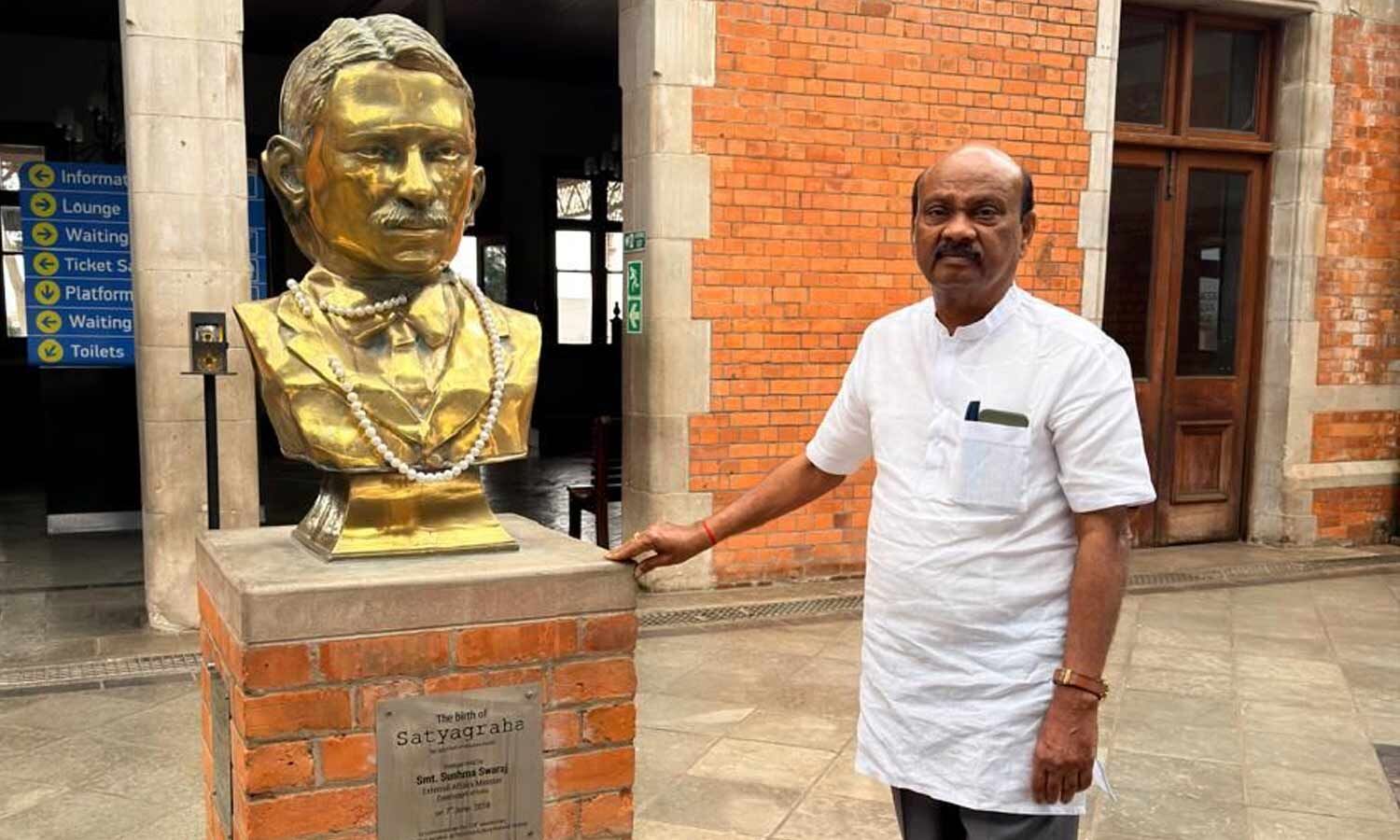
AP Speaker Pays Homage to Gandhi at Historic Station
UPSC GS1 Practice Explores Poompuhar and Gandhian Thought
Gandhi Jayanti 2026 Honors Gandhi’s Legacy of Truth and Non-Violence

Modi Gifts Putin Russian Thirukkural Translation Ahead of BRICS Summit

Angmo Urges Government to Treat Education Protests as Wake-Up Call