1 week ago
How Two Bengali Cyclists Challenged the British Empire
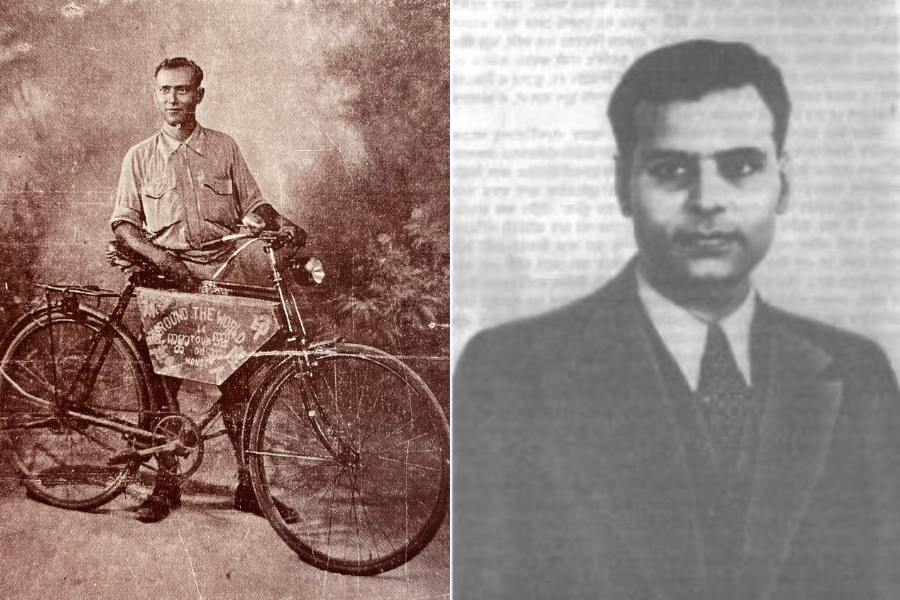
Bimal Mukherjee and Ramnath Biswas were two Bengali men from India who travelled very long distances by bicycle.
They made these journeys when India was ruled by Britain.
Their travels showed that Indians could be strong, adventurous and independent.
Mukherjee travelled around the world between 1926 and 1937.
He earned money by doing jobs such as photography, teaching and fishing.
Biswas also made several long journeys and wrote about what he saw.
Meeting people in different countries helped both men think about freedom, colonialism and politics.
Their bicycles became a way to learn about the world and challenge unfair ideas about India.

Bimal Mukherjee and Ramnath Biswas undertook major cycling journeys across several continents during the 1920s and 1930s.
Their travels challenged British colonial stereotypes about Indian identity, physical ability and independence.
Mukherjee travelled from 1926 to 1937, supporting himself through jobs, public talks and other work.
Biswas began three major journeys in 1931 after working at Singapore port and associating with an anti-colonial revolutionary movement.
University of Glasgow research says cycling shaped their views on imperialism, socialism, race and pan-Asian solidarity.
- Who
- Bengali cyclists Bimal Mukherjee and Ramnath Biswas, whose journeys were studied by University of Glasgow researcher Souvik Naha.
- What
- They made extensive cycling journeys across several continents and used their travel writing to challenge colonial ideas about India.
- Where
- Across several continents, including places encountered during Mukherjee’s and Biswas’s overseas travels.
- When
- Mukherjee travelled from 1926 to 1937; Biswas began his first of three major journeys in 1931.
- Why
- Their journeys allowed them to challenge colonial stereotypes and develop ideas about imperialism, independence, socialism and pan-Asian solidarity.
Key facts
- Researchers
- The study was conducted by Souvik Naha of the University of Glasgow.
- Cyclists
- Bimal Mukherjee and Ramnath Biswas
- Mukherjee’s travels
- 1926–1937
- Biswas’s journeys
- He began the first of three major journeys in 1931.
- Mukherjee’s occupations
- Photography, sailing, fishing, dairy farming, teaching and giving travel talks.
- Historical setting
- India remained under British rule during their journeys.
- Asian Games context
- The research was highlighted ahead of the Aichi-Nagoya Asian Games, scheduled for September 19 to October 4.
Quotes
Souvik Naha
Senior lecturer in Imperial and Post-colonial History at the University of Glasgow
“Almost a century ago, Mukherjee and Biswas used the bicycle not only to test the limits of physical endurance, but also to challenge colonial assumptions about Indian identity and ability.”
 telegraphindia.com
“Their writings show how anti-colonial thought could develop beyond established political institutions, through everyday encounters and experiences.”
telegraphindia.com
Sources
Related news

The Revolutionaries Explores India’s Parallel Anti-British Revolutionary Movement
‘Got Japan’ Controversy Exposed Caste, Community, and Belonging in Kumaon

The Revolutionaries Brings Bengal’s Forgotten Freedom Fighters to Screen
British Tourists Draw Viral Attention With Spiti Auto-Rickshaw Adventure
How Gandhi and India Shaped WEB Du Bois’s Global Vision
US Artist's Viral Praise Reframes India's Colonial and Cultural History
IIT Kanpur Announces Third Cohort Of AI Course
Study Favors Dog Vaccination Over Childhood Rabies Shots

Natural Sugars May Have Fueled the Evolution of Bigger Brains
Race, Media Scrutiny, and the Death of Jason Arday