1 hr ago
Mother Tongue Advocates Say Bengali Enables Complete Education

The article says children understand school lessons best in the language they speak at home.
It focuses especially on Bengali.
The writer believes that learning in an unfamiliar language can make children spend extra time translating ideas in their heads.
The article also says Bengali culture, literature, music, films and history help shape a child’s identity.
It argues that using a state’s own language does not have to prevent people from communicating across India.
Translators could help people who speak different languages understand one another.
English, Hindi and other languages could still be learned for wider communication.
The writer wants governments to give mother tongues a stronger role in schools, offices and public life.

The article argues that education is most meaningful when children learn primarily in their mother tongue.
It says Bengali-speaking children may face added strain when required to learn English, Hindi and another state language.
The writer compares Bengal with France and Germany, which conduct public affairs largely in their own languages.
The article rejects the view that English or Hindi is essential for national integration, proposing translators instead.
It calls on Indian state governments to support mother-tongue administration, education and communication while training interpreters.
- Who
- The writer, identified as the chairman of the Prof. Chittaranjan Kole Foundation for Science and Society, discusses Bengali speakers and other Indian linguistic communities.
- What
- The article advocates mother-tongue-based education and greater use of regional languages in administration and communication.
- Where
- The discussion focuses on Bengal and India, with comparisons to France, Germany, Bangladesh and other countries.
- When
- The article does not provide a publication date.
- Why
- The writer argues that mother-tongue education supports children’s understanding, mental well-being, cultural development and self-esteem.
Mother-Tongue Education
Common-Link Language Advocates
Language of schooling
Mother-Tongue Education
The writer argues that children learn more naturally and with less mental strain when formal education is conducted in their mother tongue.
Common-Link Language Advocates
The article says some political leaders believe languages such as English or Hindi are needed for communication and national integration.
Communication across states
Mother-Tongue Education
Different Indian states could preserve their own languages while using translators and interpreters for inter-state communication.
Common-Link Language Advocates
Supporters of a common language would prioritize shared languages to make communication across India easier.
Role of English and Hindi
Mother-Tongue Education
The article presents English and Hindi as useful additional languages rather than replacements for regional mother tongues.
Common-Link Language Advocates
The article reports the opposing view that English or Hindi may be necessary for wider national communication.
Key facts
- Main language discussed
- Bengali
- Educational argument
- School education is described as most meaningful when provided in a child’s mother tongue.
- Languages cited as additional burdens
- English, Hindi and the language of the state where a family lives
- Population comparison
- The article gives Bengal’s population as approximately 101.4 million.
- International examples
- France and Germany are cited as countries that conduct public affairs in their own languages.
- Proposed solution
- Use translators and interpreters to support communication among India’s different linguistic communities.
- Recommended government action
- Create ministries or institutions to strengthen mother tongues in administration, education and communication.
Sources
Related news

Amit Shah Links Indian Languages With Cultural Nationalism

Adhikari Accuses Trinamool Regime of Twisting Bengali Syllabus

India’s Sovereign AI Faces Test Beyond Twenty-Two Language Coverage
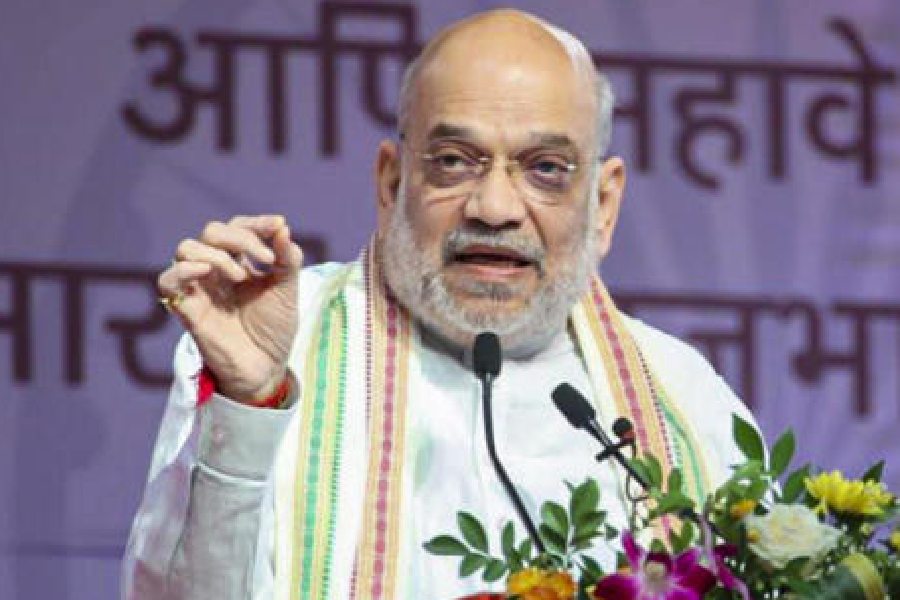
Amit Shah Calls Hindi Link Language, Denies Regional Imposition

Amit Shah Says Hindi Must Advance With Other Indian Languages

Why English Teachers Often Create Life-Changing Bonds in India

Asian Games Rain Washouts Set India-Sri Lanka, Pakistan-Bangladesh Semifinals

ICC and CSA Set to Announce 2027 World Cup Schedule

India Crush Bangladesh 10-0, Set Up Pakistan Semi-Final

India Faces Pakistan Hockey Semifinal as Boxers Secure Medals