

1 week ago
World’s Oceans Reach Record Heat as El Niño Intensifies

The world’s oceans reached their hottest recorded temperature over a recent Friday and Saturday.
The water averaged about 21.1°C.
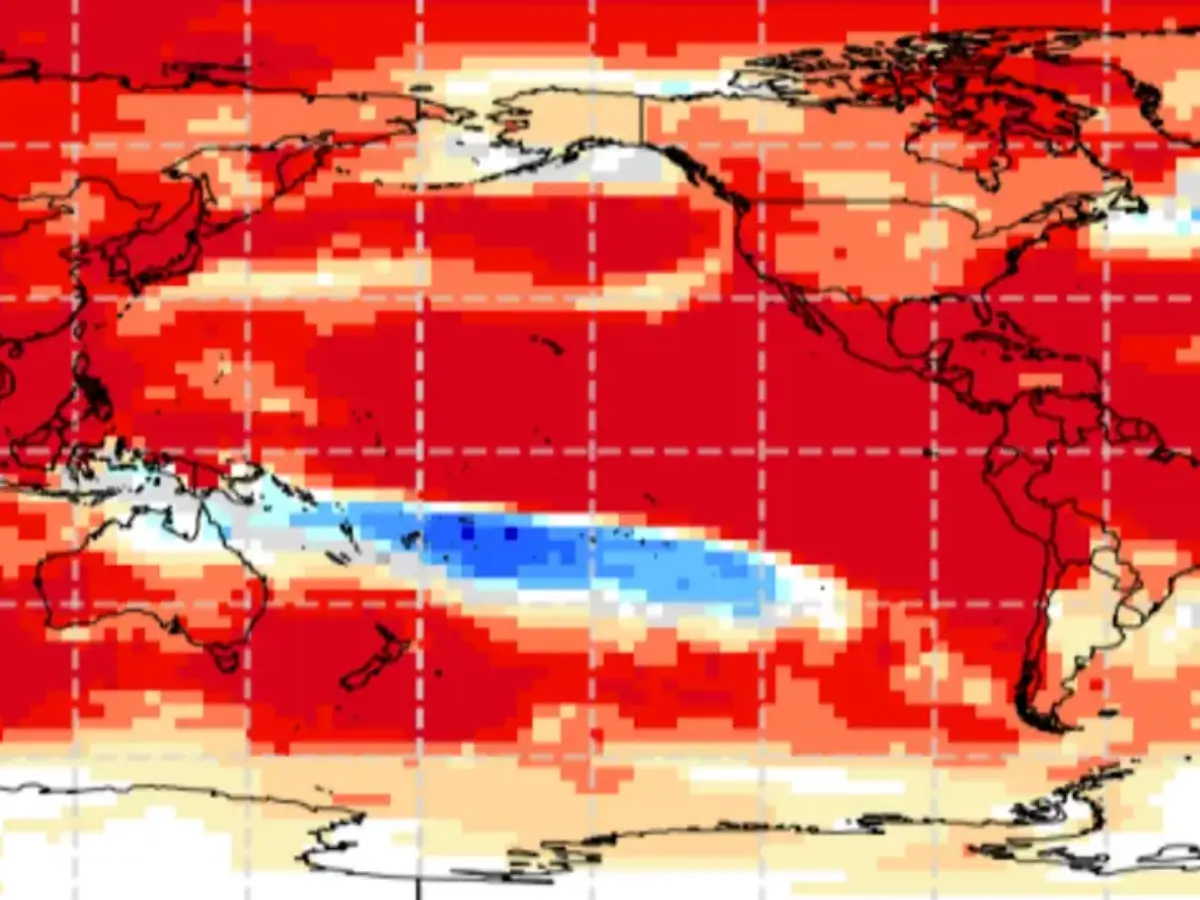
A natural climate pattern called El Niño is helping make the oceans warmer.
Human-caused climate change has also warmed ocean water over the long term.
Hotter oceans can make storms stronger and nights warmer.
They can also contain less oxygen and become more acidic.
This can hurt coral, fish and other sea life.
Scientists are especially worried about anchovies, which support many animals and people.
Some warm-water animals, such as jellyfish, may become more common.

Global ocean temperatures reached 21.1°C on Friday and Saturday, surpassing the previous daily record.
Copernicus attributed the heat to a growing El Niño and human-caused climate change.
Warmer oceans can intensify storms, increase acidity, reduce oxygen and worsen heat waves.
Scientists warned that coral, fisheries, seabirds, marine mammals and people dependent on seafood face risks.
The Peruvian anchovy fishery could suffer during El Niño, while warm-water jellyfish may increase.
- Who
- The European climate service Copernicus, ocean scientists and marine ecologists reported and assessed the record temperatures.
- What
- Global ocean surface temperatures reached a record 21.1°C, with further warming expected as El Niño develops.
- Where
- Across the world’s oceans, with particular concerns mentioned for Europe, the Caribbean, the Southern Hemisphere and the Peruvian anchovy fishery.
- When
- The record was measured on Friday and Saturday and reported on August 25, 2026; El Niño was expected to peak between November and January.
- Why
- A growing El Niño and long-term warming caused by burning coal, oil and gas are driving the unusually high temperatures.
Key facts
- Record temperature
- 21.1°C (70°F), recorded on Friday and Saturday
- Previous comparison
- The temperature narrowly exceeded the average daily record set in March 2024
- Long-term ocean warming
- Human-caused warming has increased ocean temperatures by 0.8°C (1.4°F), according to Copernicus
- El Niño outlook
- The current El Niño was expected to peak between November and January
- Ocean effects
- Warmer water can become more acidic, carry less oxygen and alter currents and weather patterns
- Marine risks
- Scientists warned of coral losses, fisheries collapse and food shortages
- Potential species shift
- Jellyfish may become more common as waters warm
Quotes

Jane Lubchenco
Oceanographer and former chief of the US National Oceanic and Atmospheric Administration
“The thing that makes my heart sink is that this starts so early and it's so out-of-normal that you know when it hits its peak, it's going to be unprecedented.”
 thehindubusinessline.com
“An ocean this warm destabilises weather patterns and threatens food security, economic prosperity and marine life. A warmer ocean is not our friend.”
thehindubusinessline.com
Samantha Burgess
Strategic climate lead for the European climate service Copernicus
“This is yet another sign of our climate system under strain and the ocean under immense pressure.”
thehindubusinessline.com
Sources
Related news

Global Sea Surface Temperature Sets Record Amid El Niño Warming

Record Ocean Warmth Signals Climate Change Entering Unfamiliar Territory
Earth’s Oceans Reach 125,000-Year Heat Record Amid El Niño

Powerful El Niño Could Make 2027 Hottest Year

Record-Strength El Niño Could Bring Extreme Global Weather

Potential 2026 Super El Niño Could Rewrite Global Weather Records

Ikea cuts European prices as cost pressures weaken demand

Europe's Bond Selloff Deepens as Middle East Tensions Lift Oil

China’s Rapid Car Development Faces Growing Safety Scrutiny

CNG Prices Rise Rs 2 per Kilogram in Pune

China Challenges US Leadership in Escalating Global AI Contest
