1 week ago
Global Sea Surface Temperature Sets Record Amid El Niño Warming

The world’s oceans have reached their hottest recorded average surface temperature.
The temperature was 21.1°C on 22 August.
This broke the previous record from March 2024.
Ocean temperatures usually reach their highest point in March or April, so a record in August is unusual.
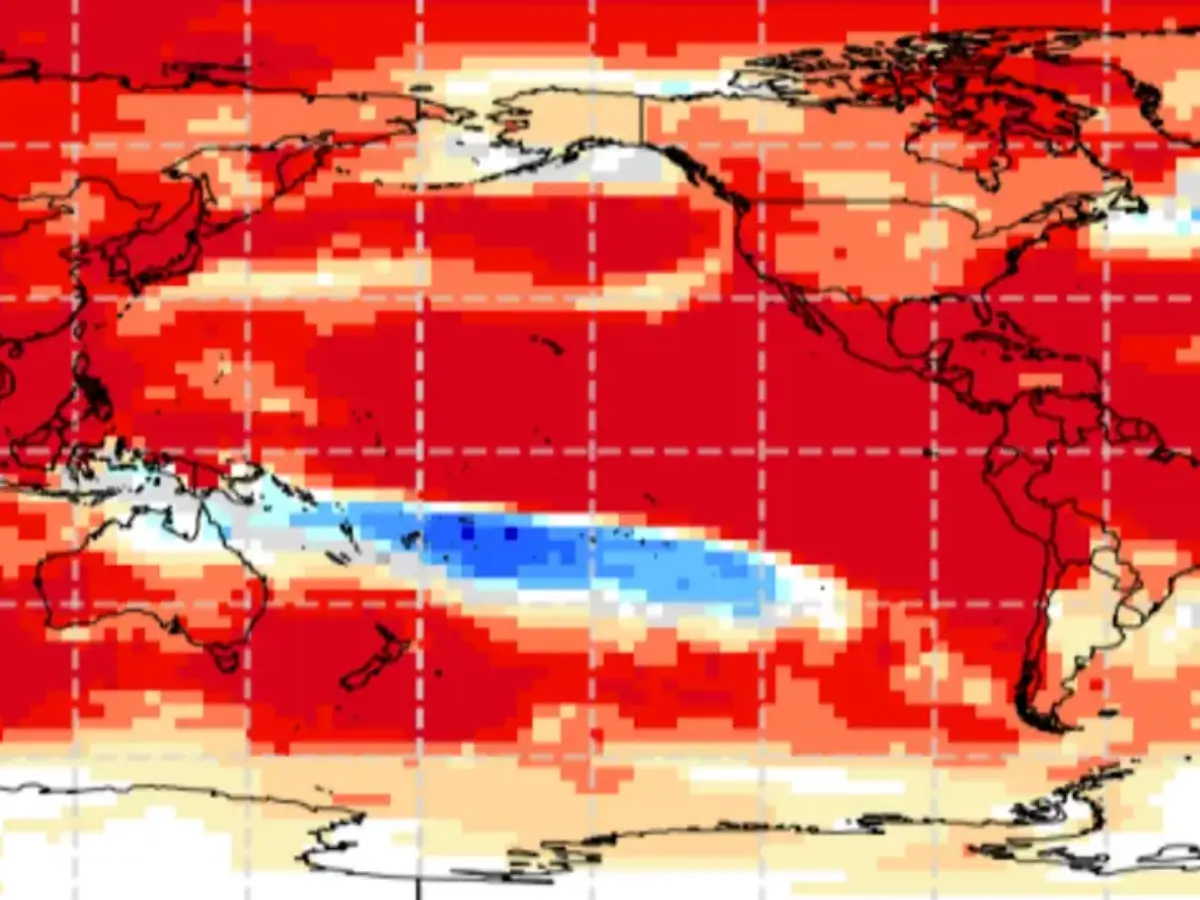
A climate pattern called El Niño is making the oceans even warmer.
Scientists say this extra heat is being added to warming caused by human activities.
Hotter oceans can harm coral reefs, seagrass and fish.
They can also help create stronger rain and storms.
Scientists will keep watching to see whether this record is temporary.

The global average sea surface temperature reached 21.1°C on 22 August.
The reading surpassed the previous record of 21.09°C set in March 2024.
Scientists said the late-August record is unusual because ocean temperatures typically peak in March or April.
El Niño is adding heat to oceans already warmed by decades of human-driven climate change.
Scientists warned of growing risks to marine ecosystems, fisheries, coastal communities, rainfall patterns and storms.
- Who
- Scientists from the European Centre for Medium-Range Weather Forecasts and the Copernicus Climate Change Service, with the World Meteorological Organization providing context.
- What
- The global average sea surface temperature set a record of 21.1°C.
- Where
- Across the world's oceans, with El Niño developing in the Pacific Ocean.
- When
- The record was recorded on 22 August; the article also describes a series of monthly readings throughout 2026.
- Why
- El Niño is adding heat to oceans already affected by decades of human-driven warming.
Key facts
- Record temperature
- 21.1°C
- Record date
- 22 August
- Previous record
- 21.09°C, set in March 2024
- Measurement depth
- 10 metres below the ocean surface
- Typical seasonal peak
- March and April
- Marine heatwave trend
- Global marine heatwave days have more than tripled since the early 1990s
- Monitoring organizations
- European Centre for Medium-Range Weather Forecasts and Copernicus Climate Change Service
Quotes
Samantha Burgess
Researcher at the European Centre for Medium-Range Weather Forecasts
“This record is another clear signal of an ocean under growing stress. El Niño is adding heat to the system, but it is doing so on top of decades of human-driven warming. As ocean temperatures continue to rise, the risks to marine ecosystems and coastal communities also increase.”
 theprint.in
Sources
Related news

Record Ocean Warmth Signals Climate Change Entering Unfamiliar Territory

World’s Oceans Reach Record Heat as El Niño Intensifies
Earth’s Oceans Reach 125,000-Year Heat Record Amid El Niño

Powerful El Niño Could Make 2027 Hottest Year

Climate Change Drives Record Heat Across Europe’s Seas

Potential 2026 Super El Niño Could Rewrite Global Weather Records

World's seas hottest July on record as Europe faces heatwaves

France Braces for Fifth Heatwave as Europe Sets Temperature Records

Western Disturbances Bring Rain, Snow to North India

Telangana Warms Up; Bay of Bengal Weather Systems Monitored