

1 day ago
China’s Rapid Car Development Faces Growing Safety Scrutiny
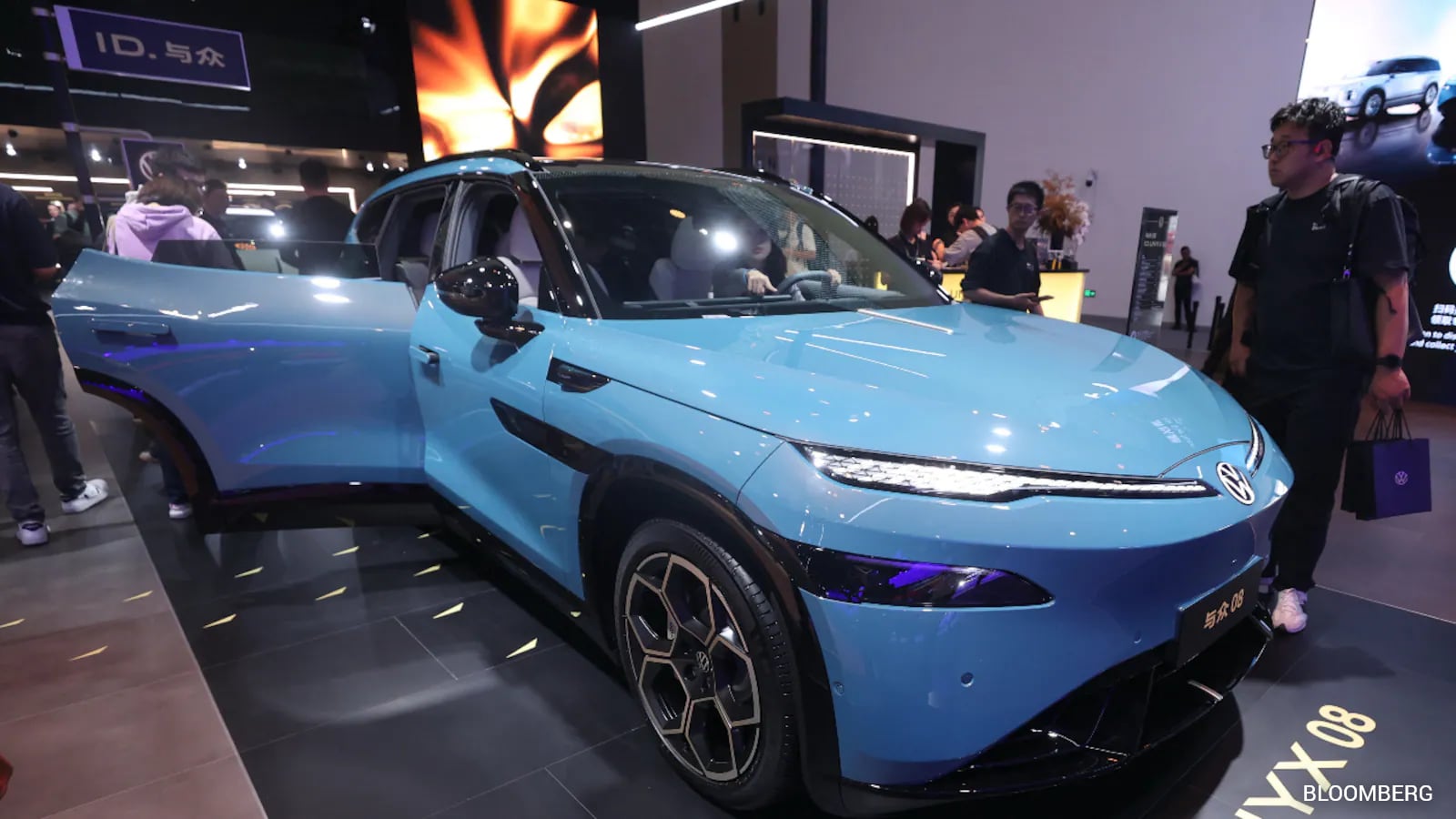
Chinese car companies are making new vehicles very quickly.
Some may use artificial intelligence to create a new model in about 18 months.
This is faster than many older foreign car companies.
Regulators worry that speed could mean cars are not tested carefully enough.
They are inspecting factories and watching customer complaints more closely.
China may require new electric vehicles to drive 30,000 kilometers during testing.
Some industry leaders say cars must be safe before customers use them.
Others say a quickly developed car is fine if it passes all the required tests.
The debate is about how to keep improving cars without putting people at risk.

Artificial intelligence could help Chinese automakers reduce new-model development to 18 months, compared with roughly three to five years for legacy foreign competitors.
Chinese regulators have launched a yearlong inspection campaign amid concerns that faster development could weaken testing and quality control.
Proposed rules would double mandatory new-energy vehicle road testing to 30,000 kilometers.
New safety measures target batteries, advanced driver assistance, autonomous driving systems, software updates, and door handles.
Industry leaders disagree over whether rapid development demonstrates efficiency or risks making customers real-time testers of vehicle durability and safety.
- Who
- Chinese automakers, industry executives, and Chinese regulators, including the Ministry of Industry and Information Technology.
- What
- China is tightening vehicle safety oversight as automakers accelerate model development and adopt artificial intelligence.
- Where
- China, with implications for Chinese automakers expanding into overseas markets such as Europe.
- When
- The inspection campaign is underway; inspections occurred in July, while related public comments and regulations were issued during 2025 and 2026.
- Why
- Regulators are concerned that compressed development and testing timelines could reduce vehicle quality, safety, and public trust.
Safety-first regulation
Speed and efficiency
Compressed development timelines
Safety-first regulation
Executives at Chery Automobile, Zhejiang Geely Holding Group, and Great Wall Motor warn that faster development could turn customers into real-time testers of durability and safety.
Speed and efficiency
Supporters argue that a rapidly developed vehicle is not inherently unsafe if it completes all required testing and meets regulatory standards.
Limits of artificial intelligence
Safety-first regulation
Safety-critical hardware and new technologies require stronger physical validation, and road testing cannot be replaced by simulations or AI.
Speed and efficiency
Industry analysts and technology providers say AI can reduce design errors and accelerate digital validation across many development processes.
Whether automakers can slow down
Safety-first regulation
Regulators are signaling that companies must be more disciplined, particularly as quality concerns and customer complaints increase.
Speed and efficiency
Industry leaders say slowing down is difficult because consumers demand frequent upgrades, competition is intense, sales are weakening, and margins are under pressure.
Key facts
- Potential development speed
- Artificial intelligence could help reduce development of a new model to 18 months, from around two years currently.
- Foreign industry comparison
- Legacy foreign competitors typically take roughly three to five years to develop or substantially change models.
- Proposed road testing
- China is proposing to double mandatory new-energy vehicle road testing to 30,000 kilometers.
- Inspection campaign
- Regulators launched a yearlong campaign that includes surprise inspections at automakers.
- Largest recall
- Tesla and eight other carmakers are set to fix more than 4.27 million electric vehicles under China’s largest vehicle recall.
- Aion battery issue
- Guangzhou Automobile Group’s Aion was inspected after reports that batteries in some models failed at 150,000 kilometers; the brand said repairs or replacements would be free.
- Upcoming safety rules
- New or proposed requirements cover batteries, steer-by-wire systems, door handles, advanced driver assistance, and highly automated driving.
Quotes
Li Xueyong
Vice-president at Chery Automobile Co.
“Cars aren't fast-moving consumer goods. They touch the safety of millions of families and must endure the test of diverse road conditions, climates, and driving habits worldwide. There are simply some development timelines we cannot afford to shortcut.”
 NDTV
NDTV
“While AI can help carmakers to be as fast and as accurate as possible, and reduce the amount of design errors, there are baselines such as the 30,000-kilometer or 50,000-kilometer on-road testing that can't be replaced and shouldn't be replaced.”
NDTV
Sources
Related news
China Recalls 4.3 Million Vehicles Over Hidden Door Risks

China Proposes Autonomous-Driving Rules Amid Millions of Door-Handle Recalls
China Recalls Millions of EVs Over Hidden Door Handles

China Orders Biggest-Ever Vehicle Recall Over Electronic Door Handles
Tesla to fix software for millions of vehicles in China

OpenAI Pauses Frontier AI Training Amid Safety Concerns

Ikea cuts European prices as cost pressures weaken demand

Europe's Bond Selloff Deepens as Middle East Tensions Lift Oil

CNG Prices Rise Rs 2 per Kilogram in Pune

China Challenges US Leadership in Escalating Global AI Contest
