1 week ago
How JNU’s Deprivation Points Expand Access for Marginalised Students
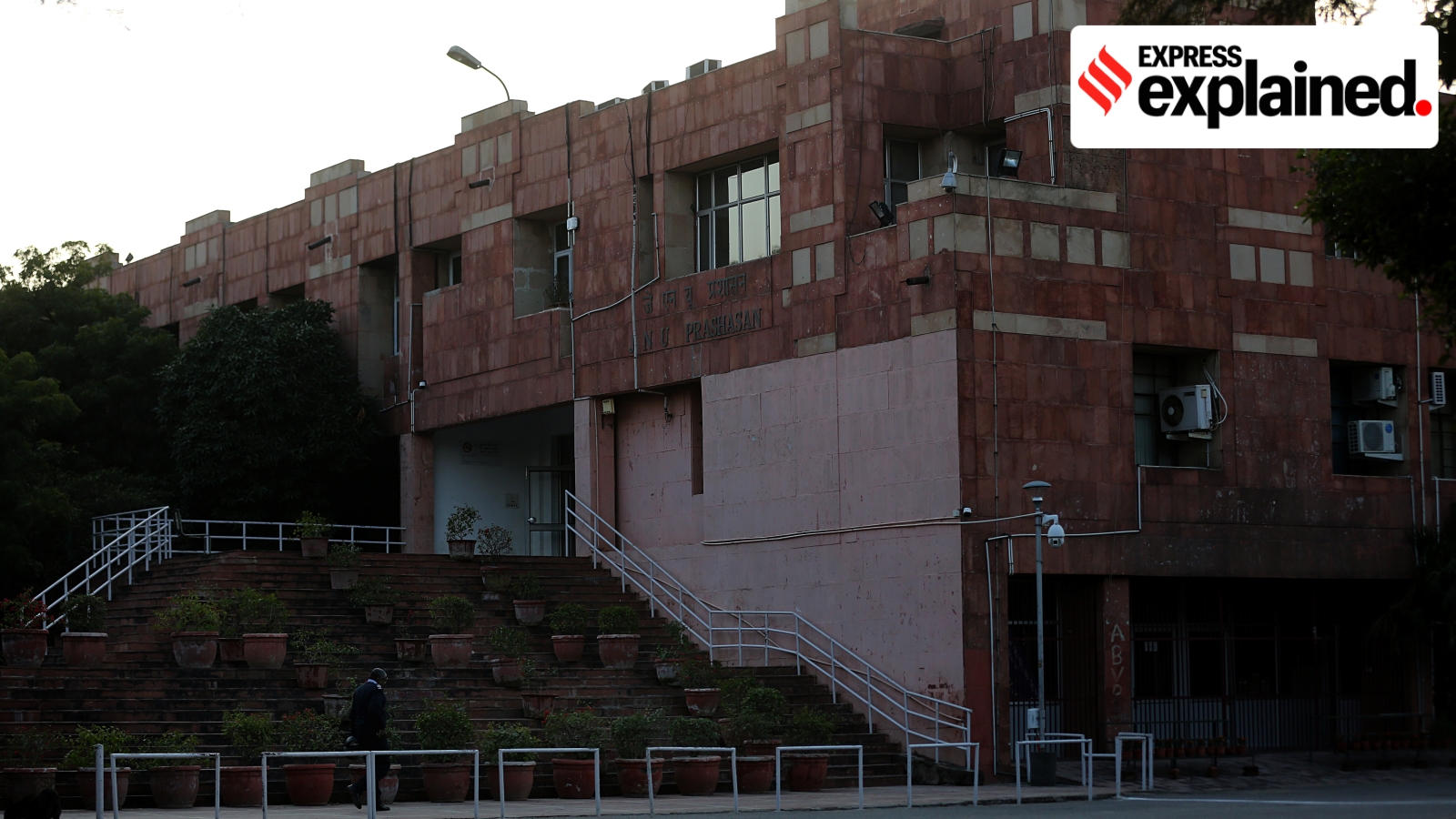
JNU gives some applicants extra points during admissions.
These points are meant to help students who faced fewer educational opportunities.
A student’s district can matter because some areas have greater disadvantages.
Women and transgender applicants may also qualify for points under certain conditions.
Kashmiri migrants can receive points if they provide the required documents.
The system can add as many as 12 points to an entrance-test score.
It applies to several undergraduate, postgraduate and diploma programmes, but not PhD admissions.
One applicant has challenged the system in court.
The Delhi High Court has allowed JNU to keep using it for now while the case continues.

JNU can add up to 12 deprivation points to entrance test scores for eligible undergraduate and postgraduate applicants.
District-based points use Census indicators including female illiteracy, agricultural work, rural population and households without toilets.
Female and transgender candidates, Kashmiri migrants and students from disadvantaged districts may receive additional points.
The system was introduced in the 1970s, withdrawn in 1984 and restored in 1995-96 after student-union pressure.
A Delhi High Court bench has allowed JNU to continue using the model while a legal challenge remains pending.
- Who
- Jawaharlal Nehru University applicants, particularly students from disadvantaged districts, women, transgender persons and Kashmiri migrants.
- What
- JNU’s deprivation-points system adds bonus points to eligible applicants’ entrance-test scores before final merit is determined.
- Where
- Jawaharlal Nehru University in India; its continuation is being considered by the Delhi High Court.
- When
- The model began in the 1970s, was withdrawn in 1984, restored in the 1995-96 academic year and is being used in the current admissions cycle.
- Why
- The system was created to account for unequal educational and regional circumstances and to broaden access beyond students who had already benefited from greater opportunities.
Supporters of deprivation points
Challenge to the model
How merit should be assessed
Supporters of deprivation points
JNU supporters argue that academic scores alone do not reflect the unequal social, economic and regional circumstances in which students compete. They say the points help equalise those conditions and make merit more inclusive.
Challenge to the model
An admission aspirant has challenged the model in the Delhi High Court. The article does not specify the detailed grounds of the challenge or the aspirant’s arguments.
Continuation during litigation
Supporters of deprivation points
The Delhi High Court division bench allowed JNU to continue applying the system while the legal proceedings remain unresolved.
Challenge to the model
The system remains subject to the final outcome of the candidate’s plea, which is being heard by a single judge.
Key facts
- Maximum points
- Eligible applicants can receive up to 12 deprivation points.
- District indicators
- District classifications use female illiteracy, agricultural-worker share, rural population and households without toilets, based on Census data.
- District points
- For undergraduate admissions, Quartile 1 and Quartile 2 districts provide six and four points; for postgraduate admissions, they provide three and two points.
- Other eligibility
- Kashmiri migrants can receive five points, subject to documentation.
- Gender-based points
- Eligible female and transgender candidates receive seven points in specified reserved or district-quartile categories, and five points in the specified unreserved category.
- Programmes covered
- The model applies to undergraduate, postgraduate, certificate of proficiency and advanced diploma of proficiency programmes.
- PhD exclusion
- PhD programmes were excluded in 2017 after JNU adopted 2016 University Grants Commission admission guidelines.
- Court status
- A Delhi High Court division bench allowed JNU to continue using the system pending the final outcome of the aspirant’s plea before a single judge.
Quotes
Surajit Mazumdar
Professor of Economics at JNU and President of the JNU Teachers’ Association
“When JNU was created by an Act of Parliament, it was not created for Delhi alone. It was supposed to draw talent from all across the country”
 indianexpress.com
Rituparna Patgiri
Assistant Professor of Humanities and Social Sciences at IIT-Guwahati
“I think the fundamental innovation that JNU tried to achieve through the deprivation points is not about which social category one belongs to, but the kind of structural deprivation and inequalities which shape the educational opportunities available to the person.”
indianexpress.com
Sources
Related news

Delhi High Court Allows JNU Admissions Despite Deprivation-Points Challenge
JUTA Opposes WBJEE Decentralised Counselling Over Fairness Concerns

JEE Board Rolls Back BTech Counselling Curbs After Protests

J&K Government College Admissions Rise 16% Through Central Portal
UGC Invites Applications for 2026-27 ODL, Online Programme Recognition

India Compresses Professional Training Across Law, Science, and Medicine
UGC Opens Applications for Distance and Online Courses

NTA Releases UGC-NET June 2026 Re-Exam City Intimation Slip
Allahabad University Opens PhD Admissions For 2026-27 Session