1 week ago
Greenland Meltwater May Help Supercharge Europe’s Heatwaves Through Shifting Patterns
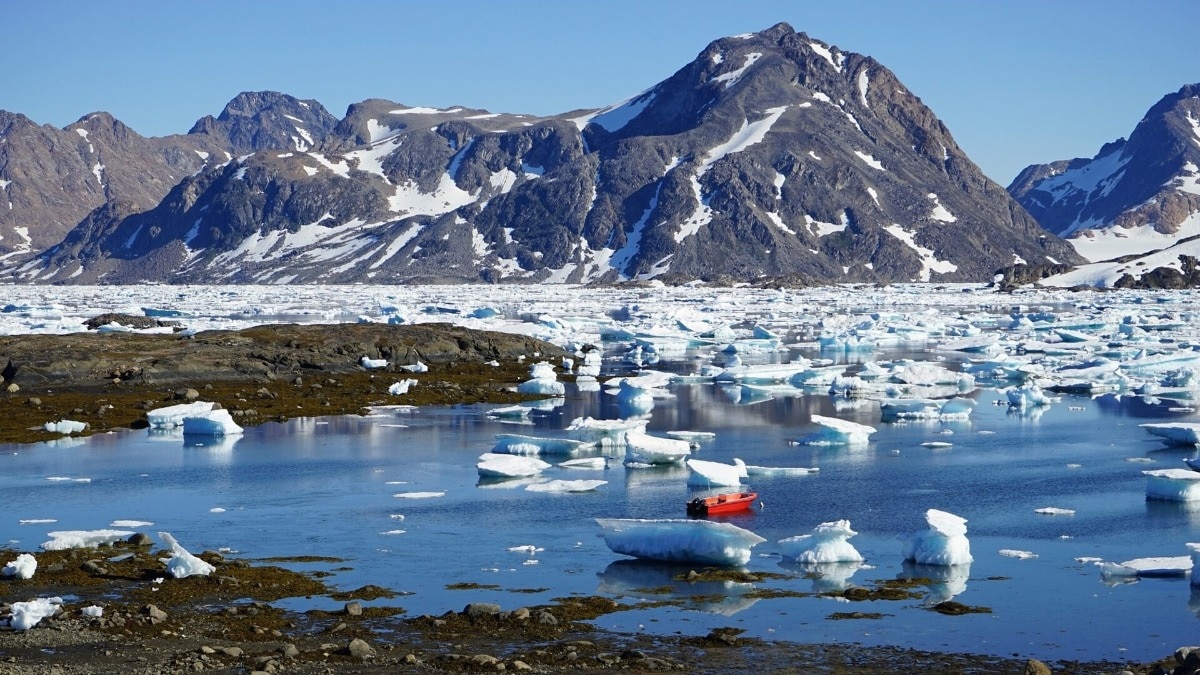
Greenland is losing ice, and the melted water flows into the North Atlantic Ocean.
This water is colder and less salty than normal seawater.
Large amounts could change how the ocean moves.
Ocean changes can affect the air and the jet stream far away.
The jet stream might become wavier, helping high-pressure weather systems settle over Europe.
These systems can block rain and keep hot air in one place.
That could make some heatwaves last longer.
Greenland’s meltwater is not the main cause of climate change.
Scientists say human-caused global warming is still the biggest reason extreme heat is becoming more common.

Greenland’s melting ice sends large amounts of relatively fresh, cold water into the North Atlantic.
The freshwater may cool parts of the ocean and alter its circulation, potentially weakening the AMOC.
Researchers say North Atlantic changes can make the jet stream more wavy and shift weather patterns over Europe.
Persistent high-pressure systems could suppress rain and trap hot air, contributing to longer European heatwaves.
The proposed mechanism may be missing from some climate models, but human-caused global warming remains the primary driver of rising extreme heat.
- Who
- Researchers studying Greenland’s ice loss, North Atlantic circulation and European weather patterns.
- What
- The research suggests Greenland meltwater may alter ocean and atmospheric circulation in ways that intensify or prolong some European heatwaves.
- Where
- Meltwater enters the North Atlantic, while possible atmospheric effects extend thousands of kilometres to Europe.
- When
- As Greenland’s ice loss continues and during recent years of increasingly severe European summer heat.
- Why
- Freshwater from melting ice can cool and disrupt the North Atlantic, potentially changing the jet stream and creating persistent high-pressure systems over Europe.
Key facts
- Source of freshwater
- Melting ice from Greenland
- Ocean affected
- The North Atlantic
- Possible circulation effect
- Freshwater may weaken the Atlantic Meridional Overturning Circulation, or AMOC.
- Atmospheric link
- North Atlantic changes may influence the jet stream thousands of kilometres away.
- European effect
- Wavier jet-stream patterns and persistent high pressure could suppress rainfall and trap hot air.
- Main driver of extreme heat
- Human-caused global warming
- Research status
- The size of the atmospheric effect and the strength of the AMOC response remain uncertain.
Sources
Related news

Jet Stream Swings and Warming Intensify Europe’s Heat and Drought

Why Europe’s Extreme Summer Heat Is Not Just El Niño
Arctic Melt Season Extends 7.5 Days, Threatening Ice Ecosystems
Climate Change Drives Record Heat Across Europe’s Seas
Europe Heatwave Killed 16,000 More Than Usual; Another Expected
IIT Kharagpur Finds Rapid Warming in High-Altitude Jammu and Kashmir
Super El Niño Raises UK Food Security Concerns

Oil Shock and Slowing AI Capex Threaten India’s Recovery

UN Map Enlarges Africa’s Appearance as United States Votes No

Campaign Urges UN to Adopt Map Showing Africa’s True Size

Trump Seeks European Repayment for US Ukraine Aid