

2 weeks ago
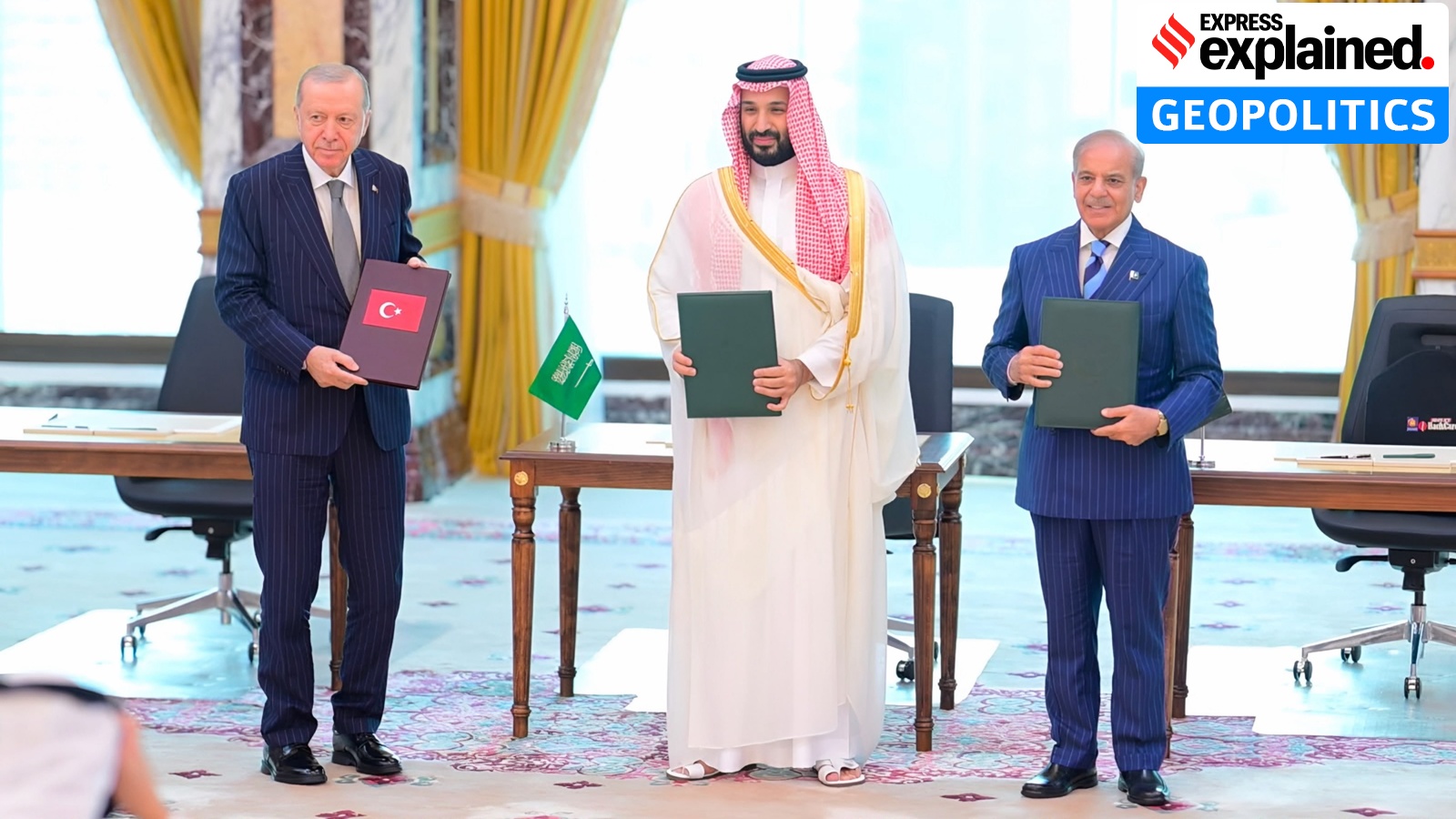
Pakistan, Saudi Arabia and Turkey Sign Mutual Defence Pact
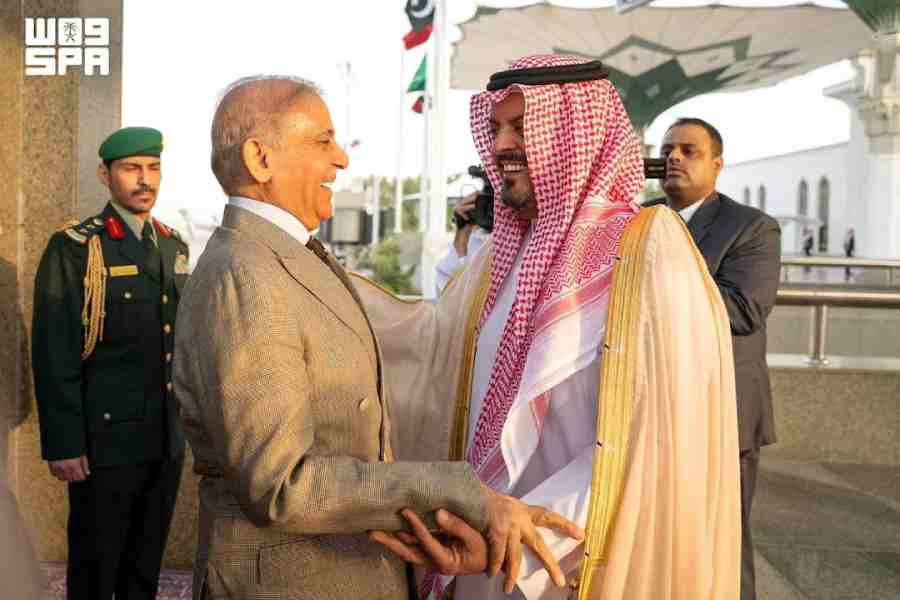
Three countries — Pakistan, Saudi Arabia, and Turkey — made a big promise to help protect each other.
It is called the 'Mecca defence pact'.
If someone attacks one of them, the other two will help, like friends standing up for each other.
The three countries bring different strengths: Saudi Arabia has money, Turkey has advanced technology, and Pakistan has a large army and nuclear weapons.
Many people think the agreement is a warning to Iran.
Iran has been fighting a war with the United States and has attacked Saudi Arabia with missiles and drones.
Saudi Arabia also seems to feel it can no longer rely on the United States to protect it.
The deal is also a signal that Saudi Arabia will not easily make peace with Israel just because the US wants it to.
Other countries like India are now thinking carefully about what this new friendship means for them.

Pakistan, Saudi Arabia and Turkey have signed a mutual defence agreement, dubbed the 'Mecca defence pact', committing each to respond if one member is attacked.
The pact extends a similar bilateral defence agreement struck between Pakistan and Saudi Arabia last September.
Observers see the deal as aimed at deterring Iran from a major military escalation against Saudi Arabia, which has faced repeated attacks during its ongoing war with the United States.
Saudi Arabia's move reflects waning confidence in the US security umbrella, as Washington launched its war on Iran without consulting Gulf states and could not shield them from Tehran's missiles and drones.
The agreement also rebuffs US attempts to have Saudi Arabia normalise ties with Israel, and pushes India to reassess its security assumptions, including not counting on Riyadh's support in any conflict with Pakistan.
- Who
- Pakistan, Saudi Arabia and Turkey, the three signatory nations of the 'Mecca defence pact'.
- What
- A mutual defence agreement in which an attack on one member is treated as an attack on all, extending an earlier Pakistan–Saudi bilaterall deal and drawing comparisons with NATO.
- Where
- At the intersection of West Asia and South Asia, involving Pakistan, Saudi Arabia and Turkey.
- When
- Recent, with an exact date not specified in the article; it extends an agreement struck last September.
- Why
- To deter Iran from a major military escalation against Saudi Arabia, amid Saudi doubts about the US security umbrella, and to rebuff US pressure for Saudi normalisation with Israel.
Gulf-focused observers' view
Editorial's assessment
Main target of the pact
Gulf-focused observers' view
The pact is aimed at deterring Iran from a major military escalation against Saudi Arabia, which Iran has repeatedly attacked via direct strikes and proxies during its war with the United States.
Editorial's assessment
The deal is also a message to the US, rebuffing Washington's efforts to get Saudi Arabia to normalise ties with Israel and reflecting Riyadh's loss of faith in the US security umbrella.
How India should respond
Gulf-focused observers' view
The pact poses no direct threat to New Delhi, since Saudi Arabia and Turkey are unlikely to be drawn into a future India–Pakistan conflict.
Editorial's assessment
India can no longer expect support from Riyadh in a conflict with Pakistan and should prepare for a post-US-led security architecture by building its own partnerships.
Key facts
- Pact name
- Mecca defence pact
- Signatories
- Pakistan, Saudi Arabia, Turkey
- Core commitment
- An attack on one member is treated as an attack on all
- Predecessor pact
- Pakistan–Saudi Arabia bilateral defence agreement struck last September
- Comparison
- Observers have drawn parallels with NATO
- Perceived target
- Deterring Iran from a major military escalation against Saudi Arabia
- US dimension
- Washington launched its war on Iran without consulting Gulf states; Riyadh doubts the US security umbrella
- Impact on India
- No direct threat, but India cannot expect Riyadh's support in a hypothetical conflict with Pakistan
Sources
Related news

Saudi Arabia, Turkey, Pakistan Sign Mecca Defence Agreement
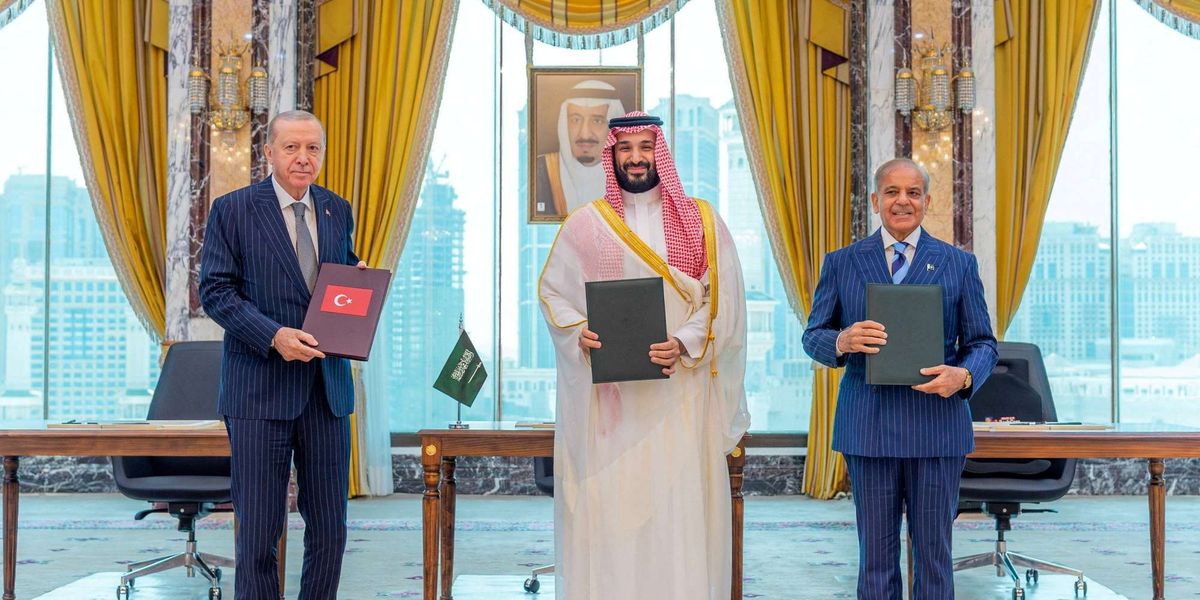
Saudi Arabia, Turkey and Pakistan sign Mecca Joint Defence Agreement
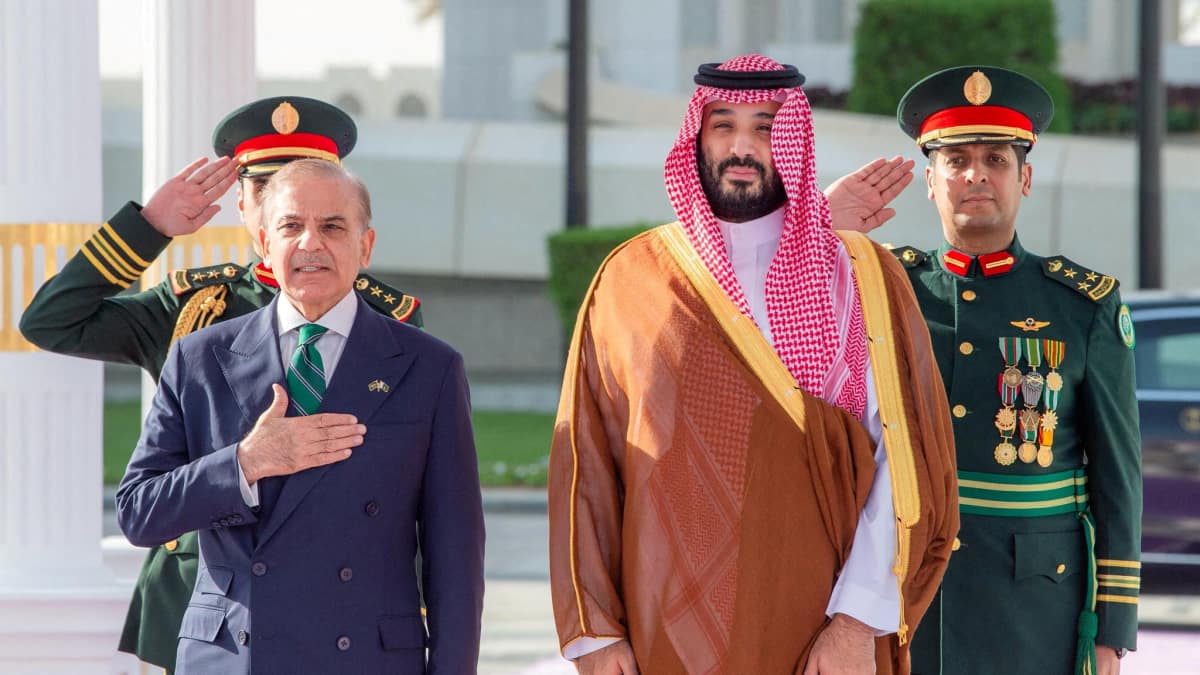
Why India Need Not Lose Sleep Over Saudi-Pakistan-Turkiye Deal
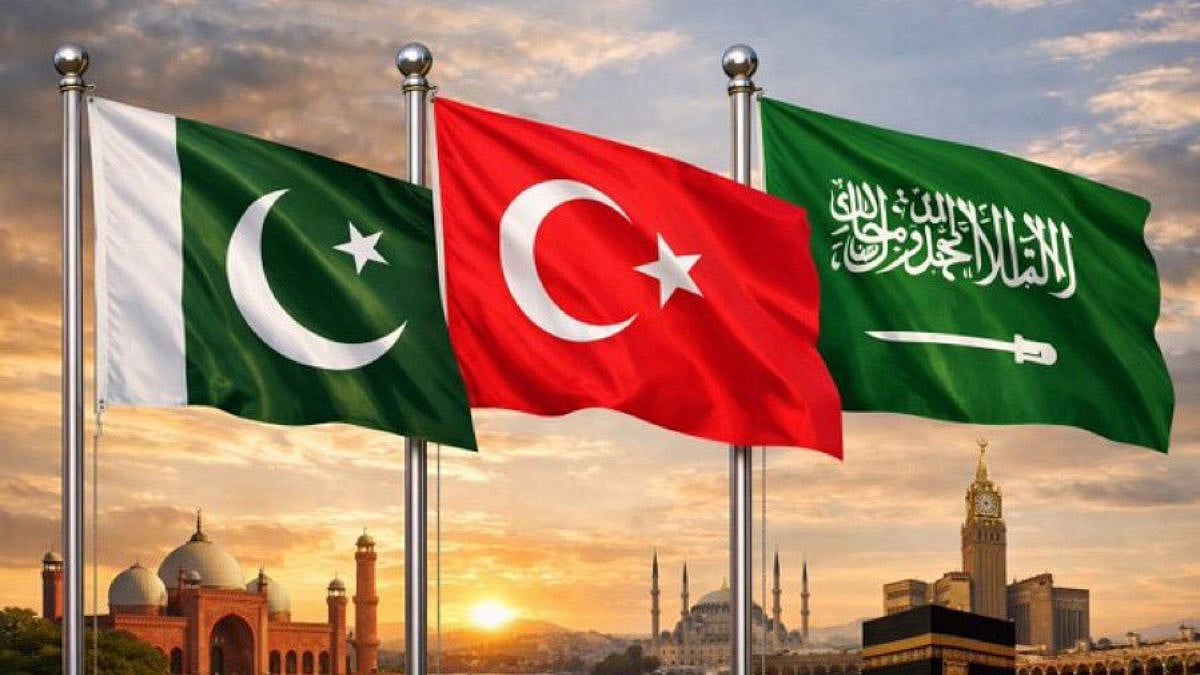
Saudi-Turkey-Pakistan Defence Pact Raises Security Concerns For India
Saudi Arabia, Turkey, Pakistan Sign Mecca Joint Defence Agreement
Pakistan seeks Mecca pact front against Israel and India
Pentagon Turmoil Deepens as Hegseth Tightens Grip on Military

Germany Blames Russia for Leipzig Drone Attack, Europe Vows Response
Erdogan Says Turkey Would Consider Full Shanghai Cooperation Organisation Membership
Augsburg Train Station Closed After Explosion, Suspicious Object Found

Taliban Offers Afghan Mineral Wealth as Washington Weighs Engagement
