1 hr ago
Supreme Court Questions Penalties for Refusing Vande Mataram
India’s Supreme Court is considering whether people can be punished for not singing “Vande Mataram.”
A new law provides a possible prison sentence or fine for disrupting its singing.
Some people say they cannot sing the song because it conflicts with their religious beliefs or personal conscience.
The government wants all six stanzas sung at official events.
A petition says the final four stanzas refer to Hindu deities.
The court said people should not be punished simply for following their conscience.
It referred to an earlier case protecting children who refused to sing the national anthem for religious reasons.
The court is looking at the punishment, not deciding whether “Vande Mataram” should remain the national song.

The Supreme Court said people who refuse to sing “Vande Mataram” for reasons of conscience should not be punished.
A 2026 amendment to the Prevention of Insults to National Honour Act prescribes up to three years’ imprisonment, a fine, or both.
The Bharatiya Janata Party-led government has required all six stanzas at official and ceremonial functions.
A petition by singer and writer T.M. Krishna argues that the final four stanzas invoke Hindu deities and challenge secular principles.
The court indicated it would examine the penalty, not the decision to designate “Vande Mataram” as the national song.
- Who
- The Supreme Court, the Bharatiya Janata Party-led government, and petitioner T.M. Krishna are central to the matter.
- What
- The court is considering penalties for refusing to sing or disrupting the singing of all six stanzas of “Vande Mataram.”
- Where
- India, before the Supreme Court.
- When
- The issue concerns a 2026 amendment; the court also referred to a relevant 1987 judgment.
- Why
- The petition challenges punishment for people who refuse to sing the song because of conscience, religion, or concerns about its final four stanzas.
Individual Rights and Secular Concerns
Uniform National Observance
Whether refusal should be punished
Individual Rights and Secular Concerns
People who object for reasons of conscience or religion should be protected from penalties, including through the rights to freedom of religion, expression, and personal liberty.
Uniform National Observance
The government’s policy requires all six stanzas to be sung at official and ceremonial functions, with the amendment prescribing penalties for disruption.
The final four stanzas
Individual Rights and Secular Concerns
The petition argues that the final four stanzas invoke Hindu deities and that making them compulsory undermines secular equality and minority rights.
Uniform National Observance
The government has insisted that the song be sung in full at government events, treating all six stanzas as part of the required observance.
Scope of the court’s review
Individual Rights and Secular Concerns
The court’s approach, as described in the editorial, protects conscientious individual choice without fear of punishment.
Uniform National Observance
The court said it would not decide whether “Vande Mataram” should be the national song, limiting its consideration to the penalty.
Key facts
- Song
- “Vande Mataram,” designated as India’s national song
- Amendment
- A 2026 amendment to the Prevention of Insults to National Honour Act, 1971
- Possible penalty
- Up to three years’ imprisonment, a fine, or both
- Government policy
- All six stanzas are required at official and ceremonial functions
- Petitioner
- T.M. Krishna, singer and writer
- Earlier precedent
- A 1987 Supreme Court judgment protected children who refused to sing the national anthem for religious reasons
- Court’s stated focus
- The penalty for refusal or disruption, rather than the song’s designation as the national song
Sources
Related news

Supreme Court Examines Penal Action For Refusing Vande Mataram
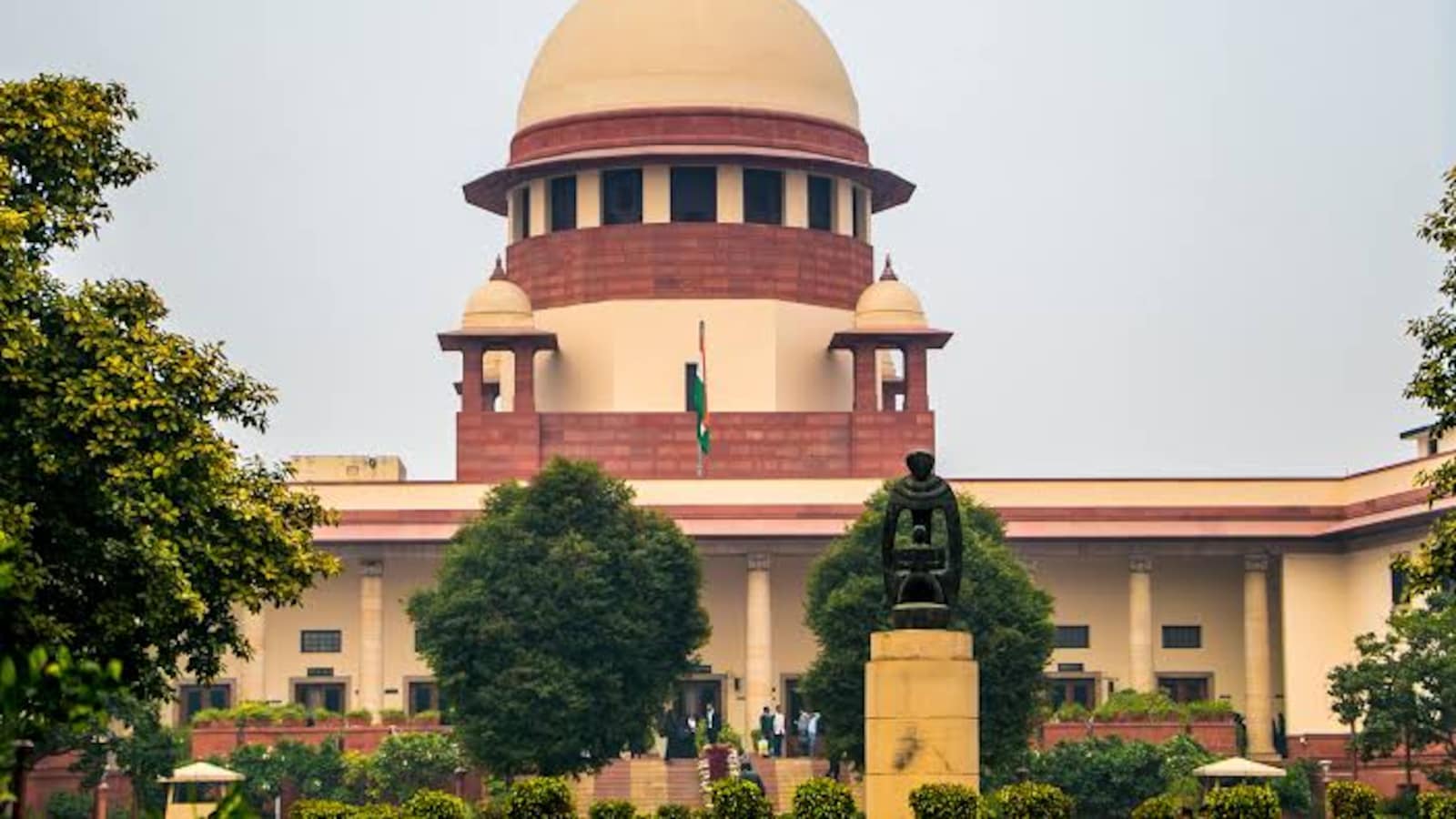
Supreme Court Protects Conscientious Objectors in Vande Mataram Case
Supreme Court Signals No Criminal Case Over Unsing Vande Mataram
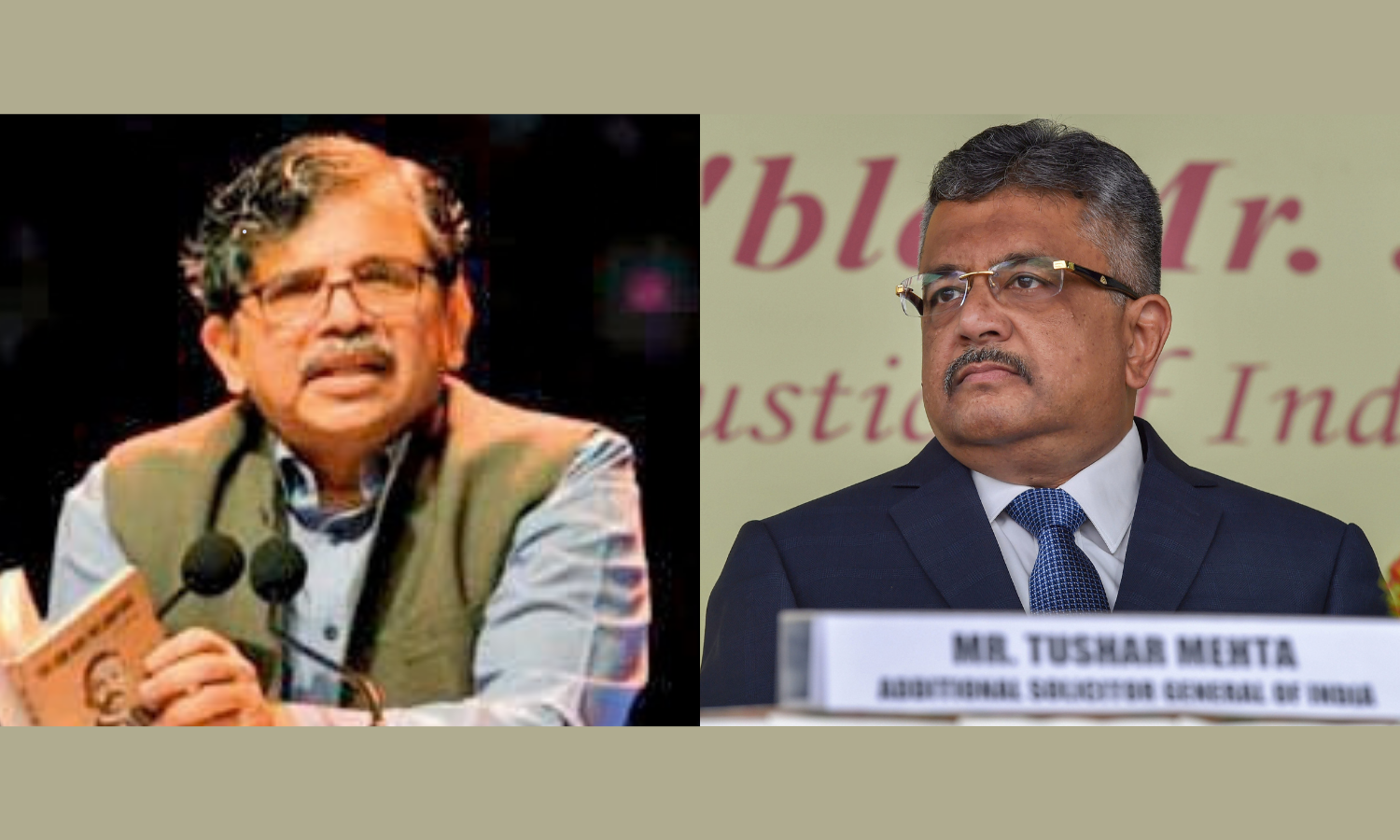
Supreme Court Examines Vande Mataram Law Amid Heated Exchange

Why Jana Gana Mana and Vande Mataram Can Coexist
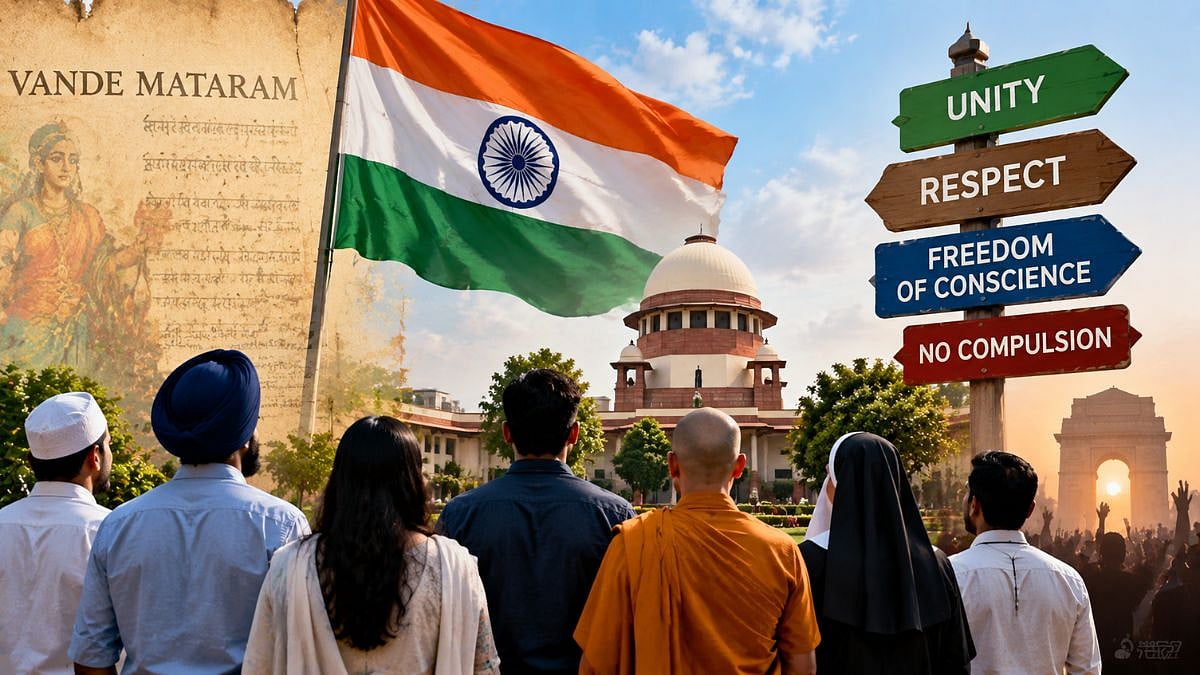
Supreme Court Says National Symbols Must Respect Conscience
Modi Pays Tribute to Deendayal Upadhyaya on Birth Anniversary
Why the Supreme Court Did Not Stop India’s SIR
Nitin Nabin Heads Jaipur Visit With Cleanliness, Youth Outreach

Samastipur Assault Video Prompts Ally’s Challenge to Bihar Government