1 hr ago
Why the Supreme Court Did Not Stop India’s SIR
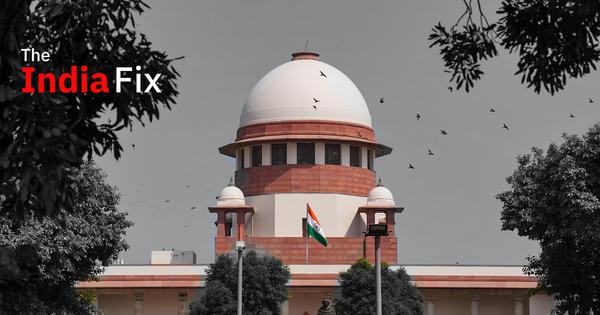
The Special Intensive Revision, or SIR, was a process for changing India’s voter lists.
It was used in places including Bihar and West Bengal.
Critics said important decisions were being made by central election officials or computer systems instead of local officers.
They also said some people were removed for questionable reasons, such as differences in names or family ages.
The Supreme Court was asked to examine these complaints.
The court did not stop the process, accepting the Election Commission’s explanation in West Bengal and saying the main purpose of the law remained in Bihar.
The article argues that many Muslims were especially affected in West Bengal.
It also says that 91% of decided appeals restored deleted names, suggesting that many removals may have been mistaken.
The article concludes that the courts have often been reluctant to challenge powerful governments.

The Special Intensive Revision reorganized voter rolls in Bihar and West Bengal, with critics alleging that it centralized decisions that the law assigns to local electoral registration officers.
During litigation, the Supreme Court accepted the Election Commission’s denial of illegality in West Bengal and said Bihar’s process preserved the law’s “substance.”
Critics also challenged exclusion rules based on alleged “logical discrepancies,” including name mismatches and unusual age gaps between parents and children.
The article says the process disproportionately targeted Muslims in West Bengal and contributed to stronger Bharatiya Janata Party performance.
Of the appeals decided so far, 91% reportedly reversed deletions, which the article presents as evidence of widespread errors.
- Who
- The Election Commission, the Supreme Court, electoral registration officers, affected voters, and critics including legal scholar Gaurav Mukherjee.
- What
- A dispute over the Special Intensive Revision of voter rolls and the Supreme Court’s decision not to halt it.
- Where
- Bihar and West Bengal, India.
- When
- The controversy developed in 2025; the article also cites a Supreme Court hearing on April 3, 2026.
- Why
- Critics say the revision centralized legally local decisions, used arbitrary exclusion criteria, and disproportionately affected Muslims; the court accepted the Election Commission’s position that the process was lawful or retained the law’s substance.
Critics and Legal Challenges
Election Commission and Court Rationale
Centralization of voter-roll decisions
Critics and Legal Challenges
Critics argue that the law requires electoral registration officers to prepare the rolls locally and that the SIR improperly shifted decisions to centralized systems or authorities.
Election Commission and Court Rationale
The Election Commission denied that the process was illegal, while the Supreme Court said in the Bihar case that the substance of the legal procedure remained intact.
Removal of names and voting rights
Critics and Legal Challenges
Critics argue that arbitrary exclusions denied citizens the right to vote and that the high rate of successful appeals showed the process produced major errors.
Election Commission and Court Rationale
A Supreme Court judge said that being unable to vote in one election did not mean a person’s voting right was permanently removed and could be restored in the future.
Political and community impact
Critics and Legal Challenges
The article argues that the process disproportionately targeted Muslims in West Bengal and helped the Bharatiya Janata Party perform better against the Trinamool Congress.
Election Commission and Court Rationale
The Election Commission and the court’s position, as presented in the article, did not accept that the process violated the law or required judicial suspension.
Key facts
- Process
- Special Intensive Revision of electoral rolls
- States discussed
- Bihar and West Bengal
- Main legal dispute
- Whether voter-roll decisions were improperly centralized instead of being made by local electoral registration officers
- Exclusion criteria cited
- So-called logical discrepancies, including parental-name mismatches, unusual parent-child age gaps, and parents having more than six children
- Appeal outcomes
- The article reports that 91% of decided appeals resulted in deleted names being restored
- Political effect alleged
- A Scroll analysis found a strong relationship between larger electoral-roll declines and improved Bharatiya Janata Party performance relative to the Trinamool Congress
Quotes
Justice Joymalya Bagchi
Supreme Court judge who made the remark during a Bengal SIR hearing
“If someone cannot vote in this election.. does not mean their right can be deprived forever”
 scroll.in
Sources
Related news
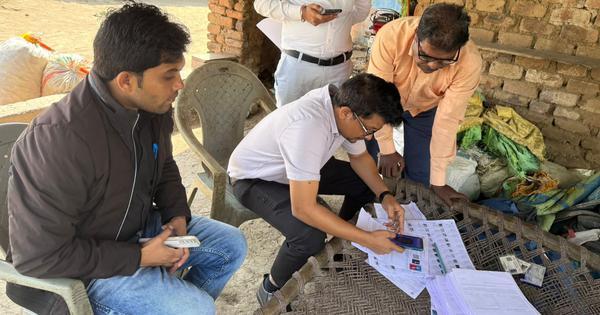
India's Controversial Electoral Roll Revision Faces Internal and Public Scrutiny

Two Election Commissioners Raise 14 Objections Over SIR Decisions
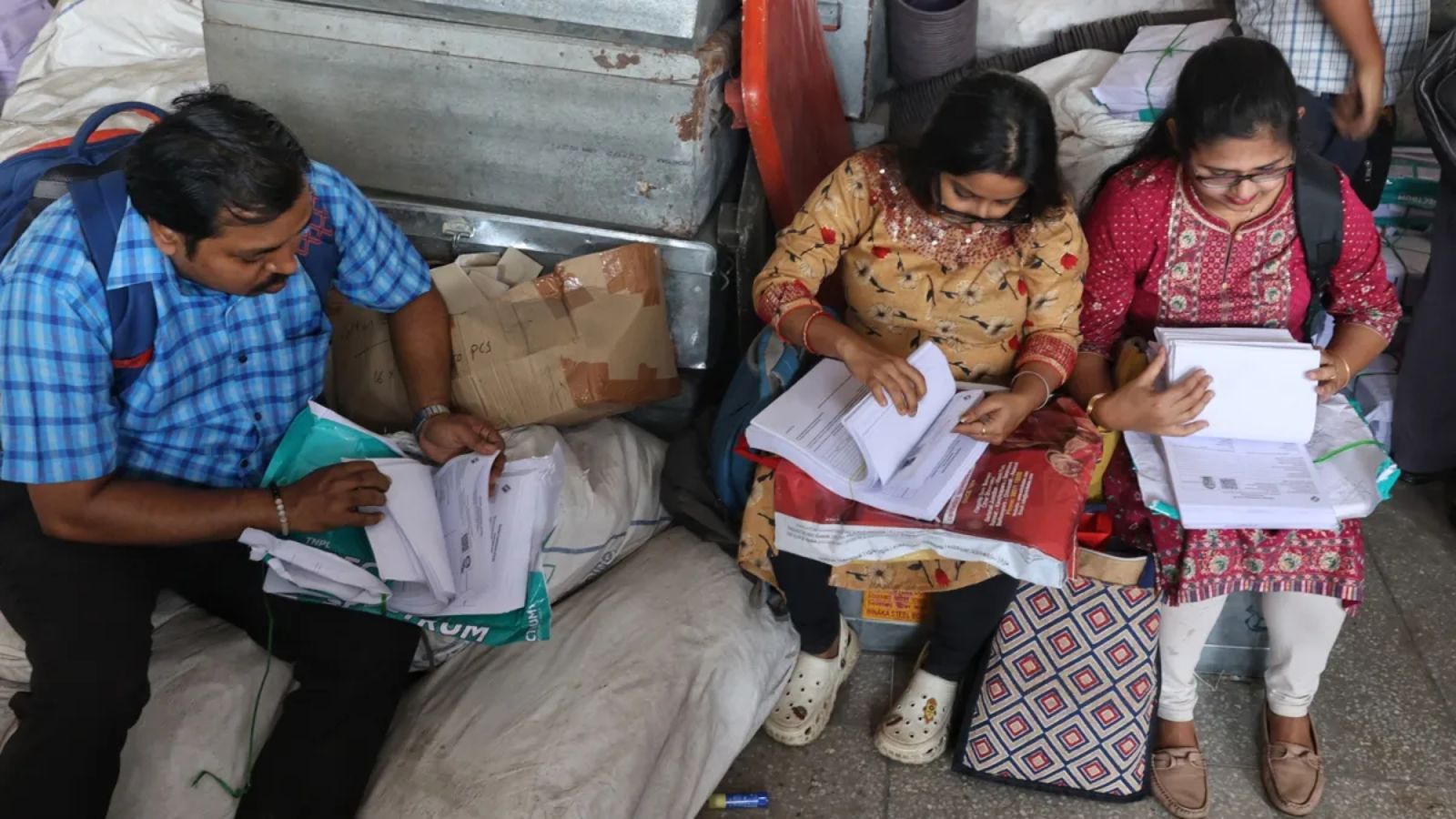
Calls Grow to Rethink India’s Voter Roll Revision

Former Election Commissioner Calls Electoral Roll Revision Unfair Despite Legality
Electoral Roll Purge Draws Warning Over India’s Voting Rights
Bengal Voter Roll Revision Raises Questions Over Centralisation
Modi Pays Tribute to Deendayal Upadhyaya on Birth Anniversary
Supreme Court Questions Penalties for Refusing Vande Mataram
Nitin Nabin Heads Jaipur Visit With Cleanliness, Youth Outreach

Samastipur Assault Video Prompts Ally’s Challenge to Bihar Government