3 weeks ago
Mecca Joint Defence Agreement exposes Arab weakness, analyst says
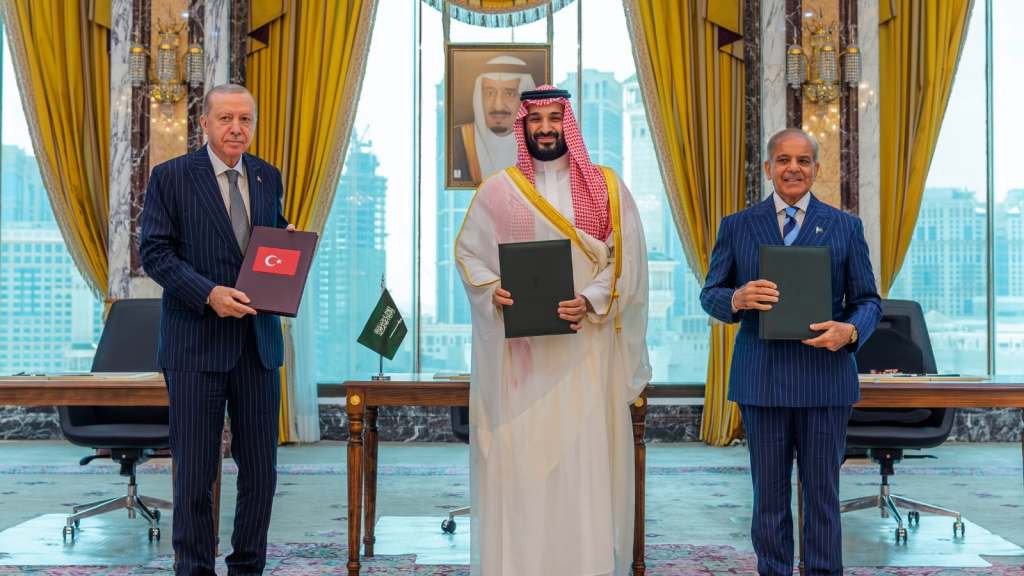
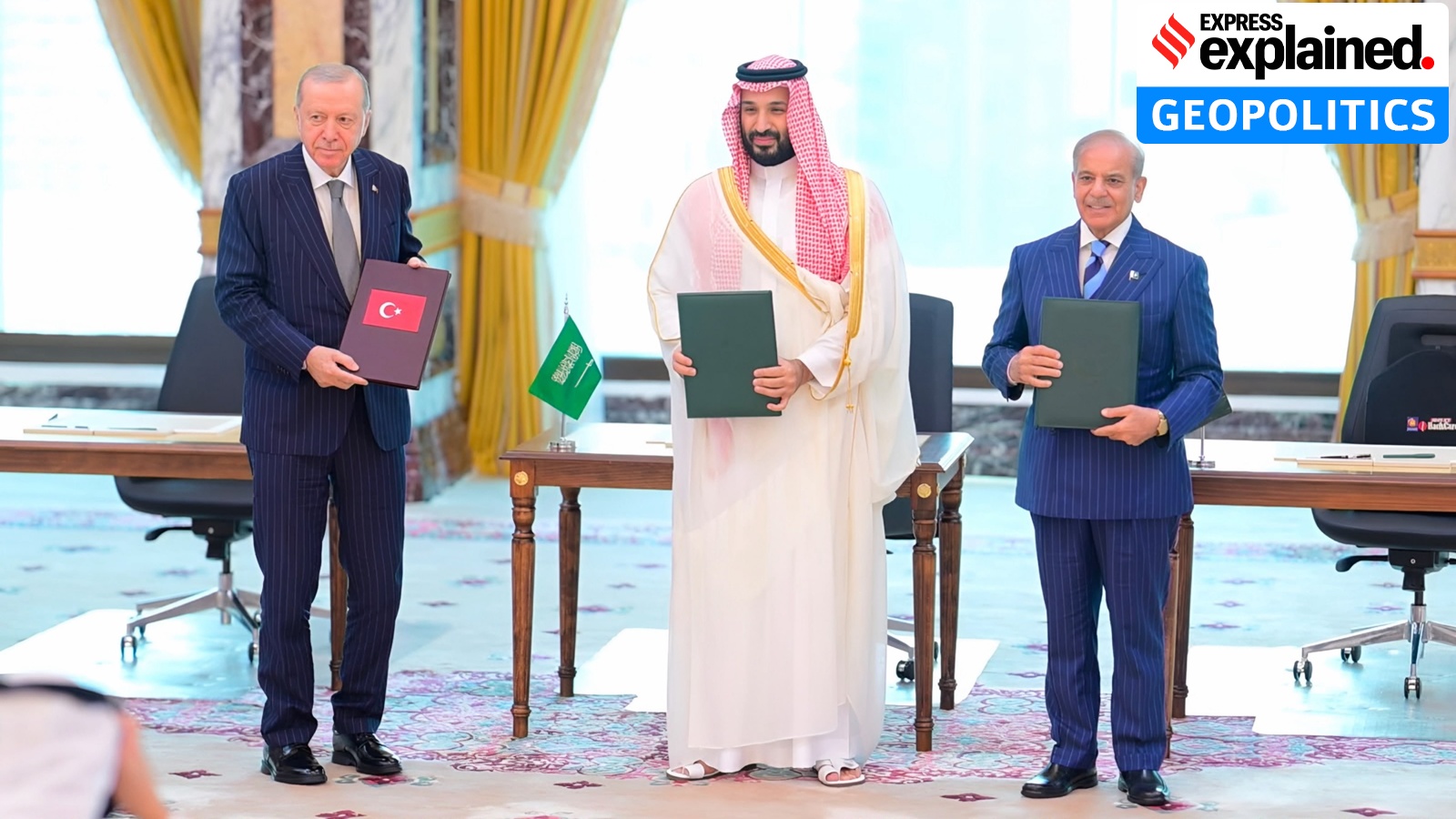
Three countries — Saudi Arabia, Turkey, and Pakistan — signed a special agreement called the Mecca Joint Defence Agreement on August 7.
The agreement says they will work together to protect each other.
A writer named C. Raja Mohan wrote an article about this agreement.
He thinks the agreement shows that Arab countries are weak, not strong.
He remembers a politician from long ago who said that adding zeros together still gives you zero.
That was about countries promising to help each other but not really doing it.
The writer says that in the past, groups of Arab countries often failed to work together.
He says the help that really worked came from America, not from Arab countries themselves.
He thinks the new agreement is mainly a backup plan in case America cannot be trusted.
He hopes that India will offer more help to Middle Eastern countries in the future.

Saudi Arabia, Turkey and Pakistan signed the Mecca Joint Defence Agreement on August 7.
C. Raja Mohan argues the accord is a hedge against American unreliability, not evidence of Islamic security self-reliance.
The article recalls Suhrawardy's 1956 remark that "zero plus zero plus zero still amounts to zero" about Arab solidarity.
Pakistan's parliament voted unanimously for neutrality when Riyadh sought troops for its Yemen war in 2015.
Riyadh's Turkish turn is significant because Erdogan once campaigned to isolate Crown Prince Mohammed bin Salman over Jamal Khashoggi's 2018 killing.
- Who
- Saudi Arabia, Turkey and Pakistan, which signed the agreement, and analyst C. Raja Mohan who commented on it
- What
- The signing of the Mecca Joint Defence Agreement
- Where
- Mecca
- When
- August 7
- Why
- The author argues it serves as a hedge against American unreliability and a signal to Tehran and Washington
Sceptical view
Optimistic view
Purpose of the Mecca Accord
Sceptical view
It is a hedge against American unreliability and a signal to Tehran and Washington, not genuine Islamic security self-reliance.
Optimistic view
The accord can be read as a demonstration of Islamic security cooperation and the development of alternative options beyond the US.
Saudi-Turkish reconciliation
Sceptical view
The accord does not dissolve the structural contradictions between Riyadh and Ankara.
Optimistic view
Years of patch-up efforts mean the two regional powers have moved past earlier rivalry over Khashoggi and the Muslim Brotherhood.
India's regional role
Sceptical view
Delhi should expand its military engagement and become a credible security actor in the Middle East.
Optimistic view
India has long treated renunciation of a Middle East security role as a virtue and remained a passive bystander.
Key facts
- Agreement
- Mecca Joint Defence Agreement
- Signatories
- Saudi Arabia, Turkey, Pakistan
- Date signed
- August 7
- Author's assessment
- A hedge against American unreliability, not Islamic security self-reliance
- Pakistan in Yemen (2015)
- Parliament voted unanimously for neutrality when asked for troops
- Prior defence pact
- A September 2025 Pakistan-Saudi pact, after which Houthi missiles and drones struck Saudi Arabia regularly
- Historical remark
- Suhrawardy (1956): "Zero plus zero plus zero still amounts to zero"
Sources
Related news
Saudi Arabia, Turkey, Pakistan Sign Mecca Joint Defence Agreement
How Far Will Saudi Arabia Go for Pakistan's Mecca Pact?

Mecca Joint Defence Pact Risks Remaining Rhetorical, Report Warns
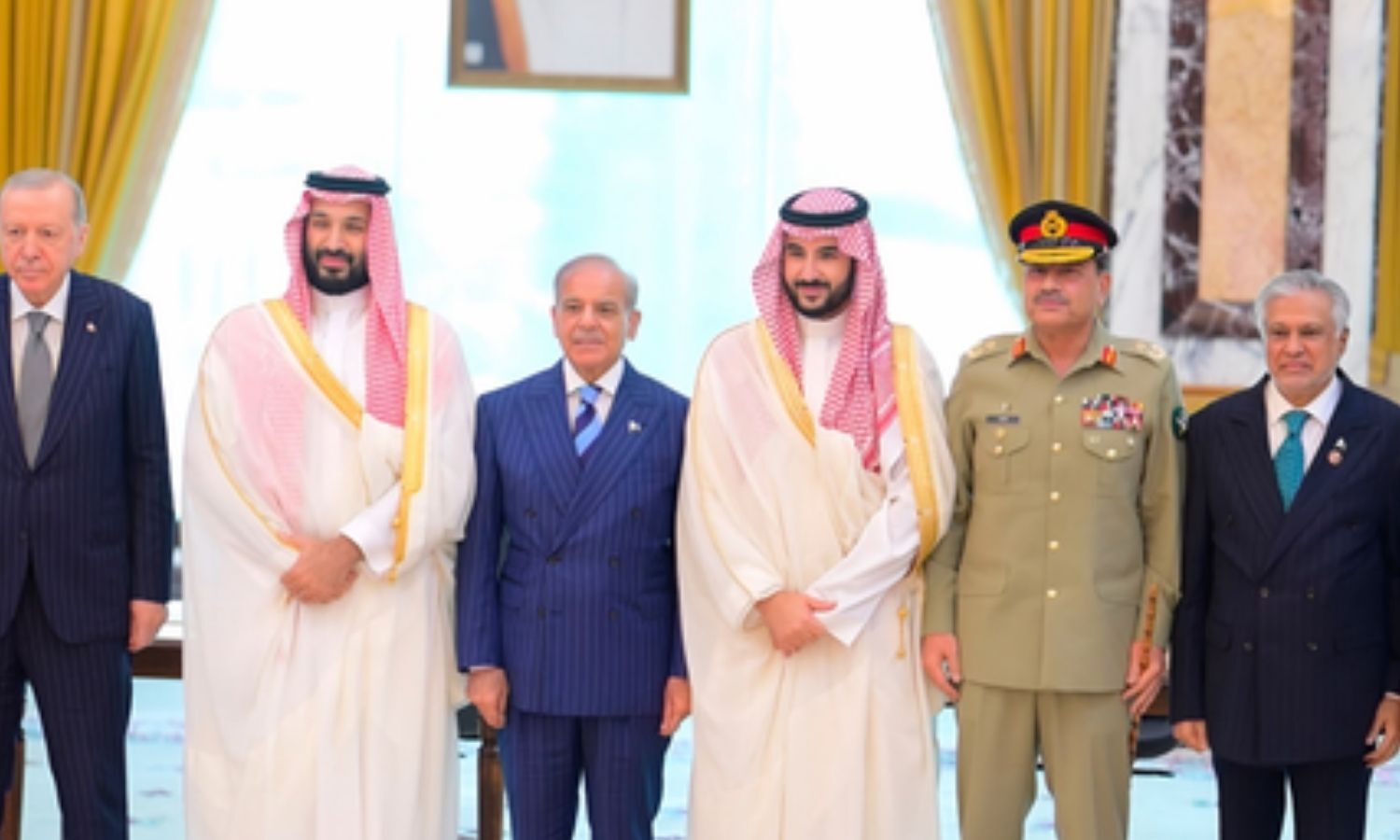
Mecca Defence Pact Faces Questions Over Its Political Cohesion

Saudi Arabia, Turkey, Pakistan Sign Mecca Defence Agreement
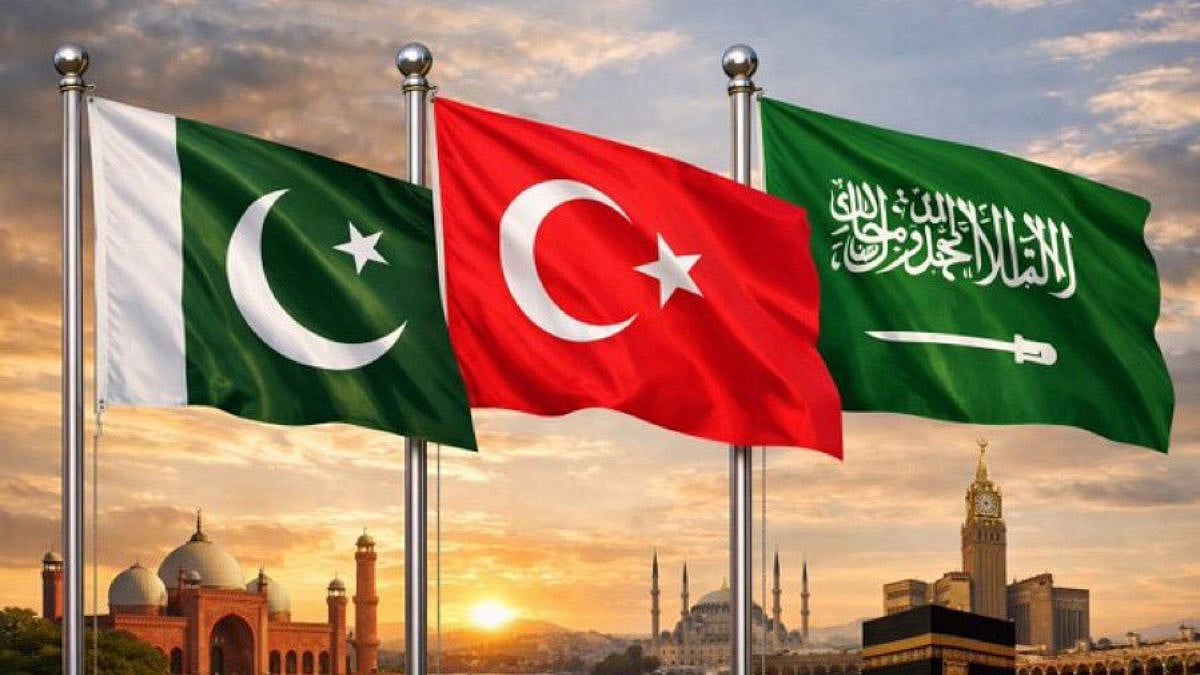
Saudi-Turkey-Pakistan Defence Pact Raises Security Concerns For India
India-Egypt Convergence Could Strengthen BRICS and Global South
Remembering the Punjab Boundary Force and the Shadow of Partition
Supreme Court Recognizes Menstrual Hygiene as Constitutional Right

India-Arab Meeting Strengthens Ties, Focuses on Terrorism and Trade