5 days ago
How Tagore Used Rakhi to Resist Bengal’s Partition
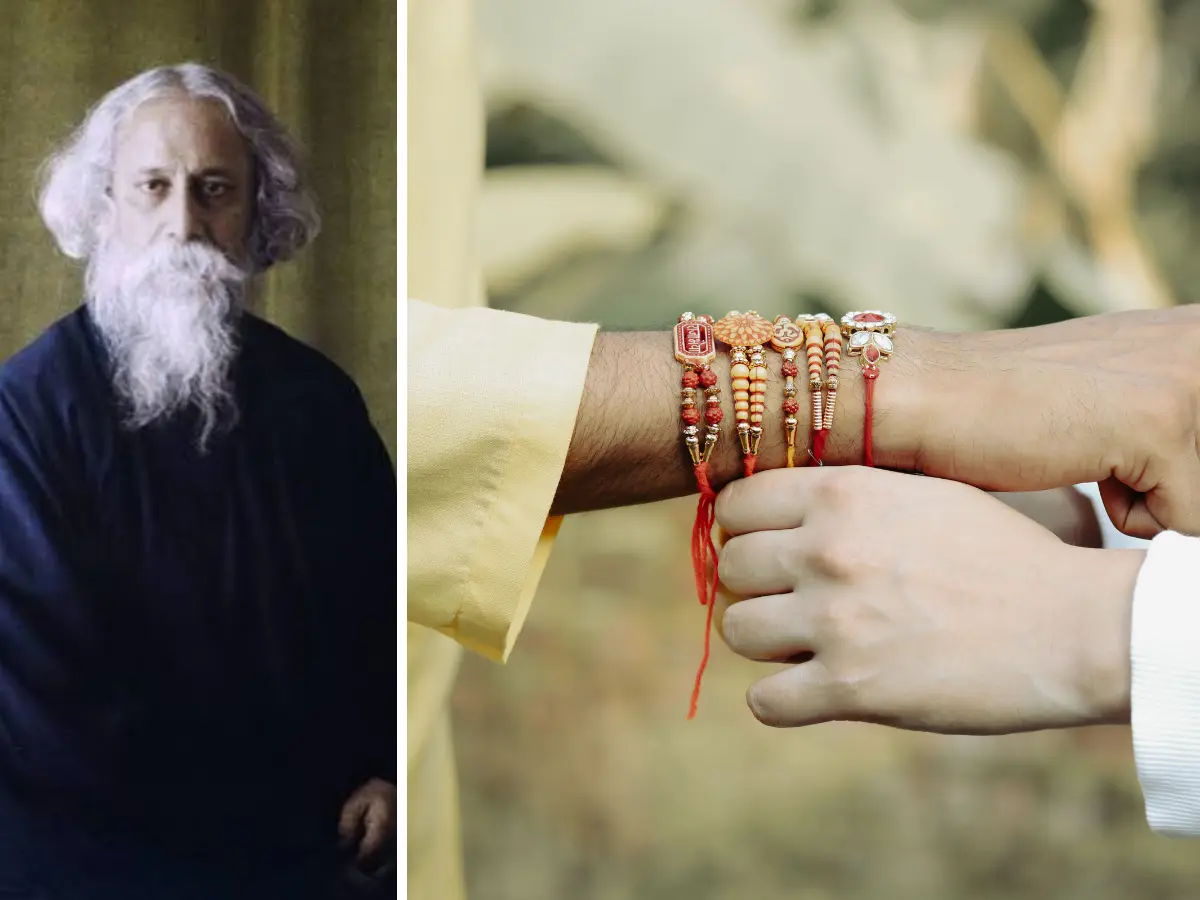
In 1905, the British decided to split Bengal into two parts.
Many people believed the plan would separate Hindus and Muslims.
Poet Rabindranath Tagore wanted people to stand together instead.
He used Rakhi, a thread traditionally exchanged by siblings, as a sign of friendship and unity.
On the day the partition began, people tied yellow threads on one another’s wrists.
Tagore led a procession through Kolkata and visited Muslim neighbourhoods.
People also sang songs about their shared home, Bengal.
These actions became part of the movement against British rule.
The British later cancelled the partition in 1911.

In 1905, Lord Curzon announced Bengal’s partition, creating Muslim-majority Eastern Bengal and Assam and Hindu-majority Western Bengal.
Rabindranath Tagore reimagined Rakshabandhan as a public symbol of Hindu-Muslim unity.
On October 16, 1905, Tagore called for mourning and urged people to tie yellow threads to one another’s wrists.
Tagore led a procession through Kolkata’s Muslim neighbourhoods, visiting mosques, markets and homes while singing patriotic songs.
The Rakhi-centered solidarity became a symbol of the Swadeshi movement, and the partition was annulled in 1911.
- Who
- Rabindranath Tagore, along with Hindus and Muslims in Bengal, led a campaign of solidarity against the British partition plan.
- What
- Rakhi was transformed from a family ritual into a public symbol of Hindu-Muslim unity and resistance to Bengal’s partition.
- Where
- The movement was highlighted in Kolkata and also involved marches in Dhaka and Sylhet.
- When
- The partition took effect on October 16, 1905, and was annulled in 1911.
- Why
- The British partition was presented as administrative restructuring but was described as dividing Bengal along religious lines and weakening its nationalist movement.
Key facts
- Partition announced by
- Lord Curzon
- Partition date
- October 16, 1905
- Administrative result
- Eastern Bengal and Assam became Muslim-majority, while Western Bengal became Hindu-majority.
- Rakhi symbol
- A yellow silk thread representing an unbreakable bond between Hindus and Muslims.
- Tagore’s song
- “Banglar Mati, Banglar Jol,” meaning “Soil of Bengal, Water of Bengal.”
- Movement associated
- The Swadeshi movement.
- Partition annulled
- 1911
Sources
Related news
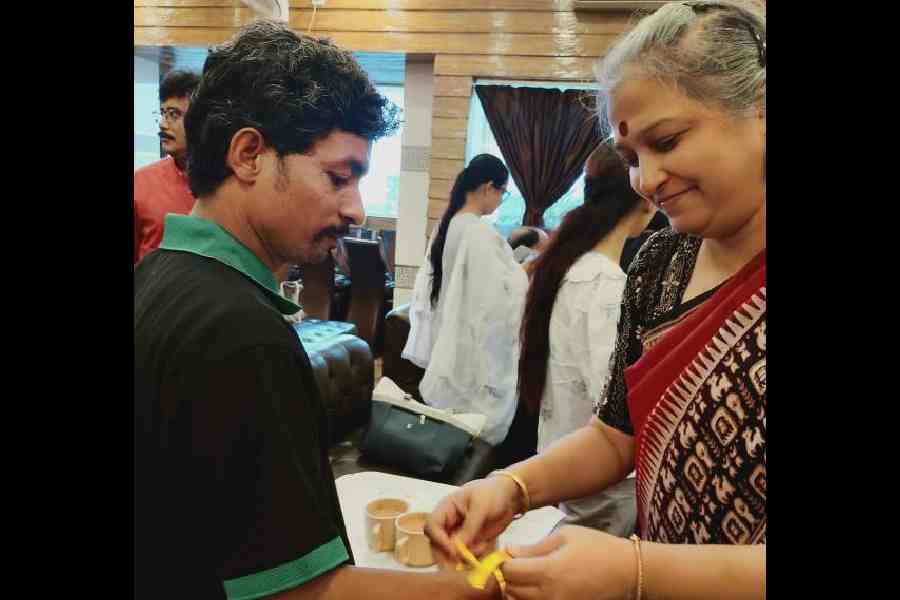
Rakhi Gathering Revives Tagore’s Message Against Divisive Politics
Bengal Government Plans Raksha Bandhan With Rabindra, Folk Performances
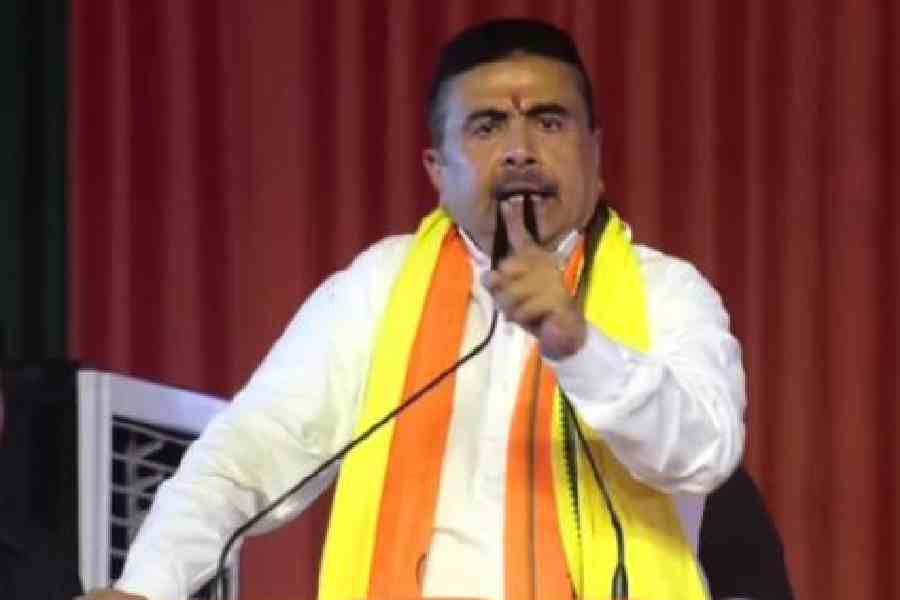
Suvendu Adhikari announces Raksha Bandhan at Har Ghar Tiranga rally

Indore Marks Raksha Bandhan With Faith, Family And Civic Initiatives
West Bengal Governor Urges Universities to Observe Partition Horrors Remembrance Day
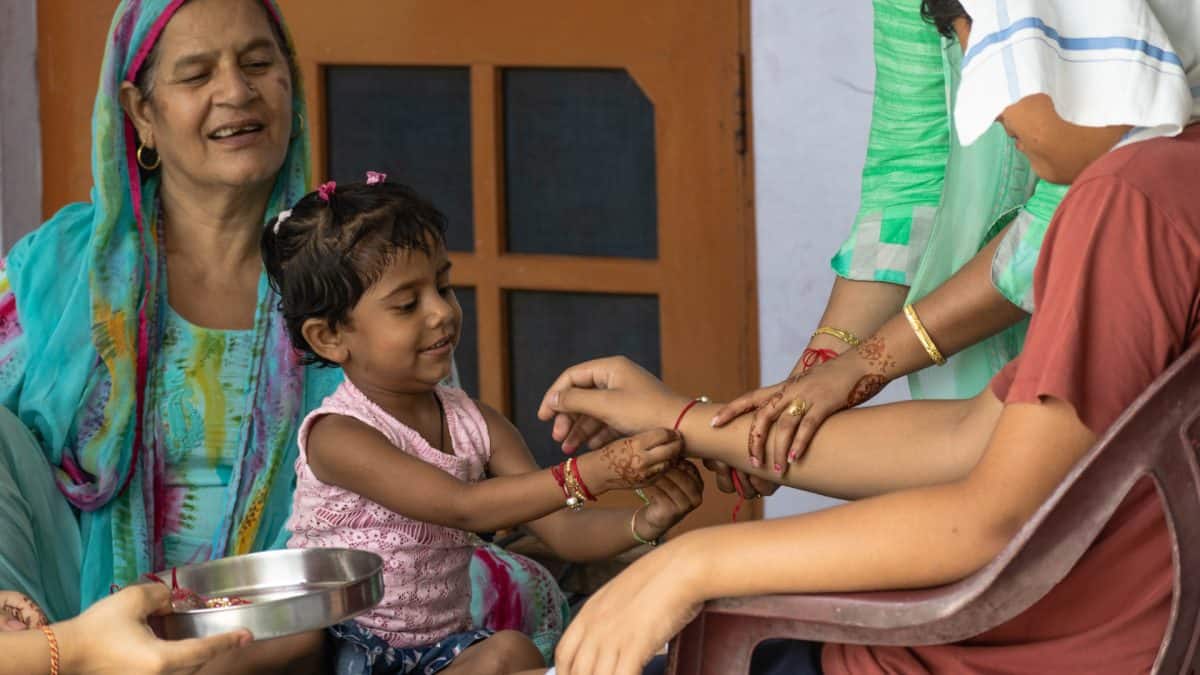
Raksha Bandhan's History Reveals A Festival Beyond Simple Sibling Protection

Quit India Movement paved way for Independence, Congress leader says
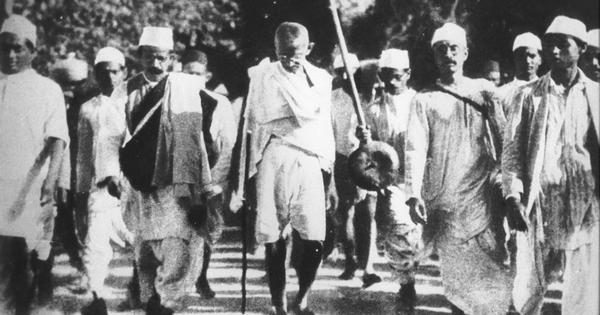
Independence Day fiction: Jailed satyagraha volunteer's family faces land seizure

Independence Day 2026: Freedom Fighter Quotes Continue to Inspire

From Colonial Neglect, India Built a Healthcare System of Promise