

2 hrs ago
New Simulations Suggest Moon Formed Within Five Hours
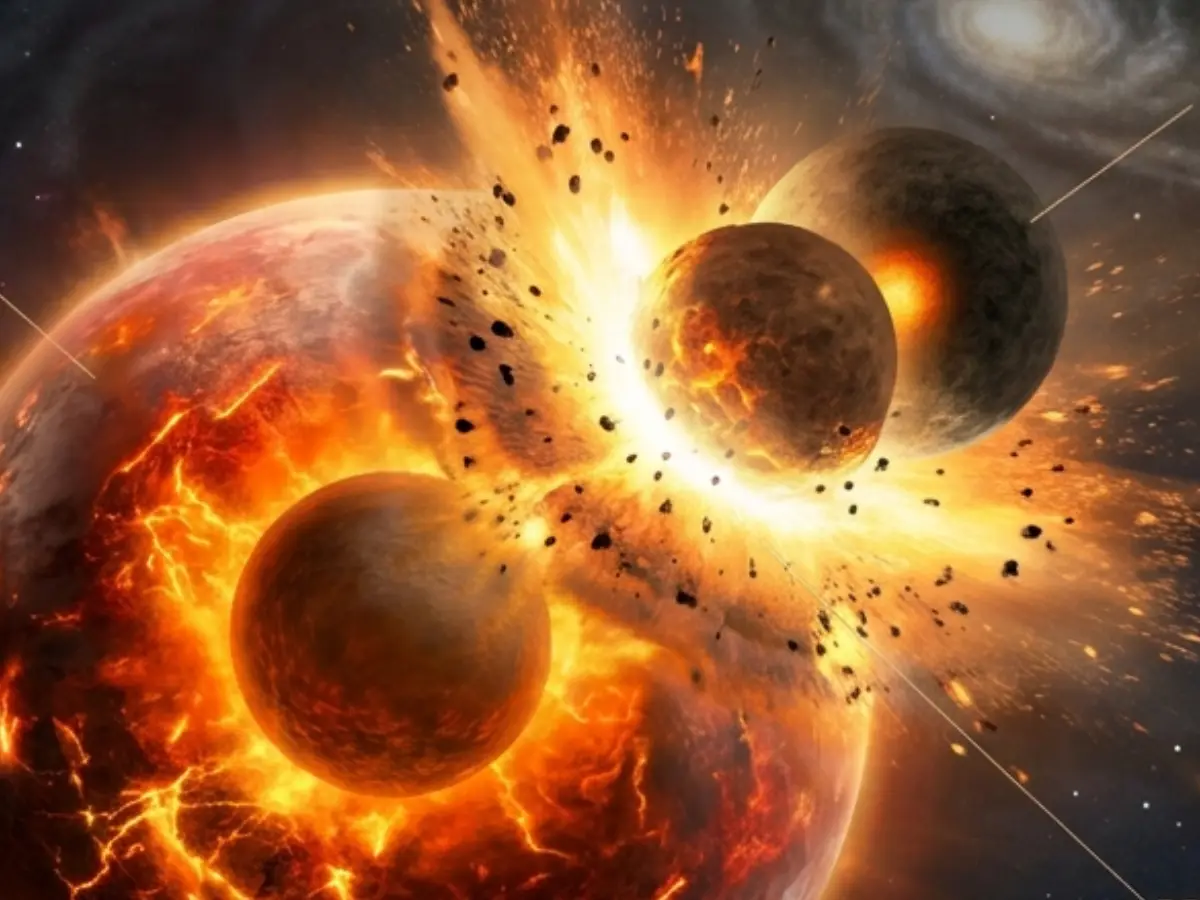
Scientists think a planet called Theia crashed into Earth long ago.
The crash sent rocks and debris into space.
Those pieces eventually joined together to form the Moon.
Earlier ideas suggested this process took much longer.
New computer tests showed that an intact Moon might have appeared in about five hours.
The result depended on how hot Earth and Theia were.
It also depended on how strong their rocks were.
The researchers said this could help explain what the Moon is made of.
It may also help scientists understand when the collision happened.

A collision between Earth and Theia about 4.5 billion years ago is widely described as the Moon’s origin.
New computer simulations indicate that an intact Moon could have emerged in roughly five hours after the impact.
The simulations found that the temperatures of Earth and Theia affected how quickly debris gathered.
Unlike earlier models, the new study included the strength of planetary rocks rather than treating both bodies as fluids.
Researchers said the findings could clarify the collision’s timing and differences in the Moon’s composition and volatile materials.
- Who
- Scientists from the Southwest Research Institute and the University of Arizona, including Dr Adeene Denton, studied the event.
- What
- Computer simulations examined how Earth’s collision with Theia could have formed the Moon in about five hours.
- Where
- The collision involved Earth and produced debris that moved into outer space.
- When
- The collision occurred about 4.5 billion years ago; the new study was published in Astrophysical Journal Letters.
- Why
- The researchers aimed to better understand the Moon’s formation, the timing of the collision, and its composition and volatile materials.
Earlier Formation Model
New Strength-Aware Model
How quickly the Moon formed
Earlier Formation Model
Earlier descriptions said debris from the collision coalesced over years to create the Moon.
New Strength-Aware Model
Some new simulations showed an intact Moon emerging in roughly five hours.
How the colliding bodies were modeled
Earlier Formation Model
Previous studies treated Earth and Theia as fluid worlds and did not account for the strength of their rocks.
New Strength-Aware Model
The new simulations included material strength, along with the bodies’ temperature structures, and produced different results.
Key facts
- Proposed impactor
- Theia
- Estimated collision time
- About 4.5 billion years ago
- Formation time in some simulations
- Approximately five hours
- Research institutions
- Southwest Research Institute and University of Arizona
- Publication
- Astrophysical Journal Letters
- Important simulation factors
- The temperatures and material strength of Earth and Theia
- Potential implications
- The findings may help explain the Moon’s formation timing, composition, and volatile material
Sources
Related news

SpaceX Falcon 9 Upper Stage Likely Crashes Into the Moon
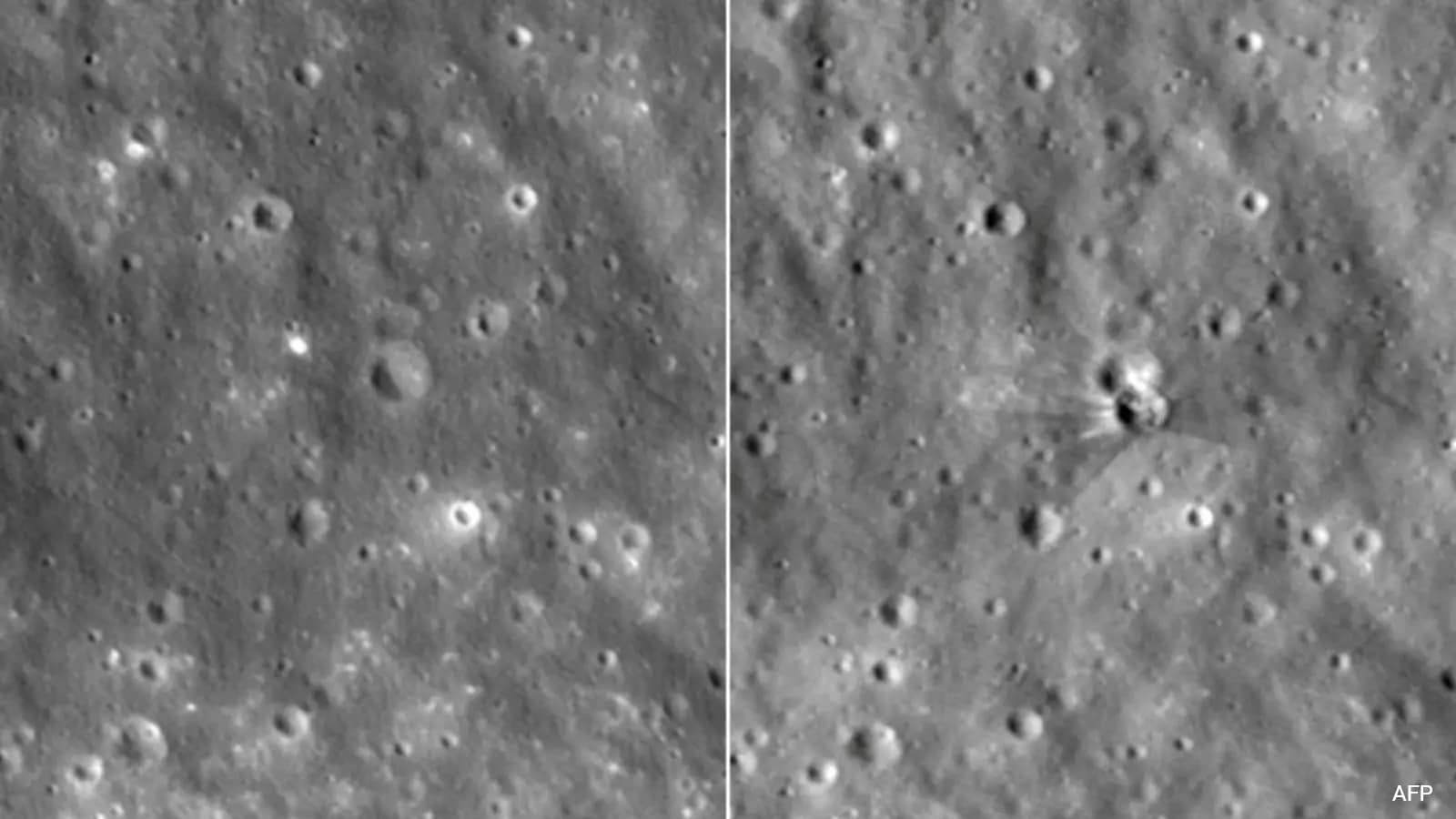
NASA Orbiter Reveals 60-Foot Crater From SpaceX Rocket Impact
Ukrainian Astronomers Report More Than 20 UFOs Near the Moon

NASA Finds Earth Microbes Could Survive Near Moon’s South Pole

Astronaut Shares Ancient Manicouagan Crater View From Space
Next Lunar Eclipse Set for February 2027 Across India, World

Why Soil Is Brown: Humus, Iron, and Earth’s Colour

2026 Blood Moon Eclipse Draws Global Attention and Zodiac Claims

Smartphone Tips for Capturing the 2026 Partial Lunar Eclipse
