

Science & Tech · Science & Environment · 1 day ago
Two Deep-Sea Rock Samples Caught Fire During Lab Testing
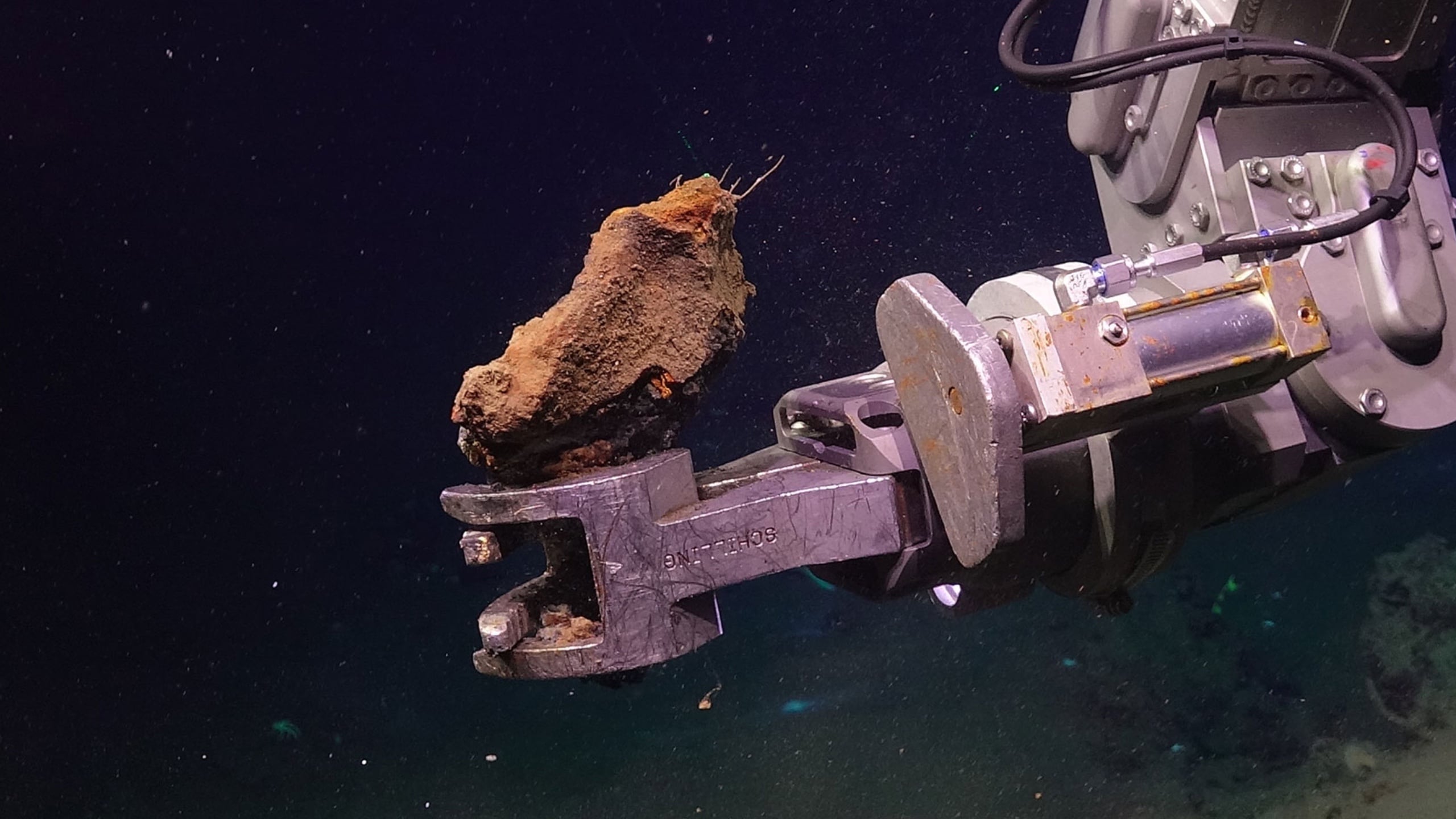
In 2022, researchers collected 57 hydrothermal rock samples from the Escanaba Trough, off the Oregon–California border.
During laboratory processing, two samples caught fire as they were freeze-dried and crushed, reaching temperatures above 100 °C.
The rocks were made mostly of nanocrystalline marcasite, an iron sulfide that can react with oxygen.
Crushing and other forces may help start that reaction, which produces heat.
The finding does not mean all rocks containing marcasite are dangerous, but it points to a possible risk when deep-sea minerals are brought to the surface.
Seafloor sulfide deposits can contain metals such as copper, zinc, gold and silver, and exploration contracts have been granted for two deep-sea ridges.
Mining has not yet taken place, and the researchers say the hazard may need special attention if it moves forward.

Two deep-sea rock samples collected in 2022 spontaneously caught fire during laboratory testing.
The samples’ temperatures rose above 100 °C, and the original rocks were completely oxidized.
Researchers found the rocks were made mostly of nanocrystalline marcasite, a form of iron sulfide that appears especially unstable in oxygen.
The USGS says the finding could matter for safety if deep-sea mining of seafloor massive sulfide deposits goes ahead.
The rocks were collected from the Escanaba Trough, off the Oregon–California border.
- Who
- Researchers at the United States Geological Survey collected and studied the samples.
- What
- Two deep-sea metal-sulfide rock samples spontaneously combusted during laboratory testing.
- When
- The samples were collected in 2022; the exact date of the laboratory tests is not stated.
- Where
- In a laboratory. The rocks came from the Escanaba Trough, off the Oregon–California border.
- Why
- The samples were mostly nanocrystalline marcasite, which appears especially unstable in oxygen; heat and crushing can initiate oxidation.
This story does not have two clearly opposing sides.
The USGS collected 57 hydrothermal rock samples from four regions of the Escanaba Trough.
Researchers freeze-dried and crushed the samples, and two spontaneously combusted.
ScienceAlert published an article about the finding and the potential hazard for deep-sea mining.
- Samples that combusted
- 2
- Sample collection
- 2022
- Total samples collected
- 57
- Collection site
- Escanaba Trough, off the Oregon–California border
- Peak lab temperature
- Above 100 °C
- Main mineral in combustible rocks
- Nanocrystalline marcasite
What people are saying
potential hazard that could merit special consideration if deep-sea mining of seafloor massive sulfide deposits moves forward
The production of heat through exothermic reactions has not been investigated in seafloor massive sulfide deposits but has the potential to cause rapid onset fires on ships
The new research suggests that some seafloor massive sulfide rocks have physical and chemical properties that could make them behave very differently from comparable mineral deposits mined on land
Sources
Related news
Fossil study suggests animal life may be 200 million years older

Study finds honey bee stingers pump venom with two saw-like parts

Low-pressure system may bring rain to Andhra Pradesh from October 15

Study finds ancient gut microbes shared by Hadza and Tsimane

A 1960 Population Model’s 2026 Doomsday Forecast Fell Behind Reality
Roman Villa Excavations Near Wrexham Reveal Earlier Activity and Later Changes
Aging-related DNA changes may help explain why large dogs die younger

Debate over Monte Verde reopens questions about the first Americans

Africa’s solar installations set a record as official data misses much of the growth

Vienna team demonstrates a self-stabilizing thorium nuclear clock

Elephant remains reveal a wetland and woodland habitat in ancient Israel
