

Science & Tech · Science & Environment · 4 hrs ago
Aging-related DNA changes may help explain why large dogs die younger
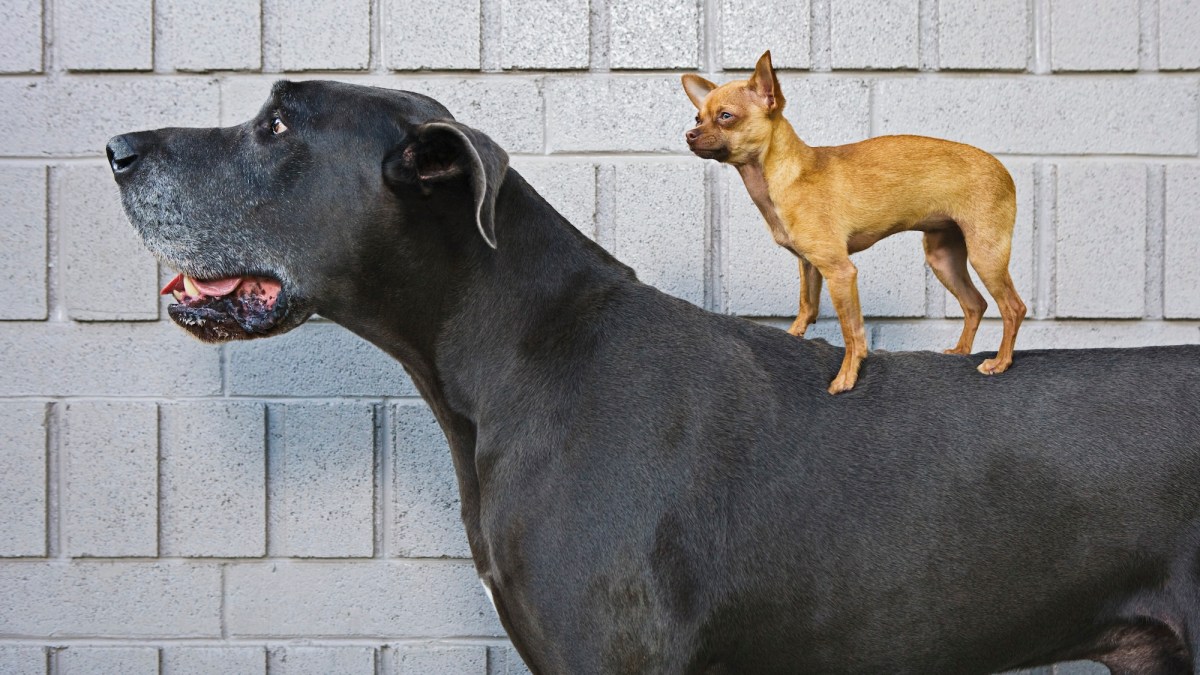
Large dog breeds generally live shorter lives than smaller breeds, unlike the pattern seen among many other mammals.
Researchers examined genetic data from 864 dogs in the Dog Aging Project to investigate why.
They found that DNA regulation of LINE1s, a type of “jumping gene,” declines as dogs age.
These genes can copy themselves around the genome and damage DNA when they are less controlled.
Larger dogs lost LINE1 regulation faster, with an average decline 35 percent greater than in smaller dogs.
The researchers say this may help explain why large dogs age faster, but it is not yet clear whether LINE1 activity causes aging.
The findings may also guide future research into aging and possible therapies in humans.

A genetic analysis of 864 dogs found that larger breeds lose DNA methylation in LINE1 “jumping genes” faster than smaller breeds.
The researchers found that larger dogs lost an average of 35 percent more LINE1 methylation than smaller dogs.
LINE1 elements can copy themselves around the genome and damage DNA when they are less regulated.
The findings may help explain why larger dog breeds tend to age faster and have shorter lifespans.
The researchers said the results could also guide studies of aging and possible future therapies in humans.
- Who
- A team of biologists, including Noah Snyder-Mackler and Blaise Mariner, studied the dogs.
- What
- The team analyzed genetic data and found faster loss of LINE1 methylation in larger breeds.
- When
- The article was published on 2026-10-12; the study date is not stated.
- Where
- The data came from the Dog Aging Project. The researchers’ analysis was published in Science.
- Why
- The researchers aimed to understand why larger dog breeds tend to age faster and die younger.
This story does not have two clearly opposing sides.
The researchers analyzed genetic data from 864 dogs in the Dog Aging Project.
The team reported that larger dogs lost an average of 35 percent more LINE1 methylation than smaller dogs.
- Dogs analyzed
- 864
- Data source
- Dog Aging Project
- LINE1 methylation loss
- Larger dogs lost an average of 35 percent more than smaller dogs
- Journal
- Science
What people are saying
Dogs provide an extraordinary model for understanding aging because they show dramatic variation in lifespan within a single species
What we found is that the epigenetic regulation of transposable elements—especially LINE1s—appears to be a major factor shaping how quickly different dogs age
It suggests that faster aging in larger dogs may be driven, at least in part, by reduced control over these ‘jumping genes’
If that’s the case, targeting these elements or the mechanisms that regulate them could be a promising avenue for future therapies to extend the health span in humans
Sources
Related news

Chinook salmon return to habitat opened by removal of four Klamath River dams

Fossil study suggests animal life may be 200 million years older

Study finds honey bee stingers pump venom with two saw-like parts

Low-pressure system may bring rain to Andhra Pradesh from October 15

Study finds ancient gut microbes shared by Hadza and Tsimane

A 1960 Population Model’s 2026 Doomsday Forecast Fell Behind Reality

Roman Villa Excavations Near Wrexham Reveal Earlier Activity and Later Changes

Debate over Monte Verde reopens questions about the first Americans

Africa’s solar installations set a record as official data misses much of the growth

Vienna team demonstrates a self-stabilizing thorium nuclear clock

Ucluelet wave was nearly three times the height of nearby waves
