

0 months ago
Supreme Court Urged to Hear CBSE Three-Language Policy Pleas Urgently

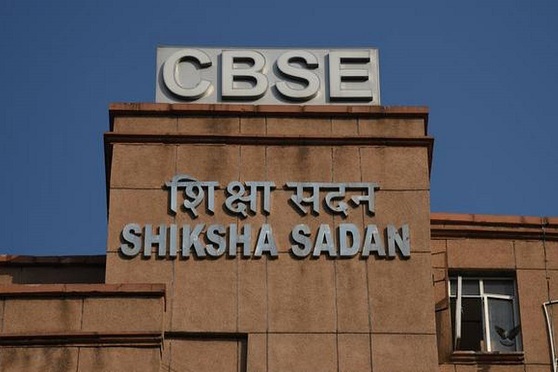
A big school board in India called CBSE made a new rule.
From next year, students in Grade 9 must study three languages.
At least two of those languages must be Indian languages.
Some parents and students are unhappy about this rule.
They say there are not enough language teachers or books in schools.
They also worry the extra language will make schoolwork too heavy.
They asked the Supreme Court, the highest court in India, to stop or delay the rule.
The court said it will think about hearing the case soon.
The people who made the rule say knowing many Indian languages helps the country stay united.
The third language will not have a big final exam, which helps students worry less.

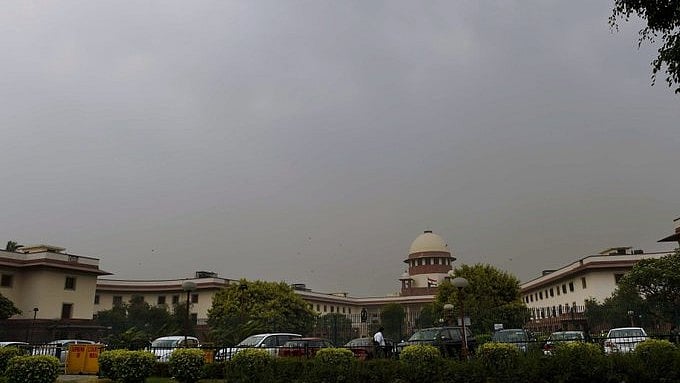
The Supreme Court was urged to urgently list pleas challenging the CBSE's three-language policy for Class 9 students.
Petitioners argued there are neither enough teachers nor books to implement the policy, leaving students in the lurch.
From July 1, 2026, Class 9 students must study three languages, with at least two being native Indian languages.
The Centre, CBSE and NCERT defended the framework, calling it essential for multilingualism and national integration.
The third language (R3) will be assessed internally, with no Class 10 board examination.
- Who
- Petitioners including Yashica Bhandari Jain, represented by senior advocates Gopal Sankaranarayanan and Mukul Rohatgi, versus the Centre, CBSE and NCERT; a Supreme Court bench led by Chief Justice Surya Kant heard the request.
- What
- The Supreme Court was urged to urgently hear pleas challenging the CBSE's mandatory three-language policy for Class 9 students.
- Where
- Supreme Court of India; the policy applies to CBSE-affiliated schools across the country.
- When
- The request was made on Tuesday; the policy takes effect July 1, 2026, and the pleas were previously listed for July 29.
- Why
- Petitioners cite a lack of teachers and books and an increased academic burden, while the government says the policy promotes multilingualism and national integration.
Petitioners and Critics
CBSE, Centre and NCERT
Implementation Readiness
Petitioners and Critics
There are neither enough teachers nor books to implement the three-language policy, leaving students in the lurch with the academic session already started.
CBSE, Centre and NCERT
The Centre, CBSE and NCERT defended the framework as part of NEP 2020, saying it is essential for promoting multilingualism and national integration.
Academic Burden
Petitioners and Critics
Making a third language compulsory increases students' academic workload and creates difficulties for those who had already planned their subjects under the existing curriculum.
CBSE, Centre and NCERT
No board examination will be conducted for the third language at Class 10 to keep focus on learning and reduce any undue pressure on students.
Legality of Circulars
Petitioners and Critics
A senior lawyer alleged the CBSE is implementing unlawful circulars that go against the RTE Act, imposing languages without alternatives.
CBSE, Centre and NCERT
The board maintains the move aligns its scheme of studies with the National Education Policy (NEP) 2020 and the National Curriculum Framework for School Education (NCF-SE) 2023.
Key facts
- Policy
- Three languages (R1, R2, R3) compulsory for Class 9, with at least two native Indian languages
- Effective Date
- July 1, 2026
- Circular Date
- May 15
- Previous Listing
- July 29
- Bench
- Chief Justice Surya Kant; Justices Joymalya Bagchi and V Mohana
- R3 Assessment
- Internal by schools; no Class 10 board examination
- Foreign Language Rule
- Only as third language after two Indian languages, or as an additional fourth language
- Interim Textbooks
- Class 6 R3 textbooks (2026-27 edition) until dedicated R3 books are available
Quotes
Chief Justice Surya Kant
Chief Justice of the Supreme Court
“"They are imposing languages without alternatives."”
 telegraphindia.com
 deccanchronicle.com
“"We will see."”
telegraphindia.com
deccanchronicle.com
Sources

Related news
Supreme Court Questions CBSE Three-Language Policy Rollout

Supreme Court Asks CBSE to Revisit Three-Language Policy Rollout

Supreme Court Urges CBSE Review Three-Language Policy, Ease Pressure

Supreme Court Questions Pace and Design of CBSE Language Policy

Supreme Court Inconclusive on CBSE Three-Language Policy Questions

Supreme Court Questions English Status in CBSE Language Rule

NCERT Prepares Classes 10-12 Textbooks For Responsible AI Use
Ramesh Seeks Funds for 13 JNVs and Two AIIMS
Andhra Pradesh Government Schools Told to Prioritize Practical Skills

West Bengal, UNICEF Begin Workshop on Inclusive Education

India’s Exam Reform Must Begin in the Classroom
