

1 week ago
India Must Scale Storage as Renewable Capacity Expands

India is adding more renewable electricity, especially solar power.
Solar power is not produced when the sun is down.
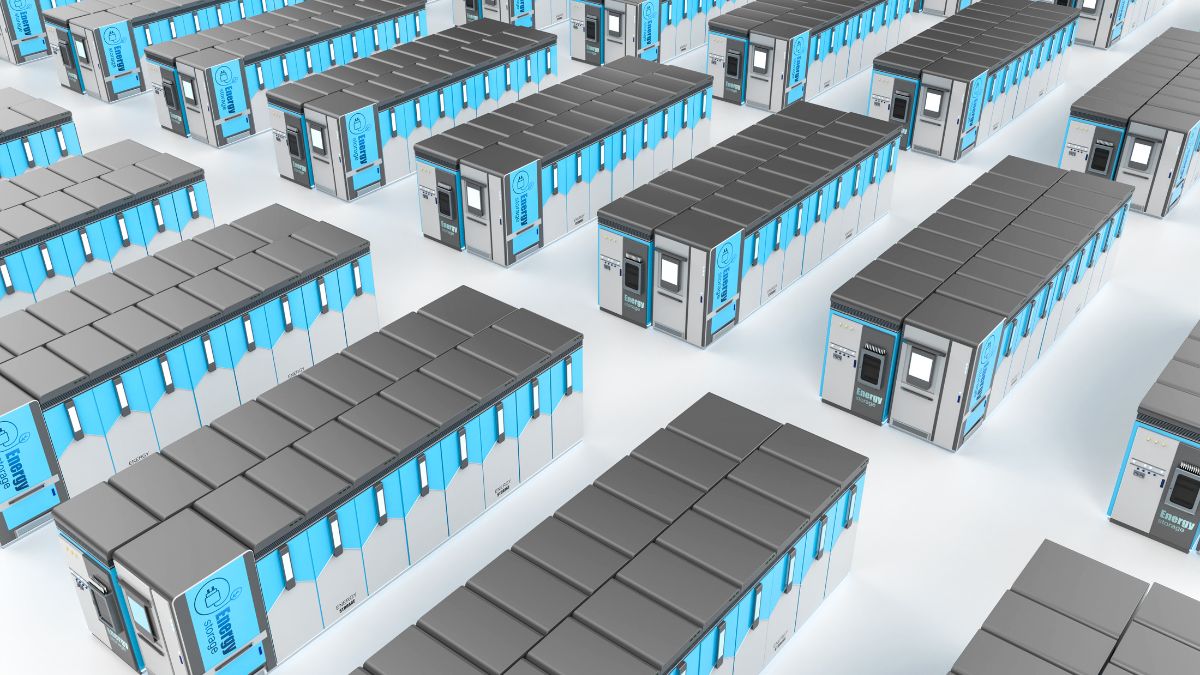
Storage systems save electricity during sunny hours so it can be used later.
Experts say India needs to build these systems quickly as electricity demand grows.
India’s domestic battery manufacturing can currently produce about 2 GWh, less than one percent of an approximately 260 GWh pipeline expected from competitive tenders in 2026.
Some industry experts say India should deploy storage now even if it must import some parts.
They say waiting until all battery cells are made domestically could delay needed projects.
Wood Mackenzie says India may need more than a decade to become self-sufficient in battery storage.
NTPC has been allocated 5 GWh under a government funding scheme to support power supply when solar power is unavailable.

India’s growing renewable capacity is creating an immediate need for larger energy-storage systems.
Domestic battery manufacturing currently accounts for less than 1 percent, or 2 GWh, of an approximately 260 GWh demand pipeline from competitive tenders in 2026.
Industry experts say storage is needed to manage solar power’s intermittency and meet electricity demand during non-solar hours.
Volks Energie’s Piyush Goyal cautioned that import dependence should not delay storage deployment because domestic cell capacity will take years to catch up.
NTPC has been allocated 5 GWh of battery storage capacity under the Viability Gap Funding scheme, while Wood Mackenzie projects more than a decade before India reaches storage self-sufficiency.
- Who
- Industry experts, NTPC Limited, and Wood Mackenzie researchers commented on India’s storage needs.
- What
- Stakeholders called for rapid expansion of battery energy storage systems and pumped storage as renewable capacity grows.
- Where
- New Delhi, India.
- When
- The comments were reported on August 23; the cited demand pipeline relates to competitive tenders in 2026.
- Why
- Storage is needed to balance intermittent solar generation, supply electricity during non-solar hours, and support rising electricity demand.
Deploy storage now
Address supply constraints
Import dependence and deployment timing
Deploy storage now
Industry voices including Volks Energie’s Piyush Goyal argue that reliance on imported cells or components should not slow deployment because the grid needs storage now.
Address supply constraints
The scale of India’s domestic manufacturing shortfall and Wood Mackenzie’s projection of more than a decade to reach self-sufficiency highlight the continuing supply constraint and dependence on imports.
Key facts
- Current domestic manufacturing
- India’s battery manufacturing capacity is about 2 GWh, less than 1 percent of the cited demand pipeline.
- Demand pipeline
- Approximately 260 GWh from competitive tenders in 2026.
- Storage technologies
- Battery energy storage systems and pumped storage projects.
- Supply challenge
- Domestic cell manufacturing is far behind expected storage demand, with the gap projected to persist for years.
- NTPC allocation
- NTPC Limited has been allocated 5 GWh of battery energy storage capacity under the Viability Gap Funding scheme.
- Projected self-sufficiency
- Wood Mackenzie said India could take more than a decade to achieve self-sufficiency in battery storage.
Quotes
Piyush Goyal
CEO and co-founder of Volks Energie
“I would caution against treating import dependence as a reason to slow deployment. The grid needs storage now to firm up the renewable capacity we are adding, and pausing for a decade until cells are fully indigenous is not a choice we can make.”
 livemint.com
Sources
Related news
India Faces Decade-Long Path to Battery Self-Sufficiency

India’s Battery Costs Competitive, But Manufacturing Must Scale
India Bets on Battery Storage to Reduce Solar Curtailments
India’s Solar-Heavy Grid Needs Flexible Demand and Storage
Ola Electric launches Mahashakti battery storage platform on August 15
India's Solar Project Costs Face 20% Rise Amid Constraints

India’s Fourth BRICS Chair Faces a Much Larger Summit

MAHAGENCO Named State Generation Company of the Year 2026

Telangana Urges Unified National Framework for Water Security

Delhi Traffic Police Announces Rajghat Restrictions For September 3

Kharge Credits Congress Food Policies, Questions Modi Government’s Record