1 week ago
India's Solar Project Costs Face 20% Rise Amid Constraints

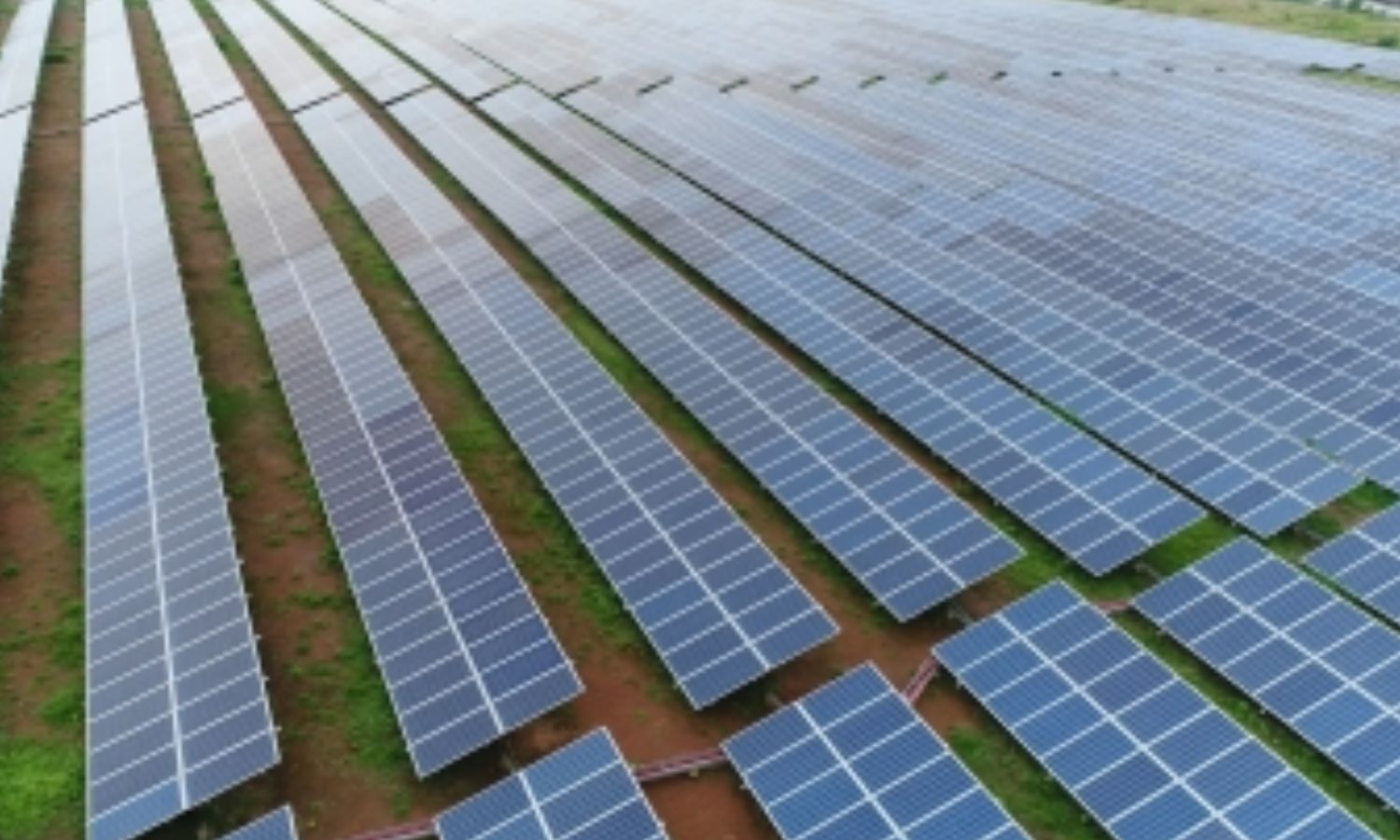
Building solar power plants in India may become about 20% more expensive soon.
This is because companies are being encouraged to buy more parts made in India.
Indian solar cells currently cost more than imported cells.
Conflict-related supply and shipping problems are also making equipment more expensive.
At the same time, fewer renewable energy projects are being awarded.
Some power grids cannot carry all the electricity produced by solar plants, causing electricity to be cut back.
Batteries and pumped-storage plants can help save electricity for later, but they also cost money.
Icra still expects renewable energy to grow because of government support, competitive prices and demand from companies.

Solar project setup costs in India could rise about 20% over the next six to eight months.
Domestic solar cells cost more than imported cells, while input, freight and supply-chain expenses are also elevated.
India had more than 150 GW of renewable projects under construction as of June 30, 2026.
Renewable capacity awards fell from 40.6 GW in FY25 to 14.7 GW in FY26, with 4.7 GW awarded in FY27 by August 10.
Transmission bottlenecks and storage costs threaten project returns, although Icra retains a Stable outlook for renewables.
- Who
- Indian solar and renewable-energy project developers, manufacturers, regulators and the rating agency Icra are affected.
- What
- Solar project costs could rise around 20% as domestic sourcing requirements and higher input, freight and supply-chain costs pressure the sector.
- Where
- India, including its northern, western and southern power regions.
- When
- The expected cost increase is over the next six to eight months; the article also cites data through August 10, FY27.
- Why
- Domestic solar cells are costlier than imported cells, while West Asia-related disruptions, grid constraints, transmission delays and storage costs are weakening project economics.
Cost and Execution Concerns
Renewable Growth Case
Project economics
Cost and Execution Concerns
Higher domestic sourcing costs, expensive equipment, currency depreciation and supply-chain pressures could reduce returns and put previously bid projects under stress.
Renewable Growth Case
Icra retains a Stable outlook, citing policy support, competitive tariffs and corporate demand for renewable energy.
Grid and storage needs
Cost and Execution Concerns
Transmission constraints have caused 30-50% curtailment during solar hours at impacted substations, while storage adds significant costs.
Renewable Growth Case
Expanded transmission and storage, including batteries and pumped-storage hydropower, could support continued renewable capacity growth.
Market activity
Cost and Execution Concerns
Renewable capacity awards declined sharply, and 40-45 GW of capacity had unsigned power-purchase agreements as of April 2026.
Renewable Growth Case
India added a record 50.9 GW of renewable capacity in FY26, and Icra expects another 45 GW in FY27.
Key facts
- Projected cost increase
- Around 20% over the next six to eight months
- Renewable projects under construction
- More than 150 GW as of June 30, 2026
- Domestic cell cost premium
- A module using domestic cells costs about 22.5 cents per watt, compared with 16 cents per watt using imported cells
- Module manufacturing capacity
- ALMM-registered capacity rose to 215.5 GW in July 2026 from 173 GW in March
- Domestic cell capacity
- 31.8 GW as of the cited July 2026 data
- Renewable generation outlook
- Icra expects renewables, including large hydro, to exceed 35% of India's power generation by FY30, compared with 22% in FY25
- Battery storage capacity
- Operational, under-construction or awarded BESS capacity was around 90 GWh as of June 2026
Quotes
Girishkumar Kadam
Senior vice‑president and group head, Corporate Ratings, ICRA
“Timely execution of intra‑state and inter‑state transmission infrastructure and enhancement of storage capacity will be critical to protect project economics and sustain the pace of capacity addition.”
 financialexpress.com
“While the bidding activity has moderated, a notable feature is decline in the bids for normal solar and wind and more focus on firm and dispatchable renewable energy and round‑the‑clock power.”
financialexpress.com
Sources
Related news
India on Track for Record 50 GW Solar Capacity
India Faces Decade-Long Path to Battery Self-Sufficiency

India’s Solar Cell Imports Surge, Challenging Domestic Manufacturing
India crosses 300 GW non-fossil capacity, adds 30.58 GW renewables
India’s lithium battery costs remain above China amid storage expansion

India's Solar Cell Capacity Set to Reach 100 GW

Rijiju Rebukes Congress as GDP Numbers Face Political Challenge

Gold Futures Fall Seventh Day Amid US-Iran Tensions

Sensex, Nifty Plunge as West Asia Tensions Lift Oil Prices

Nifty Defends 24,000 as Brent Crude Surges Past $95

West Asia Conflict Pushes India’s Q1 Current Account Deficit Higher