2 weeks ago
Drain of Wealth 2.0: India's Data and Tech Sovereignty

A long time ago, a smart man from India named Dadabhai Naoroji noticed that India was making lots of things but still not getting rich.
He figured out the problem wasn't just making things - it was who owned them.
Today, some people say the same thing is happening with the internet and computers in India.
Indian companies write lots of software and apps, and Indian people use them a lot.
But many of the biggest apps, patents, and computer buildings are owned by companies in other countries.
Because of that, a lot of the money made from India's digital work goes to owners in places like the United States.
India pays more and more money every year to use other people's inventions and brands.
The article says India is not being robbed, and that foreign companies bring good things like jobs and new technology.
But it asks everyone to think about whether India should own more of the digital world it helps build.
That way, the good things India makes could also make India richer.

India's net royalty outflows for foreign-owned intellectual property grew from under $3 billion in 2011-12 to more than $15 billion in 2024-25, according to Reserve Bank of India data.
India recorded its highest-ever services exports of $421.3 billion in the financial year ending March 2026, making it the world's seventh largest services exporter.
India imported $116.17 billion worth of electronics, chips and components in the financial year ending March 2026, against exports of $48 billion, a gap of roughly $68 billion.
More than 2,000 foreign-owned Global Capability Centres in India employ about two million Indians and generate upwards of $70 billion a year for multinationals.
India generates close to a fifth of the world's data but holds only 3-4 percent of global data centre capacity, prompting Amazon, Microsoft and Google to announce about $67.5 billion in data-centre investment.
- Who
- Indian engineers, startups and policymakers, along with foreign tech giants such as Microsoft, Google and Amazon
- What
- An analysis arguing that India creates enormous value in the digital economy but captures a smaller share of it because much of the ownership - platforms, patents, equity and data centres - remains abroad
- Where
- India, including new data centre and semiconductor projects, with many Indian startups legally domiciled in Singapore and Delaware
- When
- Not explicitly dated; the analysis covers events and data from 2011-12 through the financial year ending March 2026
- Why
- Drawing on Naoroji's 'drain of wealth' method, the article argues India needs ownership of its digital infrastructure, IP and platforms, not just participation in them
Digital sovereignty advocates
Global integration advocates
Is India's digital economy being drained?
Digital sovereignty advocates
India creates enormous value but captures too little because platforms, patents, equity and data centres are owned abroad, repeating a structurally familiar pattern to colonial-era 'Home Charges'.
Global integration advocates
Foreign platforms bring real capital, technology and jobs, Indian users get useful services at no direct cost, and most global revenue reflects value created across many markets - not theft.
Data localisation
Digital sovereignty advocates
Sensitive data such as health records, payments, defence and core government systems should be stored and processed on Indian soil to build domestic cloud and compute capacity.
Global integration advocates
Blanket localisation would build walls rather than capability; only targeted rules for sensitive categories make sense, and India should keep engaging openly with the world.
Taxing foreign digital platforms
Digital sovereignty advocates
India needs a digital economy tax framework that does not collapse when a trading partner complains, since the 6% equalisation levy was built, used for less than a decade, and then withdrawn.
Global integration advocates
The equalisation levy was withdrawn by April 2025 partly to ease trade tensions with Washington, and growing domestic capital markets are already attracting Indian companies back home.
Key facts
- Net royalty outflows (2024-25)
- More than $15 billion
- Electronics trade gap (FY ending March 2026)
- ~$68 billion (imports $116.17 billion vs exports $48 billion)
- Services exports (FY ending March 2026)
- Record $421.3 billion
- Global Capability Centres in India
- 2,000+ centres employing about 2 million people, generating $70B+ annually
- Announced data centre investment (Amazon, Microsoft, Google)
- ~$67.5 billion; pipeline exceeds $90 billion
- India's data generation vs capacity
- Generates ~1/5 of world's data; holds only 3-4% of global data centre capacity
- Digital Personal Data Protection Act rules notified
- 13 November 2025
- Maximum DPDP penalty
- Up to ₹250 crore, taking full effect May 2027
Quotes
N/A
Author’s rhetorical statement
“No one is holding a gun to anyone’s head. There’s no Secretary of State in London deciding India’s fate.”
 opindia.com
Sources
Related news

How Dadabhai Naoroji proved Britain drained India's wealth

Fund manager warns India sleepwalking into trillion-dollar Big Tech loss

India’s AI Race Gains Momentum, But Jobs Remain Uncertain
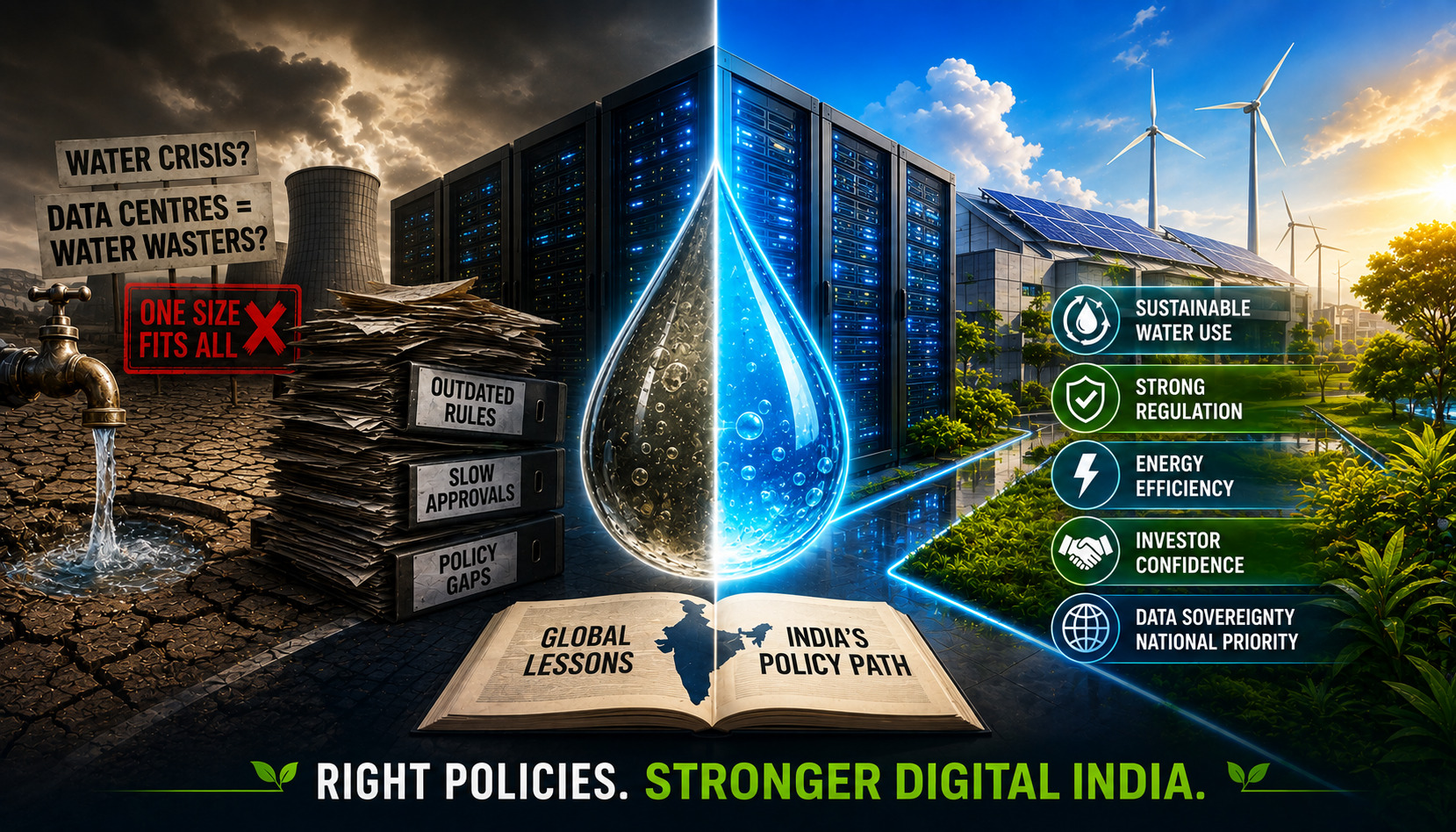
India's Data Centre Policy Push Aims to Protect Sovereign Data
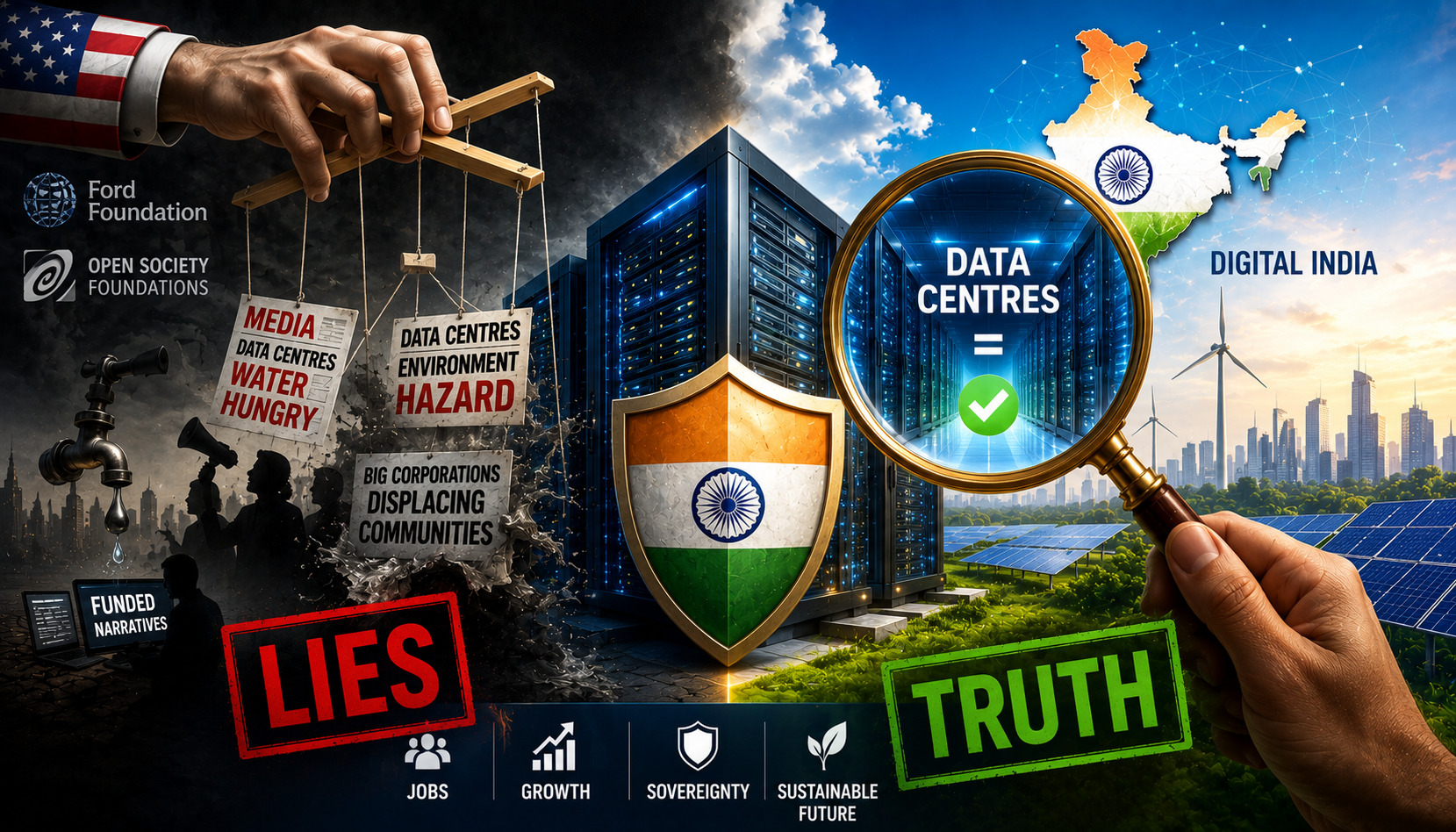
India's data centre boom shadowed by foreign-funded critical reporting

India’s Digital Infrastructure Export Push Tests Strategic Influence

Social Media Companies Intensify Efforts to Identify Child Users

Yorkville America Expands Beyond Trump-Linked ETFs With AI Strategy

Meta’s $18-Billion Child Safety Settlement Faces Praise and Criticism

School Awards Honour Courage, Commitment and Educational Excellence

AI Expansion Puts Jamnagar and Thane Under Water Stress