2 weeks ago
How Dadabhai Naoroji proved Britain drained India's wealth
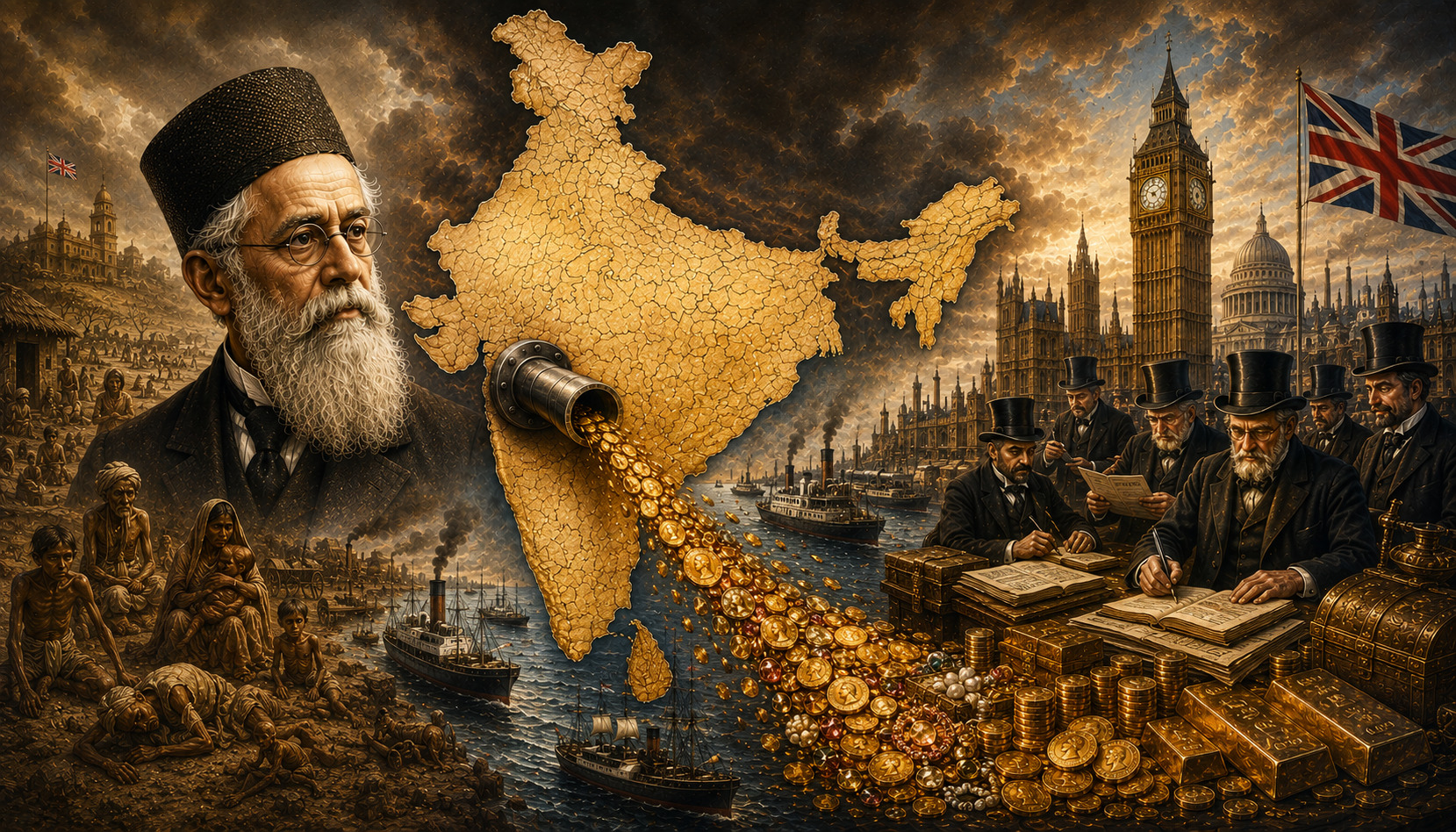
A long time ago, Britain ruled India, and that rule was called the British Empire.
A clever Indian teacher named Dadabhai Naoroji noticed something strange.
India sold more things to other countries than it bought, which usually means a country is getting richer.
But Indian people were still very poor, and there were terrible famines.
Naoroji studied government records and found that the money India earned was mostly flowing back to Britain.
It happened through payments called Home Charges and a banking trick called the Council Bill system.
He even used what prisoners ate in jail to work out how much money a person needed just to survive.
He discovered that many free Indian people earned even less than that.
His big idea, called the drain theory, helped start India's freedom movement.
Even today, historians still argue about exactly how much wealth was taken.

Dadabhai Naoroji's 1901 book 'Poverty and Un-British Rule in India' argued that India's steady export surplus did not enrich the country because its wealth was siphoned off through Home Charges and the Council Bill system.
In an 1867 paper to the East India Association, Naoroji used British Parliamentary Returns to show that nearly £100 million in Home Charges moved from India to England between 1829 and the mid-1860s.
He built one of the world's first data-driven poverty lines from colonial jail diet costs, estimating subsistence at between ₹16 and ₹35 a year and finding many Indians earned less.
By 1896 the Indian National Congress had adopted the drain argument in its resolutions, and in 1892 Naoroji became the first Indian elected to the British House of Commons.
Economist Utsa Patnaik estimated the drain at nearly $45 trillion for 1765–1938 — criticized as inflated by compounding — while a 2020 peer-reviewed study by Pablo A. Nogues-Marco found empirical support for the drain thesis for 1757–1858.
- Who
- Dadabhai Naoroji, an Indian mathematician and the first Indian elected to the British House of Commons, developed the drain theory; later economists Utsa Patnaik and Pablo A. Nogues-Marco and historians such as Morris D. Morris and Dharma Kumar debated it.
- What
- The theory that British rule drained India's wealth — via Home Charges, the Council Bill system, and colonial financial rules — despite India's export surplus, leaving the country poor; its scale and validity remain disputed.
- Where
- India (including Bombay), where the wealth was generated, and London and Britain, where it ended up via colonial financial mechanisms; argued using British Parliamentary records and academic journals.
- When
- From Naoroji's 1867 paper 'England's Duties to India' through his 1901 book 'Poverty and Un-British Rule in India'; the modern debate continued to a peer-reviewed 2020 study, with the article written about 125 years after 1901.
- Why
- To explain why a country with a consistent trade surplus remained poor, showing that wealth generated in India was transferred to Britain legally and continuously, funding British officials, pensions, shareholders, wars, and purchases.
Drain Theory Proponents
Drain Theory Skeptics
Reasons for India's poverty
Drain Theory Proponents
British rule systematically drained India's wealth through Home Charges and the Council Bill system, keeping a trade-surplus economy poor.
Drain Theory Skeptics
Morris D. Morris argued stagnation stemmed from India's own pre-industrial condition and its lack of institutional and infrastructural foundations, not mainly colonial extraction.
Patnaik's $45 trillion estimate
Drain Theory Proponents
Patnaik's 2017–18 calculation of nearly $45 trillion drained between 1765 and 1938 shows the true scale of colonial extraction; it was cited by public intellectuals such as Shashi Tharoor and UN reparations campaigners.
Drain Theory Skeptics
Critics say compounding any historical sum at interest over two centuries inflates the figure by design, and the method assumes India would have invested every uncollected rupee productively, which cannot be proven.
Does the drain thesis hold?
Drain Theory Proponents
A peer-reviewed 2020 paper by Pablo A. Nogues-Marco concluded that surviving East India Company budgets lend empirical support to the drain thesis for the period 1757–1858.
Drain Theory Skeptics
The same paper noted that Morris's institutional critique also has real force and that the debate over the size, mechanism, and applicability of the drain to the later Raj period remains open.
Key facts
- Key figure
- Dadabhai Naoroji (born Bombay, 1825; died 1917)
- Central work
- 'Poverty and Un-British Rule in India' (1901)
- First paper
- 'England's Duties to India', East India Association, 2 May 1867
- Home Charges 1829–mid-1860s
- Nearly £100 million moved from India to England
- Naoroji's poverty line
- ₹16–₹35 per year; three-quarters of the jail cost of living
- Political milestones
- Elected to British House of Commons 1892 (Central Finsbury, Liberal Party); Congress adopted drain argument by 1896
- Patnaik's drain estimate
- Nearly $45 trillion for 1765–1938, compounded at roughly 5% interest
- Nogues-Marco 2020 study
- Found empirical support for drain thesis for 1757–1858 using East India Company budgets
Sources
Related news
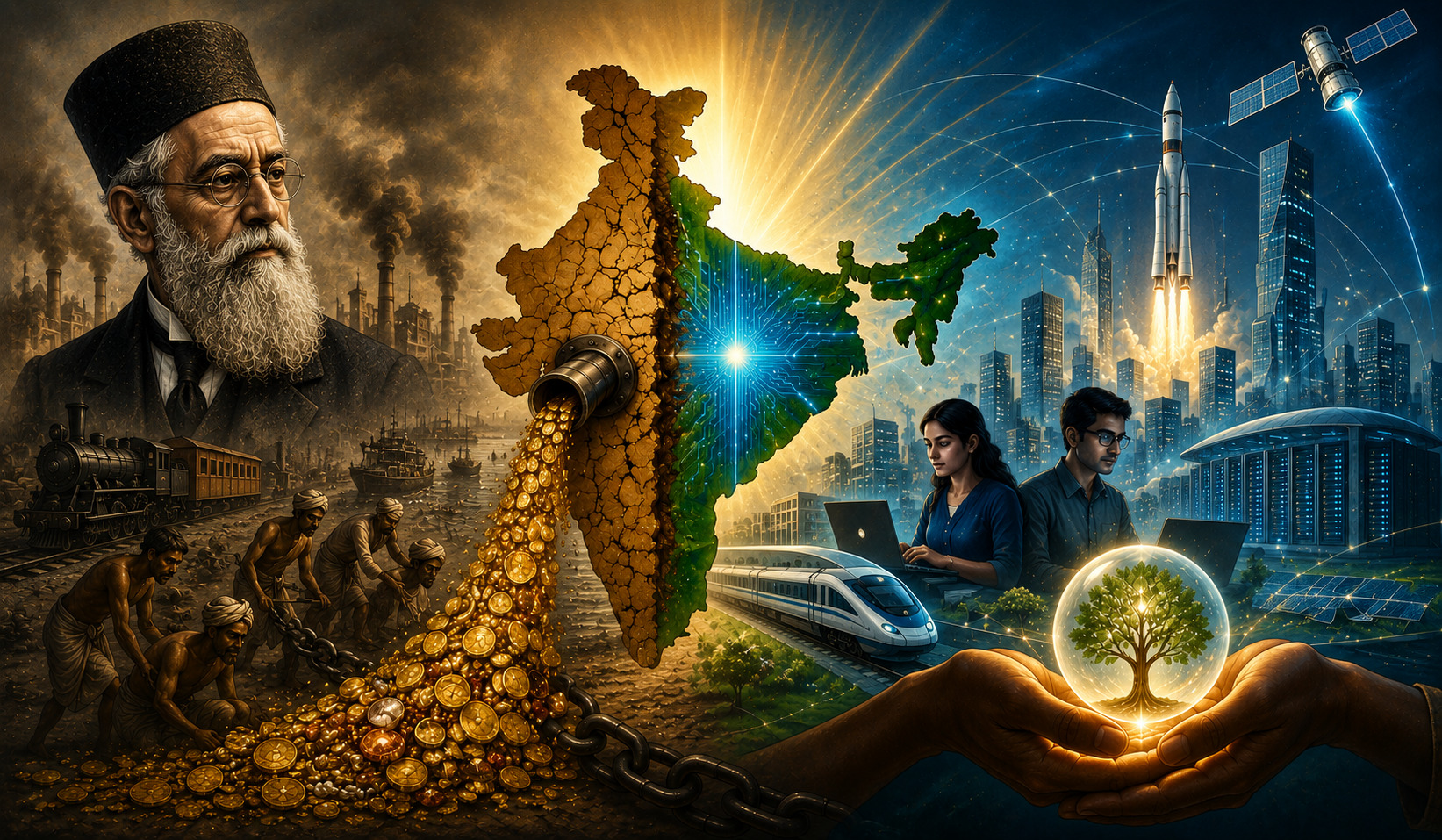
Drain of Wealth 2.0: India's Data and Tech Sovereignty
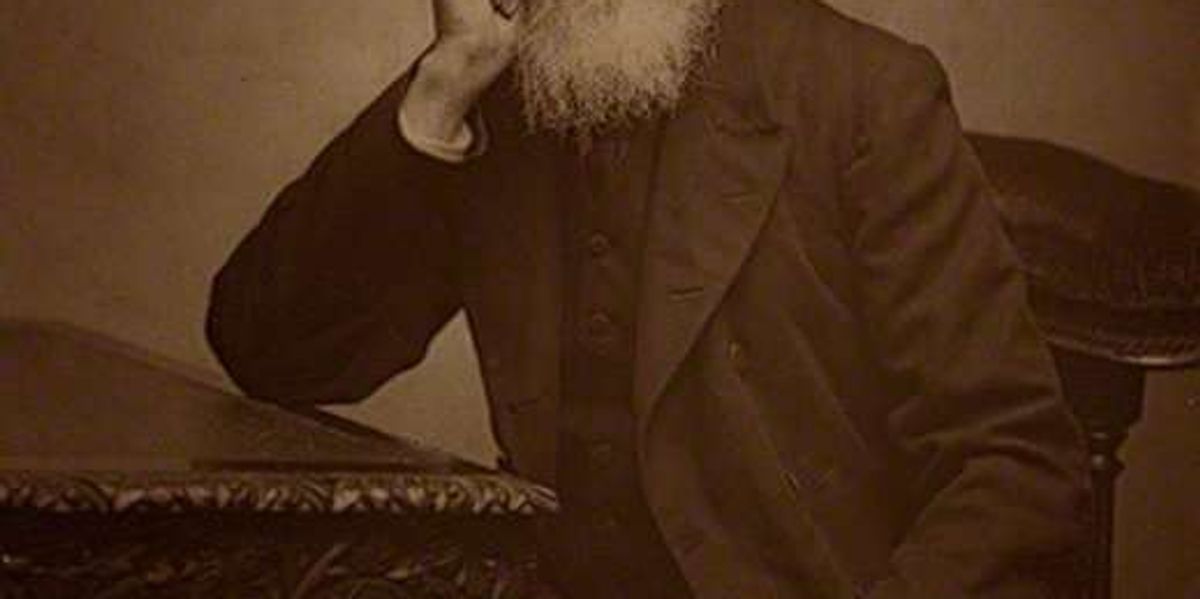
Dadabhai Naoroji Portrait to Display at National Portrait Gallery

India's Dollar Economy: Why Did $230 Billion Flee?

Book Explores Civilisational Forces Behind Bharat’s Economic Rise

US $40 Trillion Debt Sends Economic Ripples Toward India

Former PM Keir Starmer to Leave London Parliamentary Seat
Why Rough Sleeping Remains Persistent Despite New UK Funding

Nigel Farage Probe Resumes After Clacton By-Election Win

Why India and Pakistan Celebrate Independence Day One Day Apart