

2 hrs ago
India’s Rs 1.86 Lakh Crore Grid Plan Targets Renewable Bottlenecks
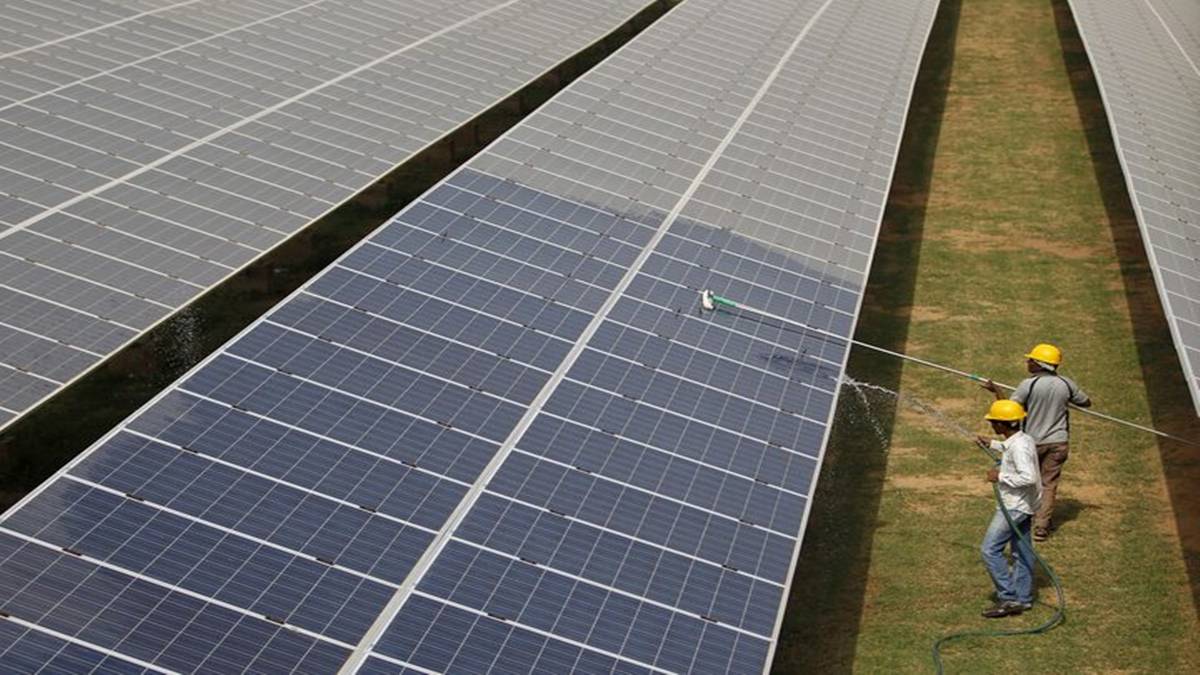
India is building more solar and wind power, but its electricity grid cannot always carry all of that energy to where it is needed.
The government has approved a large project to build new power lines, substations and batteries.
The project is expected to cost about Rs 1.86 lakh crore.
It could add more than 51,000 circuit kilometres of transmission lines and 50 GWh of battery storage.
Batteries can save electricity when the sun is shining or the wind is blowing and release it later.
Officials believe the plan can help India reach 500 GW of non-fossil fuel capacity by 2030.
However, studies and government figures show that some solar electricity has already been held back because of transmission limits.
Renewable projects are also concentrated in a small number of states, while much of the electricity demand is elsewhere.
This means the new infrastructure may help, but major grid and storage challenges remain.

India approved a Rs 1,86,405 crore Green Energy Corridor project for intra-state transmission and battery storage.
The plan is expected to add 51,126 circuit km of transmission lines, 2,28,903 MVA of substation capacity and 50 GWh of battery storage.
The government says the project will help integrate variable renewable power and make the 500 GW non-fossil capacity goal for 2030 achievable.
Transmission constraints reportedly led to 8,133 GWh of solar power being held back during April-June, while Reuters estimated 7% of solar capacity could not operate at full output.
Renewable expansion is concentrated in a few states, with transmission gaps, thermal stress and limited storage continuing to challenge grid stability.
- Who
- The Government of India, including Union ministers Ashwini Vaishnaw and Shripad Naik, announced and discussed the project.
- What
- A Rs 1,86,405 crore Green Energy Corridor project will expand intra-state transmission infrastructure and add 50 GWh of battery storage.
- Where
- Across India, including renewable-energy-rich states such as Rajasthan, Maharashtra, Gujarat, Andhra Pradesh, Karnataka and Madhya Pradesh.
- When
- The Cabinet decision was announced on a Wednesday; the project is expected to be established by FY2032-33. Government figures cited in the articles cover April-June and January-March periods.
- Why
- To improve renewable-energy evacuation, manage variable solar and wind generation, strengthen grid stability and support India’s non-fossil capacity targets.
Government’s Case
Grid-Capacity Concerns
Ability to reach renewable targets
Government’s Case
Union Minister Ashwini Vaishnaw said India’s 500 GW non-fossil capacity goal for 2030 now appeared achievable and described the project as a step toward a smart, renewable-ready grid.
Grid-Capacity Concerns
Transmission constraints, geographic concentration of renewable potential and limited battery storage could prevent new generation from reaching consumers even as installed capacity grows.
Impact of new infrastructure
Government’s Case
The government says the project will improve renewable-energy access, support long-term energy security, reduce the carbon footprint and create employment in power, manufacturing and construction.
Grid-Capacity Concerns
The Centre for Science and Environment, Ember and figures cited from Parliament and Reuters indicate that grid bottlenecks have already caused substantial clean-electricity losses and restricted solar output.
Role of battery storage
Government’s Case
The plan includes 50 GWh of battery storage to help manage fluctuations from intermittent solar and wind generation.
Grid-Capacity Concerns
The article identifies limited storage capacity as an ongoing pressure point alongside transmission bottlenecks, meaning the planned storage may need to address a significant existing shortfall.
Key facts
- Total project outlay
- Rs 1,86,405 crore
- Intra-state transmission allocation
- Rs 1,36,378 crore for Phase III
- Battery storage allocation
- Rs 50,000 crore for 50 GWh
- Central financial support
- Rs 54,082 crore
- Planned transmission additions
- 51,126 circuit km of lines and 2,28,903 MVA of substation capacity
- 2030 target
- 500 GW of non-fossil fuel capacity
- Reported solar power held back
- 8,133 GWh during April-June because of transmission constraints
Quotes

Ashwini Vaishnaw
Union minister who announced the Cabinet decision on the energy corridor
“The country’s current power generation capacity exceeds 500 gigawatts, with renewable energy sources already accounting for 52% of this total…the grid must be designed to manage the load associated with these fluctuations. Handling this variability poses a major challenge”
 financialexpress.com
Sources
Related news
Indian Cabinet Approves ₹1.86 Lakh Crore Green Energy Corridor-III Scheme

India Approves ₹1.86 Lakh Crore Renewable Grid Push
Green Energy Corridor Advances India’s 2035 Clean Power Goal

India's Pumped Storage Push Faces ₹7.36-Trillion Investment Question

Khavda IV-C Transmission Corridor Supports India’s Green Transition
Karnataka Reports 27.3 GW Renewable Capacity, Minister Highlights Clean-Energy Expansion
Indore-Manmad Rail Project Advances With ₹4,930.91 Crore Tender

Cabinet Raises Rabi MSP, Approves Energy and Traffic Projects

Govt announces rabi MSP hikes to promote oilseed production
Delhi approves AI traffic grid with 2,500 cameras
