

4 days ago
Mecca Pact May Stretch Pakistan’s Forces Against India
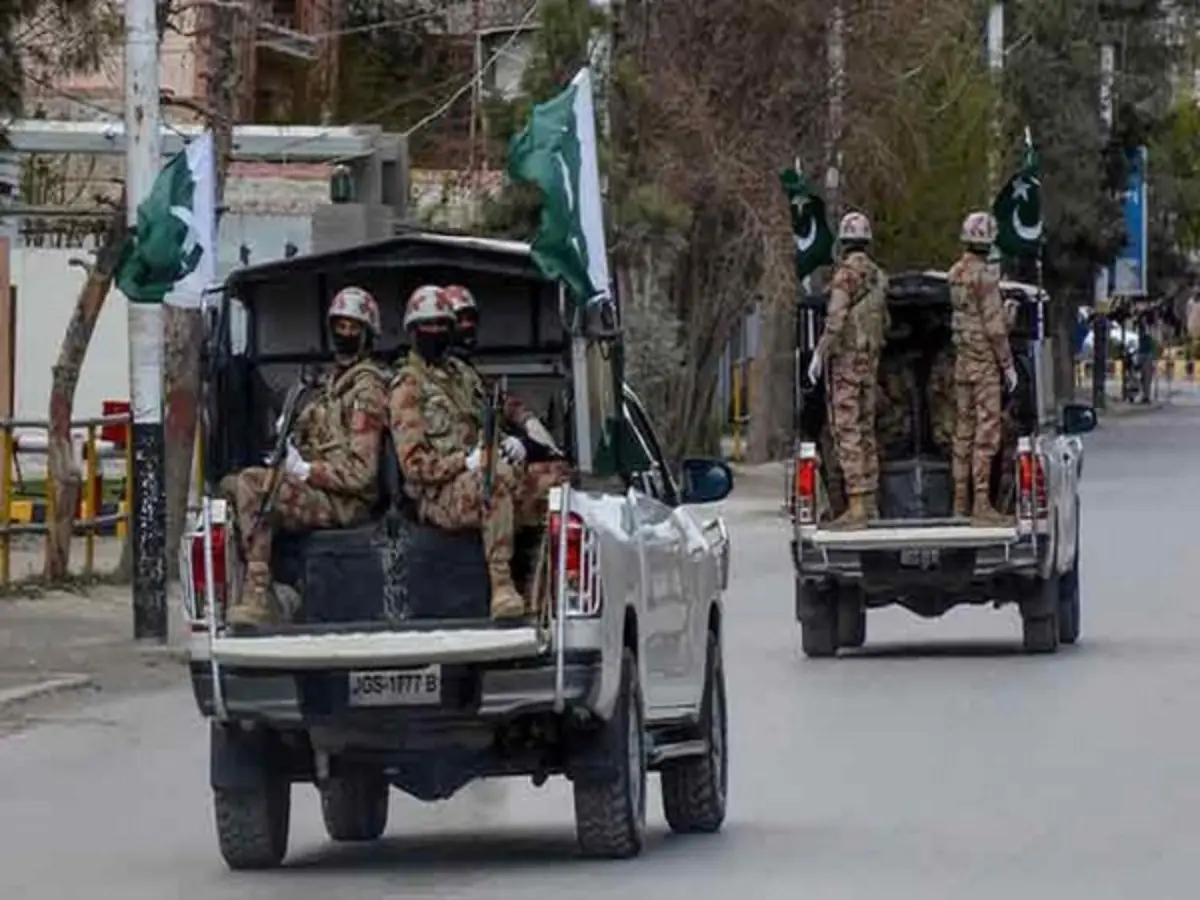
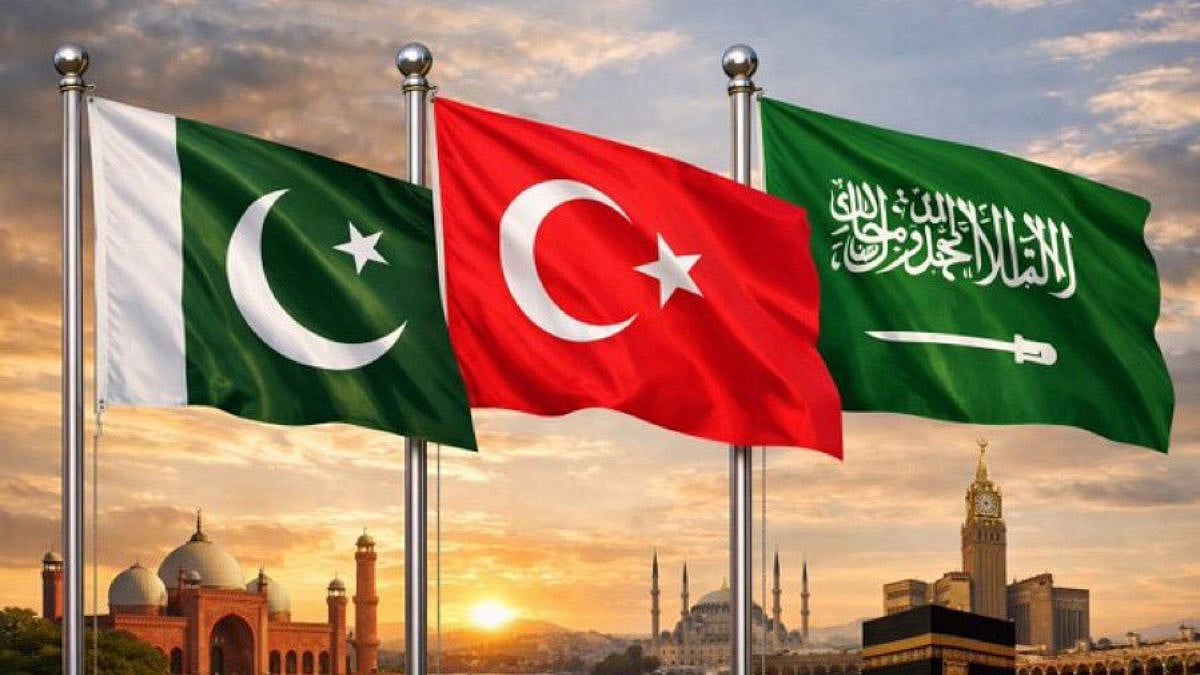
Saudi Arabia, Turkey and Pakistan made a defense agreement in Mecca.
They promised to help each other if one member is attacked.
The agreement is meant to create a strong alliance similar to NATO.
The article says Pakistan already has many soldiers near its border with India.
Pakistan also faces security problems in Balochistan, Khyber-Pakhtunkhwa and Afghanistan-related operations.
New duties in places such as Yemen, Somalia or Sudan could require Pakistan to move more troops and aircraft away from India.
The article also says Pakistan has a weak economy and relies heavily on foreign financial support.
Because of these pressures, some analysts believe the agreement could stretch Pakistan’s military instead of making it stronger.

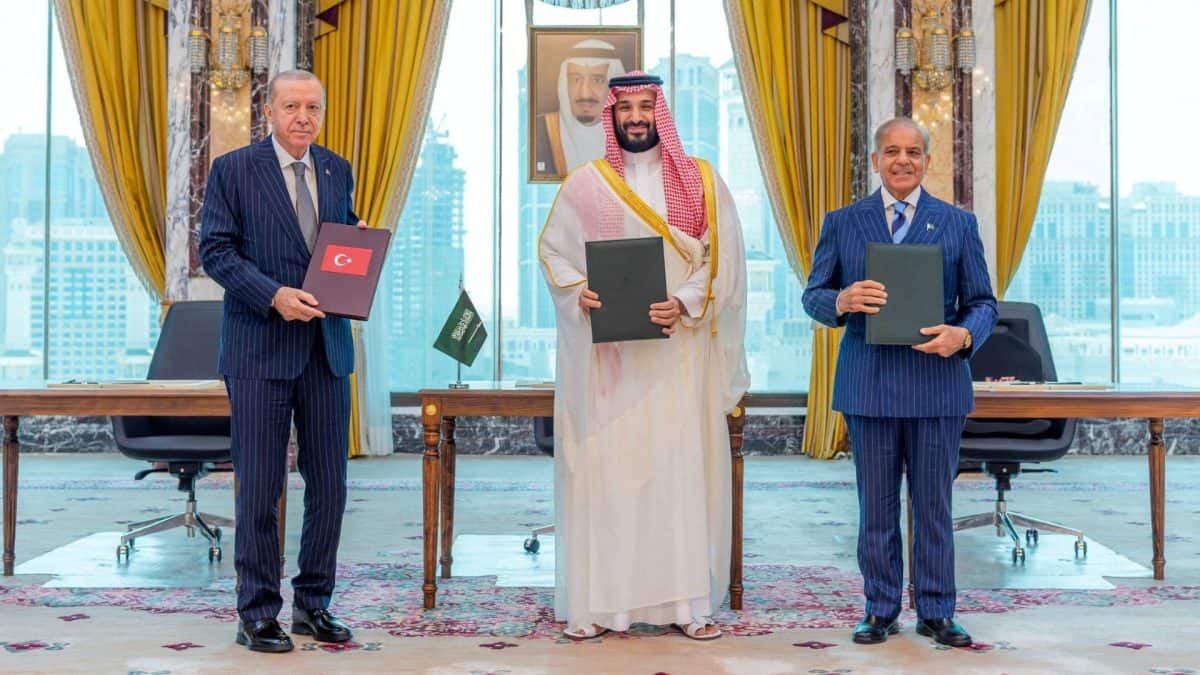
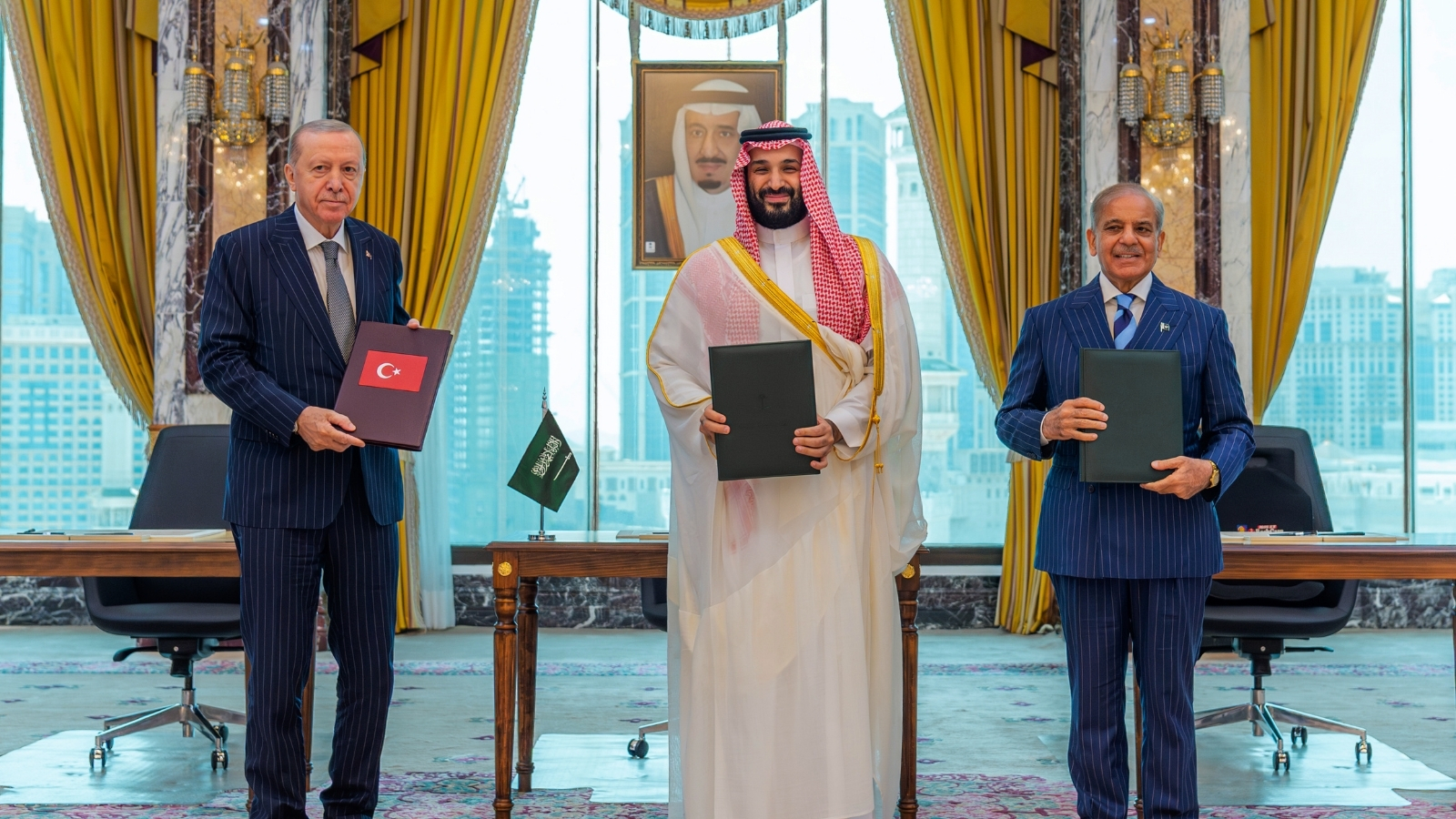
Saudi Arabia, Turkey and Pakistan signed the Mecca Joint Defence Agreement on August 7, 2026.
The pact says an armed attack on one member will be treated as an attack on all three.
The alliance could require Pakistan to deploy forces beyond its Indian border, including toward Yemen, Somalia and Sudan.
Pakistan reportedly has 13,000 troops and 20 combat jets committed to its new obligations, though the article describes this figure as unverified.
The article argues that Pakistan’s economic weakness and existing security pressures could make the pact a burden rather than an advantage.
- Who
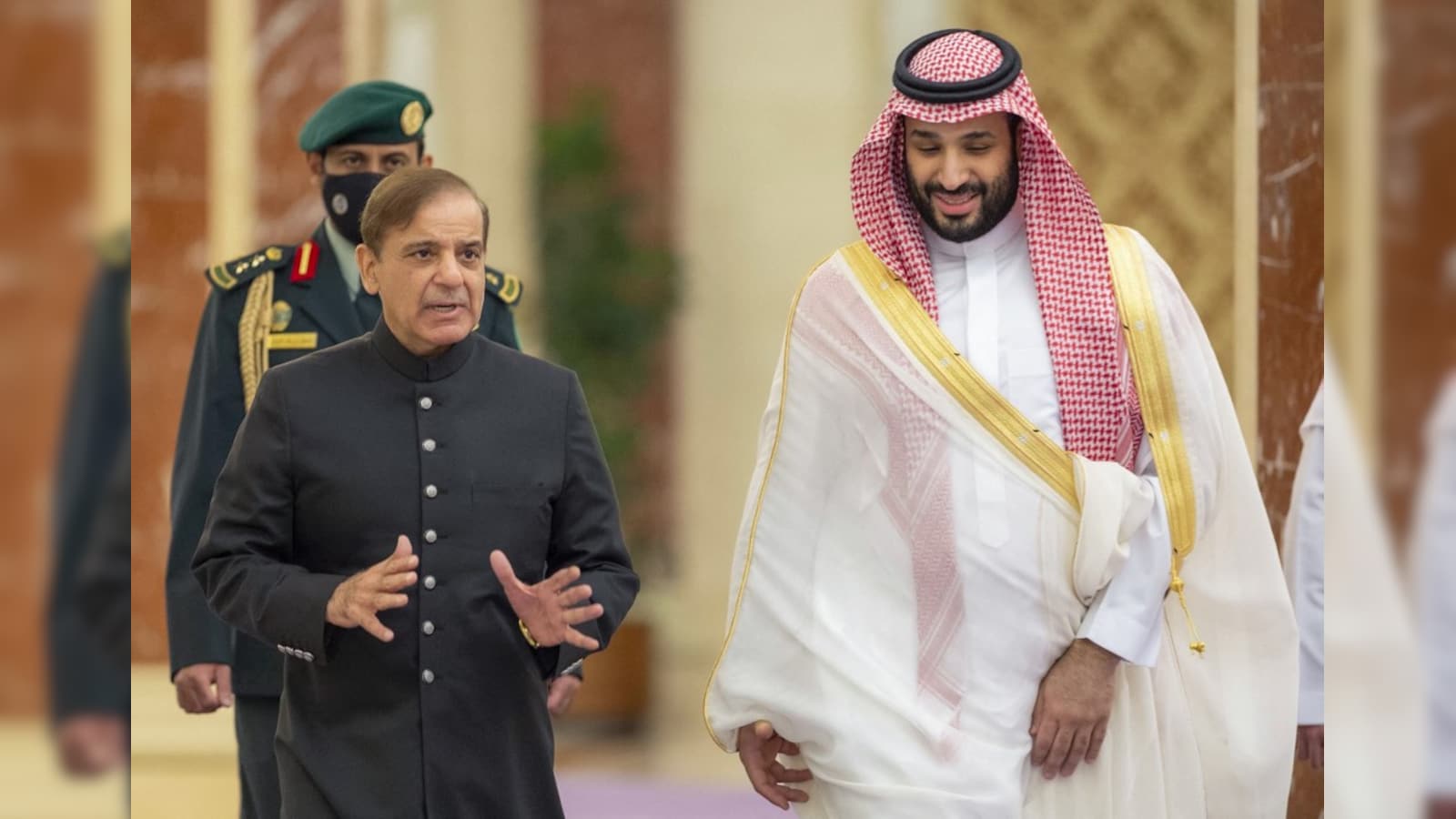
- Saudi Arabia, Turkey and Pakistan signed the agreement in the presence of Crown Prince Mohammed bin Salman.
- What
- They signed the Mecca Joint Defence Agreement, a collective-defense pact treating an attack on one member as an attack on all.
- Where
- The agreement was signed in Mecca, Saudi Arabia.
- When
- August 7, 2026.
- Why
- The alliance is intended to form a credible group like NATO, while the article examines whether its additional military commitments could weaken Pakistan against India.
Arguments for the Pact
Arguments Against the Pact
Strategic value
Arguments for the Pact
The pact is intended to create a collective-defense group credible like NATO and could give Pakistan broader military partnerships, including Turkish defense cooperation and drones.
Arguments Against the Pact
The article argues that wider commitments may stretch Pakistan’s forces and reduce its capacity on the Indian border.
Military deployments
Arguments for the Pact
Supporters could view deployments toward Yemen, Somalia or Sudan as necessary obligations under a new alliance and as a way to expand Pakistan’s strategic role.
Arguments Against the Pact
Critic MJ Akbar argues that every additional soldier or jet deployed elsewhere leaves fewer resources for India, especially while Pakistan also faces operations in Balochistan, Khyber-Pakhtunkhwa and Afghanistan-related areas.
Pakistan’s resilience
Arguments for the Pact
Pakistan is described as having a good defense industry, with drones arriving from Turkey, potentially helping it meet new obligations.
Arguments Against the Pact
The article says Pakistan’s weak economy, substantial debt and reliance on Saudi, American and other foreign financial support make additional military commitments risky.
Key facts
- Agreement
- Mecca Joint Defence Agreement
- Members
- Saudi Arabia, Turkey and Pakistan
- Collective-defense provision
- An armed attack on one member is to be treated as an attack on all three.
- Pakistan’s standing army
- About 600,000 personnel, according to the article.
- Reported new deployment
- Pakistan is believed to have sent 13,000 troops and 20 combat jets for its new commitments.
- Pakistan’s external debt
- Nearly $140 billion, including about $70 billion owed to China.
- Saudi financial support
- The article says Saudi Arabia sent another $3 billion to Pakistan’s State Bank in August, bringing the cited debt total to $8 billion, plus $1.2 billion in deferred oil payments.
Quotes

MJ Akbar
Former Union minister and senior Indian journalist quoted in the article.
“This August Riyadh sent another $3 billion to the State Bank of Pakistan as blood transfusion, making the total debt $8 billion in addition to $1.2 billion in deferred payment for oil supply facility. Islamabad is waiting for America to ease the pressure of $10 billion from the International Monetary Fund (IMF). The total external debt of Pakistan is nearly $140 billion, of which $70 billion is to China. Its total internal and external debt of near $300 billion adds up to nearly 70 per cent ofを?”
 wionews.com
“Any upscale against the Houthis will require more troops. Each additional soldier, each additional jet there means that much less on the Indian front. Pakistan has a good defence industry, and drones are arriving from Turkey. But every commander knows that the danger zone lies in the space between stretch and overstretch.”
wionews.com
Sources
Related news
How Far Will Saudi Arabia Go for Pakistan's Mecca Pact?
Saudi-Turkey-Pakistan Defence Pact Raises Security Concerns For India
Why Pakistan’s Mecca Pact May Not Shield It From India
Pakistan seeks Mecca pact front against Israel and India
Mecca Pact Offers Pakistan No Blank Security Cheque
Mecca Defence Pact: Would Saudi and Turkey Fight for Pakistan?
Pentagon Turmoil Deepens as Hegseth Tightens Grip on Military
Germany Blames Russia for Leipzig Drone Attack, Europe Responds
Erdogan Says Turkey Would Consider Full Shanghai Cooperation Organisation Membership
Augsburg Train Station Closed After Explosion, Suspicious Object Found

Taliban Offers Afghan Mineral Wealth as Washington Weighs Engagement
