

5 days ago
India-China Consensus Offers Cautious Momentum, Not Strategic Breakthrough
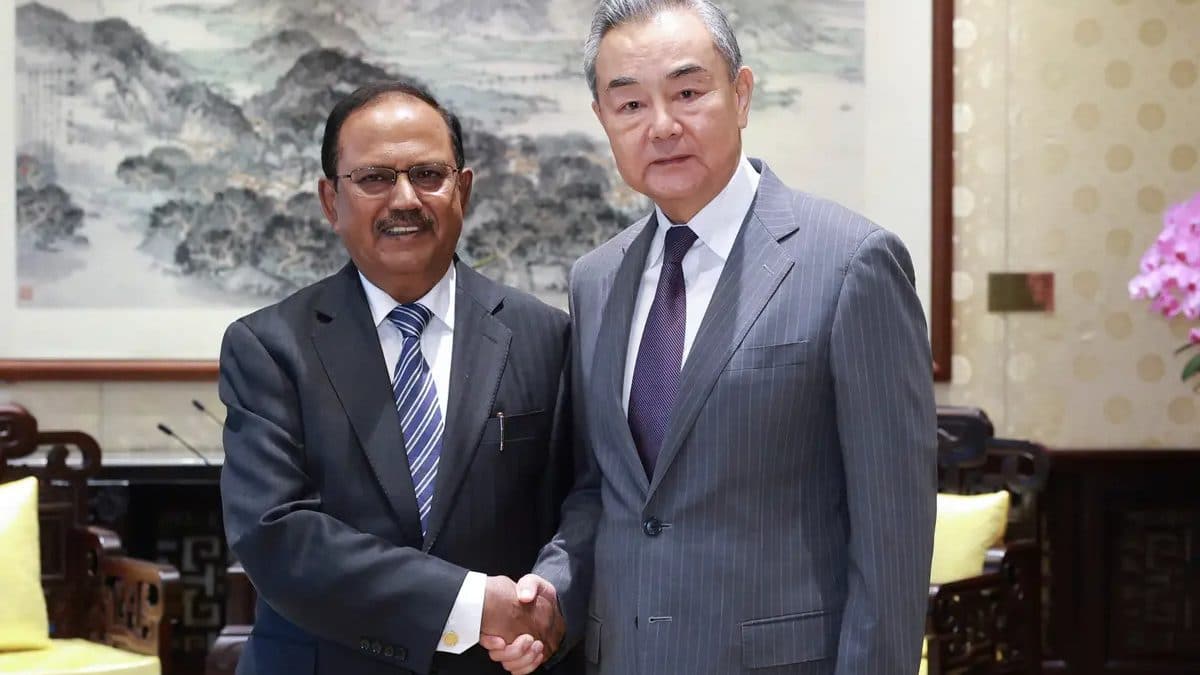
India and China have been arguing over parts of their shared border for many years.
Their officials recently held important talks in Beijing.
Afterward, they released a joint plan with eight areas of agreement.
The plan includes more ways for military leaders to communicate and avoid misunderstandings.
It also discusses border trade and sharing information about rivers.
These steps could help stop small problems from becoming bigger conflicts.
However, the countries still disagree about where the border should be.
The agreement is meant to manage tensions, not solve every problem.
The article says both sides are moving carefully because global pressure, including policies from Donald Trump’s United States, gives them reasons to stabilize relations.

India and China issued an eight-point consensus after talks between Ajit Doval and Wang Yi in Beijing.
The agreement calls for progress on boundary delimitation, border management, military communication and crisis prevention.
Both sides agreed to add military meeting points, establish two eastern and middle sector hotlines, and address incidents through existing channels.
The countries plan to resume discussions on trans-border rivers, including hydrological data sharing, and reopen designated border trading points.
The measures suggest cautious re-engagement, but longstanding disputes involving the LAC, Pakistan and regional influence remain unresolved.
- Who
- Indian National Security Adviser Ajit Doval and Chinese Foreign Minister Wang Yi led the 25th round of Special Representatives-level boundary talks.
- What
- India and China released an eight-point outcomes and consensus document covering boundary delimitation, border management and communication mechanisms.
- Where
- The talks were held in Beijing; a possible later leaders’ meeting is expected at the BRICS Summit in New Delhi, though China has not officially confirmed the visit.
- When
- The meeting took place in Beijing, with separate readouts issued on August 25 and the joint outcomes released on August 26.
- Why
- Both sides are seeking to contain border tensions and stabilize relations amid wider geopolitical and economic pressures.
Indian and Cautious Interpretation
Chinese and More Procedural Interpretation
Approach to the boundary dispute
Indian and Cautious Interpretation
India’s readout emphasized seeking a political settlement in the context of broader, long-term interests and did not use the phrase “package settlement.”
Chinese and More Procedural Interpretation
China’s readout stressed a “package settlement,” implying a comprehensive approach involving different sectors of the boundary.
Meaning of the consensus
Indian and Cautious Interpretation
The article views the agreement as useful crisis containment and a possible foundation for stability, but warns that it does not represent a strategic realignment or restored trust.
Chinese and More Procedural Interpretation
The joint document’s language on an “early and substantial harvest” of boundary delimitation and border management suggests that incremental progress may be possible.
Border implementation
Indian and Cautious Interpretation
India has been skeptical that an early-harvest approach could normalize relations while leaving sensitive areas such as Depsang and Demchok unresolved.
Chinese and More Procedural Interpretation
The article says China has historically promoted early progress in less contentious areas, while major strategic and cartographic disputes remain difficult.
Key facts
- Negotiators
- Ajit Doval and Wang Yi
- Talks
- 25th round of Special Representatives-level talks on the India-China boundary question
- Joint outcome
- An eight-point outcomes and consensus document
- Military communication
- Two additional meeting points and two new hotlines in the eastern and middle sectors
- Trans-border rivers
- The next expert-level meeting was scheduled for September, with continued communication on hydrological data sharing and related memorandums of understanding
- Border trade
- Both sides agreed to reopen designated border trading points
- Possible leaders’ meetings
- Xi Jinping and Narendra Modi were expected to meet around the Shanghai Cooperation Organisation summit and the BRICS Summit, although Xi’s India visit had not been officially confirmed
Sources
Related news

India-China Talks Seek Border Progress Amid Calls for Peace
India-China Resume Border Talks, Seek Political Settlement
India-China Border Talks Seek Stability and Boundary Progress
India, China Explore Early Harvest Approach in Border Talks

India-China Talks Show Signs of Border Ties Stabilizing

India-China Talks Seek LAC Peace, Frontier Delimitation Progress
Putin Faces Western Isolation While Russia Builds Non-Western Ties
India’s Global Power Ambitions Face Economic and Democratic Setbacks
Modi’s Frugality Appeal Contrasts With Extensive Foreign Travel

Modi Sets Roadmap for Collaborative, Water-Secure India’s Future

Sonia Gandhi Memoir Sparks Debate Over Politics, Publishing And Speech
