1 week ago
India Reviews Education, Survey, Labour, Security and Nuclear Policies
Several important policy and legal issues were discussed in India.
The government is reconsidering rules meant to prevent caste discrimination in colleges and universities.
The Supreme Court had paused those rules while it examines their wording.
The statistics ministry wants richer households to record their spending themselves because many do not respond to survey workers.
The Supreme Court is also examining whether English should be called a non-indigenous language in a school language policy.
India and Japan agreed to work more closely to keep sea routes safe and improve naval cooperation.
The Court changed how the word “industry” may be understood for future labour disputes, but old cases will use the earlier rule.
Political debate also continued over which parts of Vande Mataram should be sung, while new nuclear rules propose regular reviews of operator liability limits.

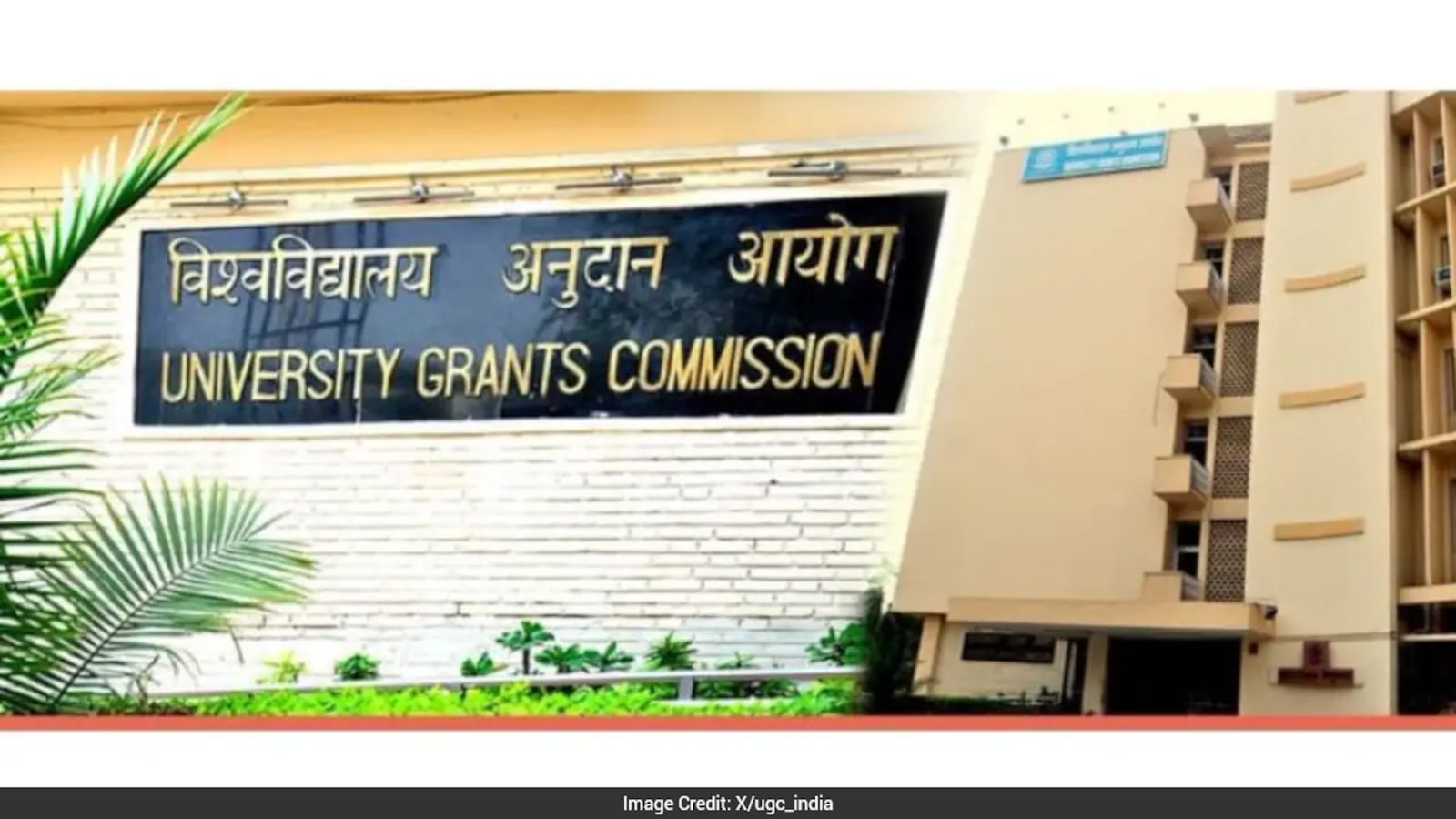
The Centre told the Supreme Court that it is reconsidering the UGC’s 2026 equity regulations, which had been stayed after challenges to their definition of caste-based discrimination.
MoSPI is considering diary-based or online self-reporting for affluent households in gated societies to address rising non-response in the Household Consumption Expenditure Survey.
The Supreme Court questioned whether CBSE can classify English as a non-indigenous language under its three-language policy, which begins fully for Class 6 students in 2026–27.
India and Japan signed a maritime-security agreement covering maritime awareness, search and rescue, disaster relief, naval exchanges, exercises and logistical support.
Other developments included a prospective revision of the legal definition of industry, a Congress decision to sing only two stanzas of Vande Mataram, and five-year reviews of nuclear-liability caps under the SHANTI Act.
- Who
- The Union government, the University Grants Commission, the Supreme Court of India, MoSPI, CBSE, India and Japan, Parliament-related political actors, and nuclear-sector policymakers.
- What
- The developments concern caste-equity rules in higher education, household spending surveys, the school language policy, maritime-security cooperation, labour-law definitions, Vande Mataram, and nuclear-liability rules.
- Where
- The proceedings and policy decisions concern India, including the Supreme Court and New Delhi, with maritime cooperation covering the Indo-Pacific.
- When
- The developments were reported on Thursday, August 21, 2026; the SHANTI draft rules were released on August 14.
- Why
- They address discrimination protections, improving economic data, implementing education policy, protecting sea routes, clarifying labour-law coverage, managing political and religious sensitivities, and regulating nuclear risks.
Arguments for broader protections and oversight
Arguments for clarity, flexibility and implementation
UGC equity rules
Arguments for broader protections and oversight
Supporters of the regulations seek robust, specific mechanisms to address caste discrimination in higher education and protect vulnerable communities.
Arguments for clarity, flexibility and implementation
Petitioners and some general-category groups object that the definition of caste-based discrimination specifically names Scheduled Castes, Scheduled Tribes and Other Backward Classes, potentially excluding general-category students and faculty from that protection.
Household expenditure data
Arguments for broader protections and oversight
MoSPI argues that better participation by affluent households is necessary to prevent biased samples and unreliable estimates of consumption, inequality, poverty and inflation weights.
Arguments for clarity, flexibility and implementation
Resident Welfare Associations have raised concerns about intrusive questions, privacy and possible sharing of information with other government departments; MoSPI has said the data is anonymised.
English in the three-language policy
Arguments for broader protections and oversight
The petitioners argue that treating English as non-native or non-indigenous can create difficulties for students and raises constitutional concerns.
Arguments for clarity, flexibility and implementation
CBSE’s position is that English is an official language and cannot be treated as a foreign language, but also cannot be classified as a native Indian language under the policy.
Industry definition and worker protection
Arguments for broader protections and oversight
Labour unions argue that the established broad framework protects workers’ access to remedies concerning wages, working conditions, strikes and dismissal.
Arguments for clarity, flexibility and implementation
The majority found that aspects of the 1978 interpretation require modification and that a revised definition is needed for future disputes, while preserving the earlier framework for pending cases.
Key facts
- UGC regulations
- The UGC (Promotion of Equity in Higher Education Institutions) Regulations, 2026 were notified on January 13, stayed by the Supreme Court on January 29, and are now being reconsidered by the Centre.
- HCES coverage
- The 2023–24 Household Consumption Expenditure Survey covered 2.6 lakh households and asked about 405 goods and services.
- HCES non-response
- The 2022–23 urban non-response rate was 9.8%, while the rate for the most affluent urban respondents was 11%.
- Language policy
- CBSE’s three-language framework, aligned with NEP 2020, begins in the 2026–27 academic year, with the third language included in Class 10 board examinations.
- India–Japan agreement
- The maritime-security arrangement covers maritime-domain awareness, search and rescue, humanitarian assistance, disaster relief, naval visits, exercises, exchanges and logistical support.
- Industry ruling
- In a 5–4 decision, the Supreme Court modified the definition of industry for prospective cases while retaining the Bangalore Water Supply triple test for pending matters.
- Nuclear liability
- The SHANTI Act provides graded operator-liability caps from Rs 100 crore to Rs 3,000 crore, with an expert review mechanism every five years.
Quotes
Tushar Mehta
Solicitor General of India who addressed the Supreme Court on the UGC regulations
“It is not intended to displace the governing legal position in respect to the pending process.”
 indianexpress.com
“It is being reconsidered”
indianexpress.com
Sources
Related news

Supreme Court Narrows 1978 Industry Definition Under New Labour Code

Supreme Court Limits 1978 Industry Ruling Under 2020 Code

Supreme Court Upholds Landmark Bangalore Water Supply Industry Judgment
Supreme Court Splits Over ‘Industry’ Definition Under Labour Law
Supreme Court’s industry ruling settles old test, leaves Code questions

Supreme Court To Rule On ‘Industry’ Definition Today

BJP MPs Seek National Commission for General Category Interests
UGC Invites Applications for 2026-27 ODL, Online Programme Recognition

India Compresses Professional Training Across Law, Science, and Medicine
UGC Opens Applications for Distance and Online Courses

NTA Releases UGC-NET June 2026 Re-Exam City Intimation Slip