

1 week ago
Supreme Court Splits Over ‘Industry’ Definition Under Labour Law
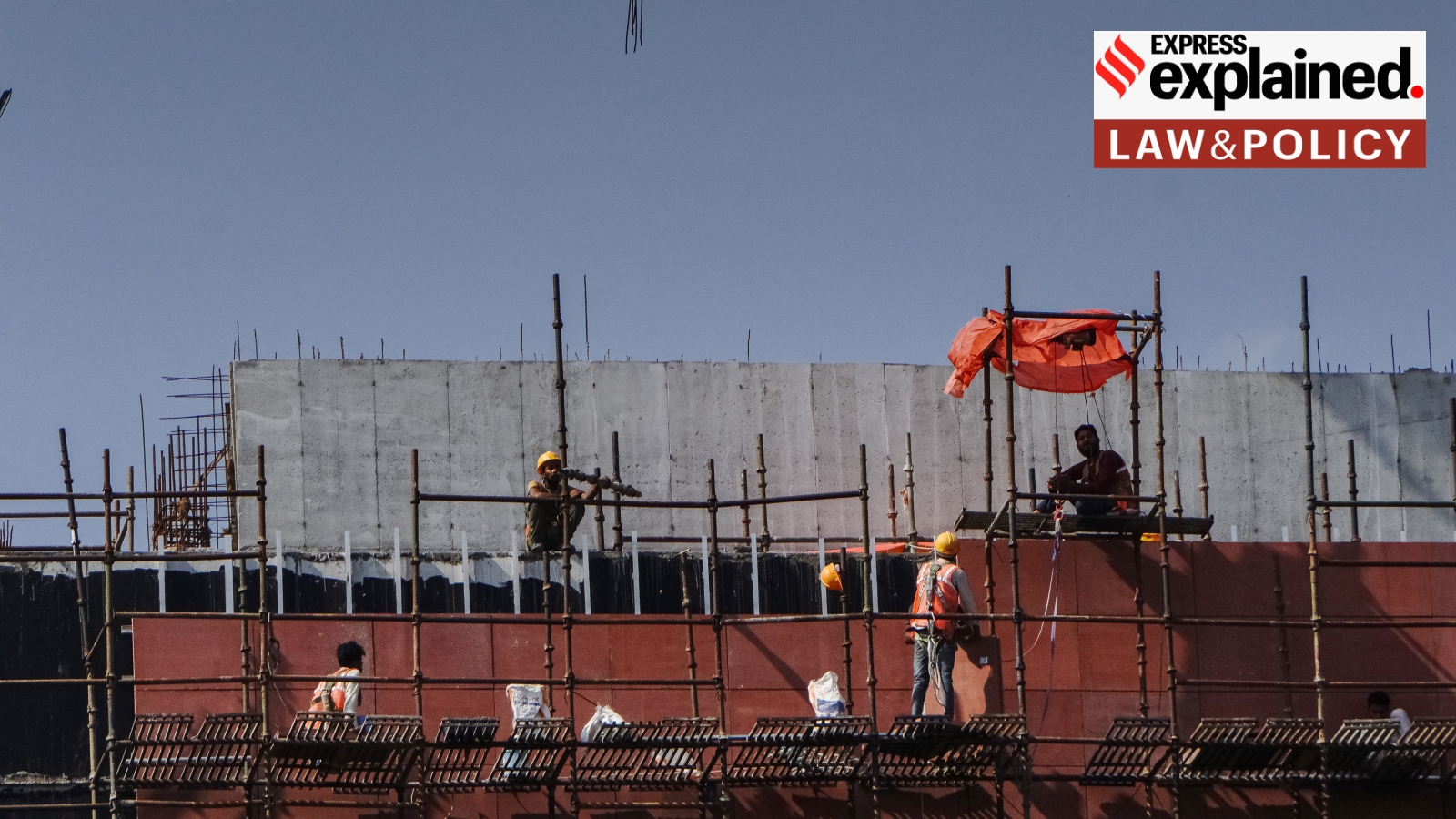
India’s Supreme Court considered what kinds of workplaces count as an “industry” under an older labour law.
This matters because the answer can determine whether workers receive certain legal protections.
In 1978, the Court created a three-part test based on organised activity, cooperation between employers and workers, and the production of goods or services.
The test did not require an organisation to make a profit.
The nine judges disagreed about whether activities should also have a commercial character.
They also disagreed about whether the case should have been sent to the nine-judge bench in the first place.
However, they agreed that old cases still waiting to be decided should use the 1978 test.
The newer Industrial Relations Code has different wording and must be interpreted on its own.
The ruling also said that not every government welfare activity is automatically a sovereign function.

A nine-judge Constitution Bench delivered a fractured ruling on the meaning of “industry” under the repealed Industrial Disputes Act, 1947.
Pending cases under the old law will continue to use the 1978 Bangalore Water Supply “triple test.”
The judges differed over whether the triple test should include a commercial-character requirement beyond systematic activity and employer-worker cooperation.
The court said government activities are not automatically sovereign merely because they are performed by the State or serve welfare objectives.
The Industrial Relations Code, 2020, must be interpreted independently and expressly excludes charitable institutions, domestic services and sovereign functions from its definition of industry.
- Who
- A nine-judge Constitution Bench of the Supreme Court, including Chief Justice Surya Kant and other judges, considered the issue.
- What
- The court interpreted the meaning of “industry” under Section 2(j) of the repealed Industrial Disputes Act, 1947, while issuing differing opinions on the broader legal questions.
- Where
- In the Supreme Court of India.
- When
- The article does not specify the date of the judgment; the relevant legal history includes the 1978 triple test, the 2005 reference and the 2017 referral to the nine-judge bench.
- Why
- To resolve longstanding uncertainty over which workplaces and government activities fall within the old labour law and how pending cases should be decided.
Broader Labour Protection
Narrower Commercial Scope
Whether the triple test needs a commercial requirement
Broader Labour Protection
Justices B V Nagarathna, Dipankar Datta and Joymalya Bagchi defended the 1978 approach, arguing that labour protections should not depend on whether an institution is profit-making. They warned that a commercial requirement could exclude workers in hospitals, schools and other non-profit institutions.
Narrower Commercial Scope
Chief Justice Surya Kant said the triple test required calibration through a discernible commercial character analogous to trade or business. He said this could exclude activities divorced from economic enterprise, including purely charitable initiatives and core sovereign functions, while keeping profit motive irrelevant.
Validity of sending the issue to the nine-judge bench
Broader Labour Protection
The CJI-led group, along with Justices P S Narasimha and Joymalya Bagchi, upheld the validity of the reference. Their position allowed the larger bench to consider the disputed legal questions.
Narrower Commercial Scope
Justice Dipankar Datta called the reference “faltering,” saying the earlier bench had wrongly treated separate concurring opinions as proof that the 1978 ruling was not unanimous and had not met the high threshold for revisiting settled precedent. Justice B V Nagarathna also said the reference relied on an incorrect assumption of conflict between earlier decisions.
Treatment of government welfare activities
Broader Labour Protection
The broader approach treats an activity as potentially falling within labour law even when it is conducted by the government or serves a welfare objective, unless it is a core, inalienable sovereign function.
Narrower Commercial Scope
The narrower approach stresses that activities divorced from economic enterprise, including core sovereign functions, should not qualify as an industry. The court nevertheless agreed that government performance or a welfare purpose alone does not automatically make an activity sovereign.
Key facts
- Bench
- Nine-judge Constitution Bench of the Supreme Court
- Old law
- Industrial Disputes Act, 1947, since repealed
- Relevant provision
- Section 2(j), which defined “industry”
- Existing test
- The 1978 Bangalore Water Supply triple test
- Pending cases
- Cases under the old Act will continue to use the 1978 test
- New law
- The Industrial Relations Code, 2020, must be interpreted independently
- Reference validity
- The opinions produced an effective 6:3 division on whether the reference was valid
Sources
Related news

Supreme Court Narrows 1978 Industry Definition Under New Labour Code
Supreme Court’s industry ruling settles old test, leaves Code questions

Supreme Court Limits 1978 Industry Ruling Under 2020 Code
Supreme Court to Decide Scope of India’s Industry Definition

Supreme Court To Rule On ‘Industry’ Definition Today

Supreme Court Upholds Landmark Bangalore Water Supply Industry Judgment
Centre Seeks Supreme Court Clarity on OBC CSE 2025 Rules

Supreme Court Special Bench to Review OBC Creamy Layer Criteria
Supreme Court Seeks States’ Response on Footpath Rights
